
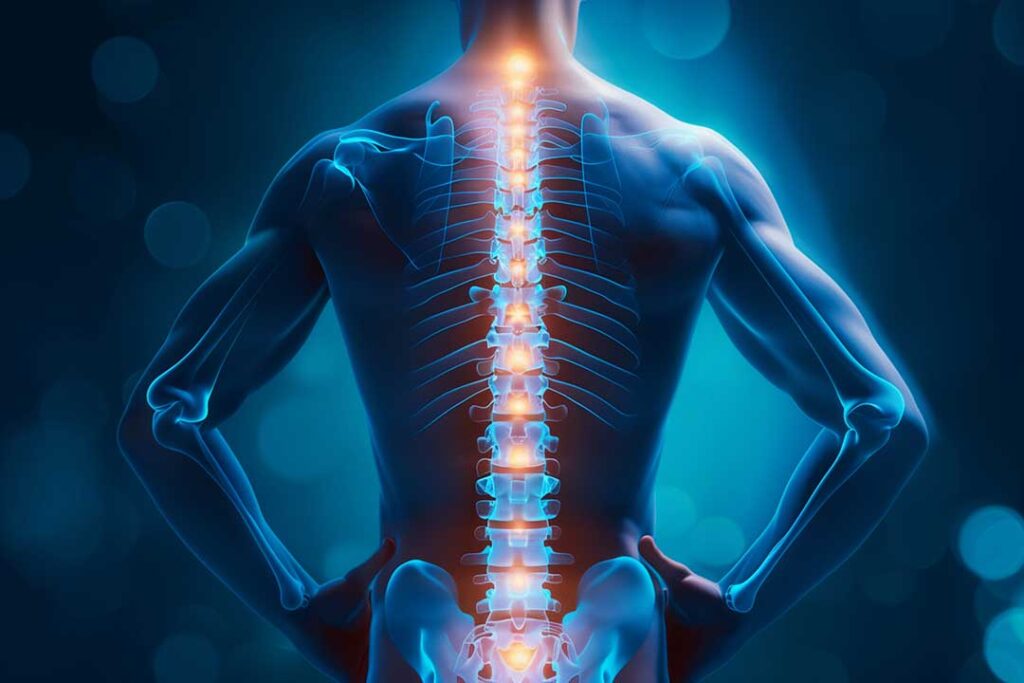
Back strength depends on more than the muscles directly beside the spine. The abdominal muscles, hips, buttocks, and upper legs also help control movement and reduce unnecessary strain during lifting, walking, standing, and household tasks. For residents in Lynbrook, NY, a short routine performed consistently may be more useful than occasional demanding workouts.
Exercise is not appropriate for every type of back pain, however. New, severe, or unusual symptoms should be assessed before beginning a strengthening program.
What exercises help strengthen the back?
The most useful beginner exercises build core control, hip strength, and endurance without forcing the spine through large or painful movements. A balanced routine can include walking, abdominal bracing, bridges, bird-dog movements, and modified side planks.
These exercises are generally performed slowly and with steady breathing. The goal is controlled movement, not the heaviest resistance or the largest range of motion.
1. Walking
Walking is a practical starting point because it gently trains the back, hips, legs, and abdominal muscles while improving overall endurance.
Begin with 5 to 10 minutes at a comfortable pace. Add a few minutes every several days if symptoms remain stable. In a dense suburban community, walking may fit naturally into errands, commuting to nearby destinations, or a brief indoor routine during icy winter conditions or very hot, humid weather.
Keep the stride comfortable. Avoid forcing speed or distance if walking increases pain.
2. Abdominal bracing
Abdominal bracing teaches the trunk to stay supported while the limbs move.
- Lie on the back with knees bent and feet flat.
- Allow the arms to rest at the sides.
- Gently tighten the abdominal muscles as if preparing for a light cough.
- Keep breathing normally rather than holding the breath.
- Hold the contraction for 5 to 10 seconds, then relax.
- Repeat 5 to 10 times.
The lower back should remain in a comfortable position. Pressing the back forcefully into the floor is not necessary for everyone.
3. Glute bridge
Bridges strengthen the buttocks and the muscles that help stabilize the pelvis. Stronger hips can reduce the amount of work demanded from the lower back during standing and lifting.
- Lie on the back with knees bent and feet about hip-width apart.
- Tighten the abdominal muscles gently.
- Press through the feet and lift the hips until the body forms a comfortable diagonal line from the shoulders to the knees.
- Pause briefly without arching the back.
- Lower slowly.
Start with 1 set of 8 repetitions. Progress gradually toward 2 sets of 10 if the movement remains comfortable. A cramping sensation in the hamstrings often means the feet are too far from the body or the hips are being lifted too high.
4. Bird-dog exercise
The bird-dog builds coordination between the back, abdomen, hips, and shoulders. It is more valuable as a control exercise than as a test of flexibility.
- Begin on the hands and knees with the hands below the shoulders and knees below the hips.
- Tighten the abdomen gently.
- Extend one leg backward while keeping the pelvis level.
- If comfortable, extend the opposite arm forward at the same time.
- Hold for 3 to 5 seconds, then return slowly.
- Alternate sides.
Start by moving only one arm or one leg at a time. The back should remain relatively still. If the hips rotate or the lower back dips, reduce the reach or perform fewer repetitions.
5. Hip-hinge practice
Many back flare-ups occur during repeated bending, lifting, or reaching. Hip-hinge practice strengthens movement habits by teaching the hips to do more of the work.
- Stand with feet about hip-width apart.
- Keep the spine in a neutral, comfortable position.
- Bend slightly at the knees.
- Push the hips backward as the torso leans forward.
- Keep the object or hands close to the body.
- Press through the feet and hips to return to standing.
Practice without weights first. This movement can help with tasks such as lifting laundry baskets, gardening supplies, or boxes from the floor. It should not be practiced by repeatedly rounding the back or lifting objects that are too heavy to control.
6. Modified side plank
The side plank works the side abdominal muscles and the muscles around the pelvis. A modified version is usually more manageable for beginners.
- Lie on one side with knees bent.
- Support the upper body on the forearm.
- Keep the elbow below the shoulder.
- Tighten the abdomen and gently lift the hips.
- Hold for 5 to 10 seconds, then lower.
- Repeat on both sides.
Begin with 2 or 3 repetitions per side. Stop if the shoulder, hip, or back feels sharp pain. The exercise should create effort along the side of the trunk, not pressure in the spine.
How often should back exercises be performed?
A beginner routine can be performed two or three days per week, with walking on most days as tolerated. Start with one set of each exercise and leave at least one day between more demanding strengthening sessions.
A useful progression is to add repetitions first, then increase the holding time, and only afterward consider adding light resistance. Advancing too quickly can produce muscle soreness that is mistaken for injury.
Five to ten minutes of easy walking can serve as a warm-up. Gentle mobility exercises may be added afterward, but stretching should not be forced or used to push through pain.
Should exercises hurt?
Mild muscle effort or short-lived soreness can be normal. Sharp pain, worsening pain, spreading symptoms, numbness, tingling, or weakness are reasons to stop that movement.
Back pain can behave differently depending on its cause. An exercise that helps one person may aggravate another, particularly when symptoms involve a disc, joint, nerve, recent injury, or surgery. A chiropractor, physical therapist, or physician can help determine which movements fit the individual situation when symptoms persist or the correct technique is uncertain.
When should back pain be evaluated promptly?
Exercise should not be used to delay evaluation of warning signs. Prompt medical attention is appropriate for back pain accompanied by:
- New loss of bladder or bowel control
- Numbness around the inner thighs or groin
- Significant or progressive leg weakness
- Pain following a major fall or collision
- Fever, unexplained weight loss, or feeling seriously unwell
- A history of cancer, serious infection, or conditions that weaken the bones
- Pain that is severe, rapidly worsening, or persistent despite reducing activity
For ordinary stiffness or mild recurring discomfort, staying gently active is often preferable to prolonged bed rest. The best routine is one that can be performed with controlled breathing, steady form, and no increase in symptoms during the following day.
