
Back pain is common, but many widely repeated beliefs about it are incomplete or inaccurate. Some myths encourage unnecessary fear, while others lead people to ignore symptoms that deserve medical attention.
For local residents, back discomfort may arise during long commutes, household projects, desk work, winter snow clearing, recreational activity, or ordinary daily movement. Understanding what back pain does—and does not—mean can help people respond more calmly and safely.
Does back pain always mean the spine is damaged?
Usually, no. Back pain can involve muscles, joints, ligaments, discs, nerves, or several structures at once. Pain does not always indicate serious injury or permanent damage.
The back is sensitive to changes in activity, sleep, stress, posture, and physical workload. A person may develop pain after lifting, gardening, shoveling, or sitting for several hours without having a dangerous spinal problem. In many cases, symptoms improve gradually with appropriate movement and routine care.
That does not mean pain should be dismissed. Severe, persistent, or unusual symptoms require closer attention, especially when they interfere with walking, sleep, work, or basic activities.
Is bed rest the best treatment?
Extended bed rest can make recovery harder. Staying still for a short period may be reasonable immediately after a painful strain, but prolonged inactivity can reduce strength, increase stiffness, and make normal movement feel more threatening.
For many uncomplicated episodes, gentle activity is more helpful than remaining in bed. This may include:
- Short walks on level ground
- Changing positions regularly
- Light household movement within comfortable limits
- Gentle mobility exercises
- Returning gradually to ordinary routines
Movement should not be forced through sharp, worsening, or radiating pain. The goal is controlled activity rather than complete inactivity or strenuous exercise.
Does good posture prevent all back pain?
No. Posture can influence how the back feels, but there is no single perfect sitting or standing position that prevents every problem.
Holding one position for a long time is often more relevant than whether the position looks perfectly aligned. A person with excellent posture may still develop pain after hours at a desk. Another person may sit in a relaxed position without experiencing symptoms.
Practical habits are usually more useful than trying to maintain rigid alignment:
- Adjust the work surface so the screen is near eye level.
- Keep frequently used items within easy reach.
- Change position every 30 to 60 minutes.
- Use back support if it improves comfort.
- Avoid staying in any one position simply because it is considered “correct.”
Is lifting with the legs a complete safeguard?
No. Bending the knees while lifting can help, but safe lifting depends on more than one technique. Load size, distance from the body, twisting, speed, fatigue, and repetition all affect strain.
A box that is manageable once may become difficult after repeated lifting. Snow removal, moving furniture, carrying laundry, and lifting children can place additional stress on the back when performed while tired or hurried.
A safer approach includes:
- Testing the weight before lifting fully
- Keeping the object close to the body
- Turning with the feet instead of twisting the trunk
- Dividing heavy loads into smaller ones
- Asking for assistance with awkward objects
- Taking breaks during repetitive work
Even careful lifting cannot eliminate all risk, because pain may occur during ordinary movement as well.
Does an MRI always identify the cause?
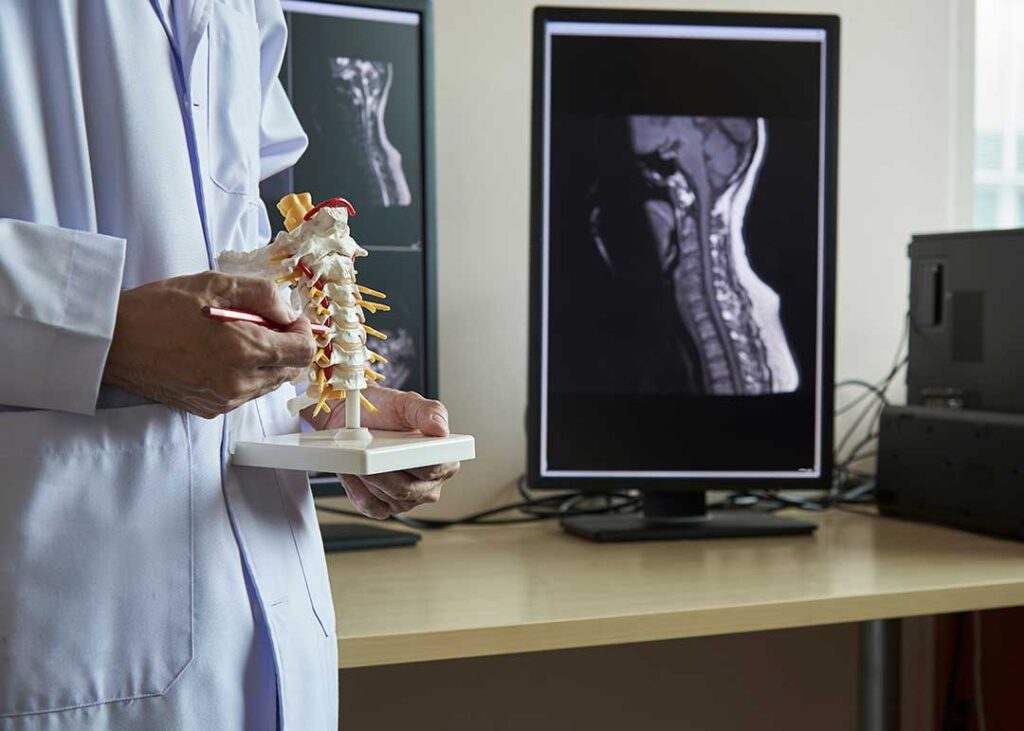
No. Imaging can be useful, but scan findings do not always explain pain. Disc bulges, arthritis, and other age-related changes are common in people who have no symptoms.
An MRI may be considered when there are warning signs, significant neurological symptoms, a history of serious injury, or pain that does not improve as expected. It is not automatically necessary for every new episode of back pain.
A scan should be interpreted alongside the person’s symptoms, physical findings, medical history, and functional changes. Treating an image rather than the individual can lead to unnecessary worry or procedures.
Is severe pain always a sign of a serious condition?

Not always. A muscle spasm or irritated joint can cause intense pain without representing a dangerous disease. Pain intensity by itself does not reliably measure the severity of an underlying problem.
However, certain symptoms warrant prompt medical evaluation. These include:
- New loss of bladder or bowel control
- Numbness around the inner thighs or groin
- Progressive weakness in a leg or foot
- Inability to walk normally
- Back pain after a major fall or collision
- Fever, unexplained weight loss, or feeling acutely ill
- A history of cancer, significant immune suppression, or serious infection
- Severe pain that is constant, worsening, or unrelated to movement
These warning signs are uncommon, but they should not be ignored.
Does exercise damage an already painful back?
Usually, appropriate exercise supports recovery rather than causing harm. The type, intensity, and timing matter.
During an acute flare-up, high-impact activity, heavy lifting, repeated bending, or forceful twisting may aggravate symptoms. That does not mean all exercise must stop. Walking, gentle mobility, and gradual strengthening may be better tolerated.
As symptoms settle, rebuilding strength in the hips, legs, abdomen, and back can improve confidence with movement. Exercise should progress gradually, with attention to how symptoms respond during the activity and later that day or the next morning.
Pain that repeatedly worsens after exercise may indicate that the activity is too difficult, too frequent, or being performed with poor control.
Can stress cause real back pain?
Yes. Stress does not mean the pain is imaginary. Ongoing stress can increase muscle tension, disrupt sleep, heighten sensitivity to discomfort, and make recovery feel slower.
Work demands, caregiving, financial concerns, and poor sleep may all influence how the nervous system processes pain. This can create a cycle in which pain reduces activity, reduced activity affects mood and strength, and anxiety makes movement feel more threatening.
Addressing sleep, relaxation, pacing, and regular movement can be part of a sensible back-care plan. These steps do not replace medical evaluation when warning signs are present.
Is every back-pain episode caused by aging?
No. Age-related changes are common, but pain is not an unavoidable consequence of getting older. People of any age can experience back pain after changes in activity, prolonged sitting, sports, lifting, or an awkward movement.
Older adults may have additional factors that deserve attention, including osteoporosis, balance problems, medication effects, or a greater risk of fracture after a fall. Younger adults may be more likely to develop symptoms from repetitive work, athletic activity, or extended screen time.
The most useful questions are often: What changed before the pain began? What movements affect it? Is strength or sensation changing? Is the condition improving, stable, or worsening?
When should back pain be evaluated?
Back pain that is mild and improving may be monitored with continued gentle activity and basic self-care. Evaluation becomes more appropriate when pain persists beyond the expected recovery period, repeatedly returns, limits ordinary function, or travels into an arm or leg.
Prompt attention is especially important for progressive weakness, significant numbness, trauma-related pain, fever, unexplained illness, or changes in bladder or bowel function.
For residents managing seasonal chores, commuting, home maintenance, or physically demanding work, pacing tasks and avoiding sudden increases in activity can reduce unnecessary strain. The central lesson is simple: back pain deserves neither panic nor dismissal. Accurate information, gradual movement, and attention to warning signs provide a more reliable foundation than common myths.
