
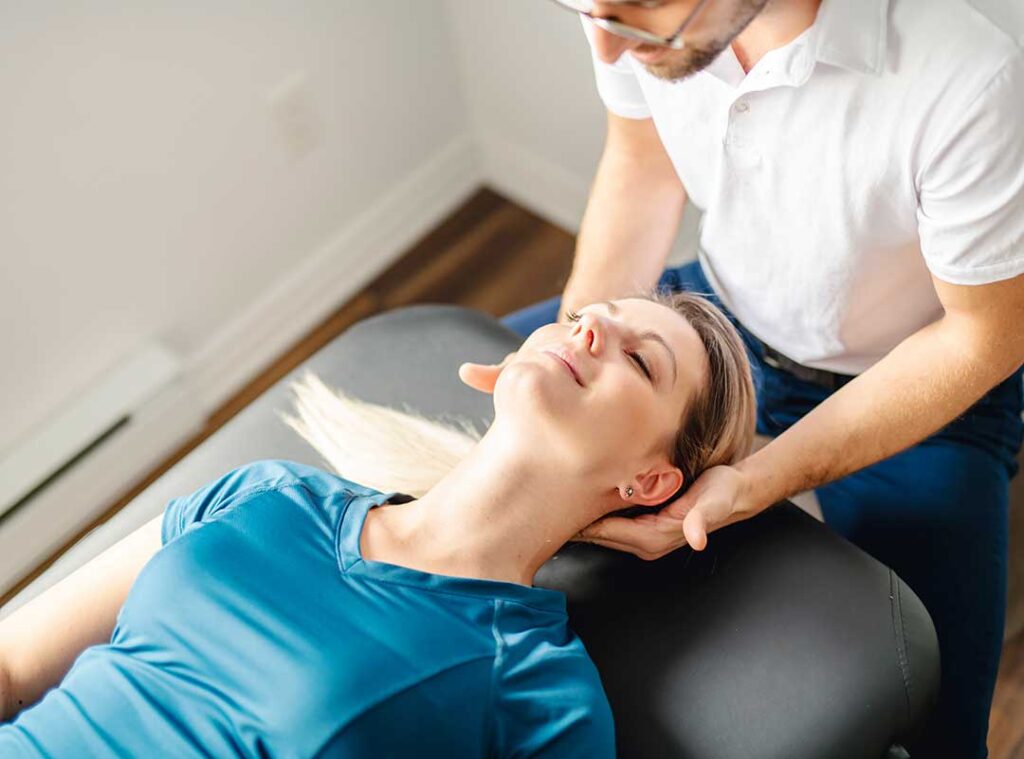
Jaw pain is sometimes connected with tension or reduced movement in the neck and upper back, but the relationship is not as simple as “poor posture causes TMJ problems.” Jaw disorders have many possible causes, and spinal health is one factor that may influence symptoms rather than explain every case.
What does jaw pain have to do with the spine?
The jaw, neck, and upper back work together through overlapping muscles, nerves, joints, and movement patterns. The temporomandibular joints, often called the jaw joints, sit just in front of the ears and allow the mouth to open, close, slide, and chew.
Several muscles that help control the jaw also connect with the skull, neck, shoulders, or upper chest. If the neck becomes stiff or the upper shoulder muscles remain tense, the chewing muscles may work harder than usual. In the other direction, persistent jaw clenching or painful chewing can cause a person to hold the head and neck differently.
This can create a cycle:
- Jaw pain leads to guarded movement.
- Guarded movement increases muscle tension.
- Neck stiffness changes how the head is supported.
- Increased tension may make jaw movement more uncomfortable.
That does not mean a spinal adjustment or posture change will resolve every jaw problem. Jaw pain can also result from tooth-related conditions, arthritis, injury, disc displacement, inflammation, stress-related clenching, or other medical causes.
What symptoms may suggest a jaw-and-neck connection?
A connection is more likely when jaw symptoms occur alongside neck or upper-back complaints. Common patterns include pain that changes with chewing, prolonged sitting, stress, or certain head positions.
Possible symptoms include:
- Aching in the jaw muscles or near the ears
- Clicking, popping, or grating during jaw movement
- Headaches around the temples or forehead
- Neck stiffness or pain at the base of the skull
- Shoulder tension
- Difficulty opening the mouth fully
- Facial pain that spreads toward the neck
- Jaw fatigue after eating or speaking
- Tooth wear or morning jaw soreness associated with nighttime clenching
Jaw sounds without pain, locking, or limited movement are common and do not always indicate a serious disorder. Pain, repeated locking, swelling, or a noticeable change in the bite deserves closer attention.
Can poor posture cause TMJ disorders?
Posture may contribute to symptoms, but research has not established a single posture-related cause of temporomandibular disorders. Studies have found that some people with jaw disorders also have neck stiffness, reduced endurance in neck muscles, or difficulty moving the upper spine. However, the exact relationship between head posture and jaw disease remains uncertain.
A forward head position during extended screen use may increase fatigue in the neck and shoulder muscles. It may also encourage teeth to remain lightly touching, particularly during concentration. Still, there is no universal “perfect posture,” and trying to force the head backward or hold the shoulders rigid can create additional tension.
A better goal is comfortable variation:
- Keep screens near eye level rather than looking downward for long periods.
- Change sitting positions regularly.
- Let the shoulders rest instead of holding them elevated.
- Keep the teeth slightly apart when not eating.
- Avoid resting the chin on a hand for extended periods.
- Take brief movement breaks during desk work, commuting, or household tasks.
In Lynbrook, indoor routines may become more sedentary during colder months or periods of heavy rain. Longer stretches of screen use, driving, and home-based work can make jaw and neck tension more noticeable, especially when breaks are limited.
How can spinal problems affect jaw movement?
Neck stiffness does not directly damage the jaw joint in most cases. Its effect is more often related to muscle coordination, sensitivity, and movement habits.
For example, a person with limited upper-neck motion may rotate the head and upper body differently while eating, working, or sleeping. Tight muscles around the neck and shoulders may also increase the sense of pressure around the face. When pain has continued for weeks, the nervous system can become more sensitive, making normal movements feel uncomfortable.
The relationship may also work in reverse. A person protecting a painful jaw may avoid turning the head, chew on one side, or keep the jaw held in a guarded position. Over time, that can contribute to uneven muscle use and neck discomfort.
This is why a careful evaluation should consider the jaw, teeth, neck, shoulders, sleep habits, stress, recent injuries, and daily activities rather than focusing on the spine alone.
What can residents try at home?

For mild symptoms that are not worsening, simple measures may reduce irritation:
- Choose softer foods temporarily if chewing is painful.
- Avoid gum, chewy foods, and very wide bites.
- Apply a warm, not hot, compress to tense jaw or neck muscles.
- Practice slow, comfortable neck movement without forcing the range.
- Notice whether the teeth are touching during the day.
- Support the neck comfortably during sleep rather than sleeping with the head sharply bent.
- Write down when symptoms occur, including after meals, stressful periods, waking, or long screen sessions.
Do not repeatedly test a painful jaw by opening it as wide as possible. Avoid forceful stretching, aggressive massage over the joint, or exercises that increase clicking, locking, or pain.
A night guard should not be selected casually because different jaw problems require different approaches. Dental causes of pain, tooth damage, and changes in the bite should be assessed by a dentist or other qualified oral-health professional.
When should jaw pain be evaluated promptly?
Persistent or severe symptoms should not be attributed to posture alone. Medical or dental evaluation is especially appropriate when jaw pain is constant, suddenly appears, follows an injury, or interferes with eating or sleeping.
Seek prompt care for:
- Inability to fully open or close the mouth
- A jaw that locks
- Significant swelling, fever, or redness
- New numbness or weakness
- Severe headache with neurological symptoms
- Difficulty swallowing or breathing
- Chest pressure, sweating, shortness of breath, or pain spreading to the jaw
The last group may signal a medical emergency rather than a musculoskeletal problem.
What type of assessment is useful?
A useful assessment looks for patterns rather than assuming that one structure is responsible. It may include the jaw’s opening and closing motion, tenderness in the chewing muscles, neck mobility, shoulder tension, recent trauma, dental symptoms, clenching, sleep quality, and the effect of daily activities.
Treatment depends on the cause. Some people improve with activity changes, stress reduction, dental care, physical therapy, or carefully selected exercises. Others need evaluation for arthritis, injury, infection, nerve-related pain, or a problem inside the jaw joint.
The most accurate understanding is that jaw pain and spinal health can influence one another through shared muscles and movement patterns, but neither should be treated as the automatic cause of the other.
