
Sports concussions cannot always be prevented, but athletes, families, coaches, and schools can reduce risk by limiting unnecessary head impacts, using properly fitted protective equipment, teaching safer techniques, and responding quickly when symptoms appear. Prevention is not limited to one sport or age group; it applies to children, teens, and adults participating in organized athletics, recreation, cycling, skating, and fitness activities.
What causes a sports concussion?
A concussion is a mild traumatic brain injury caused by a bump, blow, or jolt that makes the brain move rapidly inside the skull. The impact does not have to be directly to the head. A forceful hit to the body can also cause the head and brain to move suddenly.
Concussions may occur in football, soccer, basketball, lacrosse, hockey, baseball, softball, wrestling, volleyball, gymnastics, cheerleading, cycling, skating, and other activities. Symptoms can begin immediately or develop hours later.
Common symptoms include:
- Headache or pressure in the head
- Dizziness, balance problems, or nausea
- Blurred vision or sensitivity to light and noise
- Feeling slowed down, foggy, or confused
- Difficulty concentrating or remembering
- Unusual irritability, sadness, nervousness, or fatigue
- Sleeping more or less than usual
A person does not need to lose consciousness to have a concussion. In fact, most concussions do not involve a loss of consciousness.
Which prevention steps make the biggest difference?
The most effective approach combines safer rules, proper training, equipment, and an environment where athletes can report symptoms without fear of losing playing time.
Teach athletes to avoid head-first contact
Athletes should learn sport-specific techniques that keep the head out of contact situations. In collision sports, this includes keeping the head up, avoiding leading with the crown of the helmet, and using the legs and torso rather than the head to make contact.
Coaches can reduce risk by:
- Limiting unnecessary contact during practices
- Teaching and reinforcing legal, controlled techniques
- Avoiding drills that reward dangerous collisions
- Following age-appropriate rules and restrictions
- Correcting unsafe behavior consistently
- Allowing adequate rest between demanding practices and games
Skill development should not focus only on performance. Knowing how to fall, brace, turn away from contact, and protect the head can also reduce injury risk.
Do helmets prevent concussions?
Helmets are essential for reducing the risk of skull fractures and other serious head injuries, but no helmet can prevent every concussion. A helmet should be appropriate for the activity, the athlete’s age and size, and the rules of the sport.
Families should check that protective equipment:
- Fits securely without shifting during movement
- Is in good condition and has not been damaged
- Is used according to the manufacturer’s instructions
- Is replaced when required by safety standards or after a significant impact
- Includes any required face protection, mouth protection, or padding
A helmet that is loose, worn incorrectly, or used for the wrong activity may not provide its intended protection. Equipment should not create a false sense of security or encourage more aggressive play.
Mouthguards may help protect teeth and the mouth, but they should not be described as reliable concussion prevention devices. The main protection comes from safer play, sound technique, and appropriate rules.
How can families prepare before the season?
Preparation should begin before the first practice. Parents and athletes can ask whether the team has a written concussion policy, who is responsible for recognizing injuries, and how return-to-play decisions are handled.
It is also useful to:
- Share a child’s prior concussion history with the appropriate school or sports health staff
- Make sure emergency contacts and health information are current
- Discuss symptoms that must be reported immediately
- Reinforce that hiding a headache or dizziness can make recovery more difficult
- Encourage gradual conditioning rather than sudden intense exercise
- Address sleep, hydration, nutrition, and recovery between practices
For young athletes, a preseason conversation can be more effective than a single warning after an injury. Children may not recognize that feeling “off,” unusually tired, or unable to concentrate can be medically relevant.
What local conditions deserve extra attention?
Seasonal conditions can affect sports safety in Lynbrook. Outdoor fields may become slippery after rain, and cold-weather activities can involve hard playing surfaces, reduced flexibility, or bulky clothing that affects movement. During warmer months, heat and dehydration may contribute to fatigue and slower reactions.
Before activity, coaches and families should consider:
- Wet or uneven grass and pavement
- Poor visibility during evening practices
- Crowded indoor courts or gym spaces
- Hard surfaces around goals, boards, walls, or playground equipment
- Whether athletes have adequate breaks and access to water
- Whether cycling, skating, or scooter helmets fit correctly
These factors do not cause every concussion, but they can increase the chance of falls, collisions, or delayed reactions.
What should happen after a suspected concussion?
An athlete with a possible concussion should be removed from play immediately and should not return the same day unless cleared under the applicable sports safety protocol by an appropriately qualified healthcare professional. Continuing to play can increase the risk of another injury and may prolong recovery.
Do not use a brief symptom check, online quiz, or the athlete’s insistence that they feel fine as the only basis for returning to play. Symptoms can be subtle, and young athletes may minimize them because they want to continue participating.
Seek emergency care immediately for danger signs such as:
- Worsening or severe headache
- Repeated vomiting
- Increasing confusion, unusual behavior, or inability to recognize people or places
- Seizure
- Weakness, numbness, slurred speech, or poor coordination
- Trouble waking up or unusual drowsiness
- One pupil appearing larger than the other
- Loss of consciousness, especially if the person does not quickly return to normal
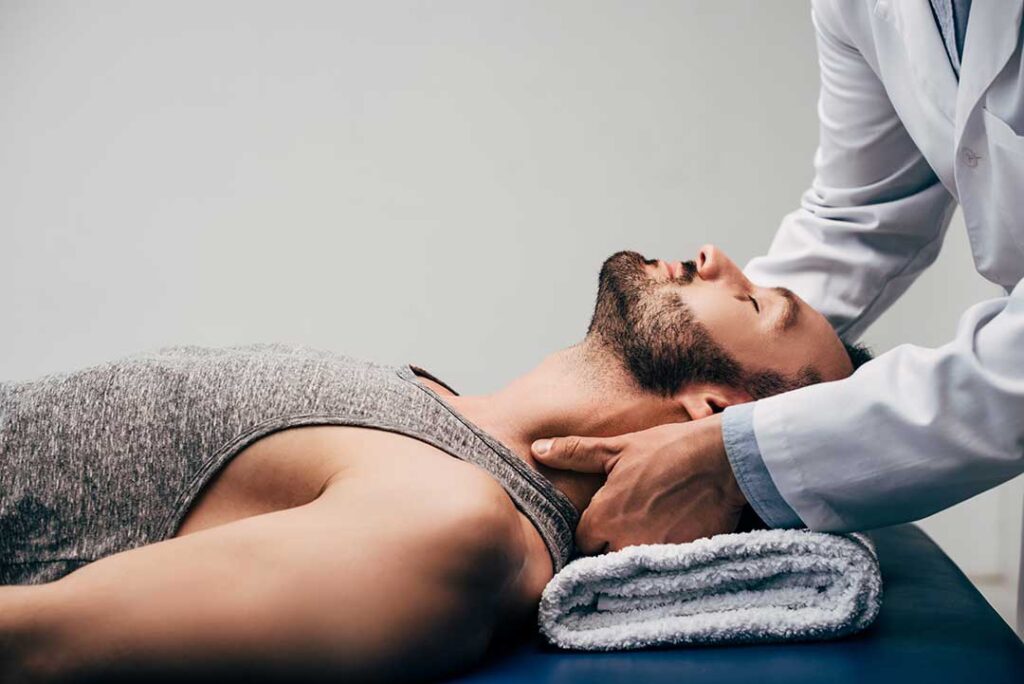
A suspected concussion requires appropriate medical assessment. Chiropractic care, stretching, massage, or exercise should not replace concussion evaluation, emergency care, or a structured return-to-school and return-to-sport plan. Any treatment involving the neck or spine should wait until serious injury has been considered and the person has received suitable guidance.
How does a safe return to sports work?
Return to sports should be gradual and symptom-guided. The athlete generally begins with ordinary daily activities, then progresses through light aerobic activity, sport-specific movement, noncontact drills, controlled practice, and finally competition. Each step should be completed without a return or worsening of symptoms.
If symptoms reappear, the athlete should stop, return to the previous tolerated activity level, and seek further guidance. Schoolwork may also need temporary adjustments, such as reduced screen time, rest breaks, or shortened assignments.
The safest sports culture is one in which reporting symptoms is treated as responsible behavior rather than weakness. Prevention depends not only on helmets and rules, but also on adults who listen, athletes who speak up, and teams that place brain health ahead of a single practice or game.
