
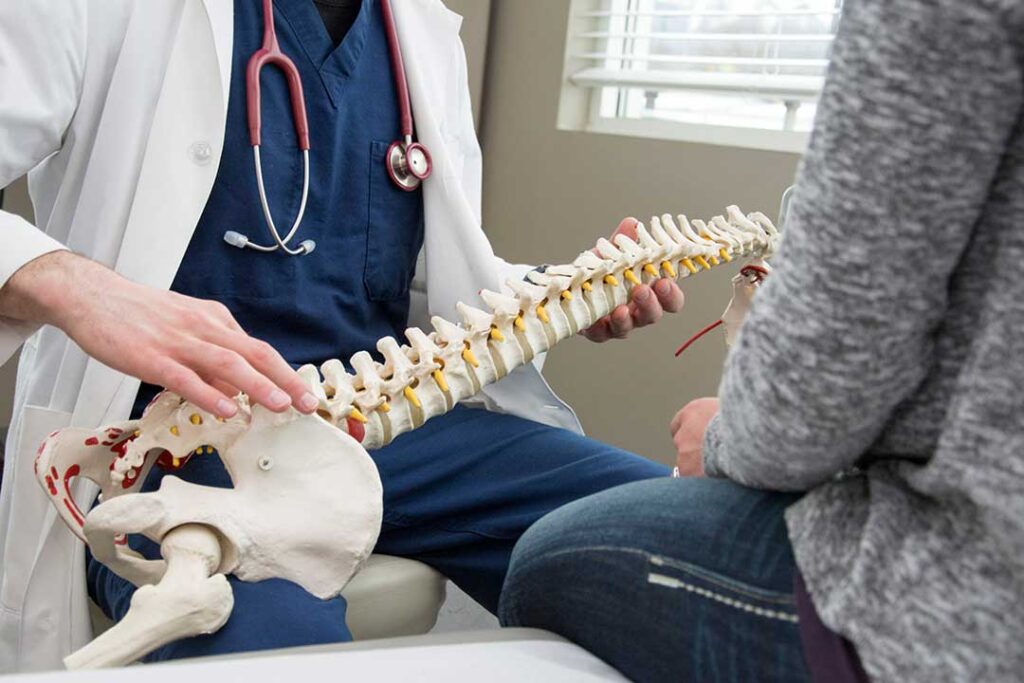
High heels can change more than the position of the feet. They may alter walking mechanics, balance, muscle activity, and the way forces travel through the ankles, knees, hips, pelvis, and lower back. For residents of Lynbrook, NY, these effects can become more noticeable during long commutes, formal events, shopping trips, or walks over uneven sidewalks.
High heels do not automatically cause back problems for every person. Risk depends on heel height, shoe shape, time spent wearing the shoes, walking surface, body mechanics, and existing foot or spinal conditions.
Why can high heels contribute to back pain?
High heels place the foot in a downward-pointing position. This shifts more body weight toward the ball of the foot and changes the body’s center of gravity. To remain upright, the knees, hips, pelvis, and lower back may adjust.
One common adjustment is increased arching of the lower back. The pelvis may tilt forward, while the muscles around the lower back and hips work harder to stabilize the body. After several hours, this can contribute to:
- Aching across the lower back
- Tightness in the hip flexors
- Fatigue in the buttock and thigh muscles
- Stiffness after sitting or removing the shoes
- Pain that becomes more noticeable later in the day
The effect is often related to duration. A person may tolerate heels for a short event but develop soreness after standing, walking, or working in them for several hours.
Do high heels affect the knees and hips too?
Yes. The changes begin at the feet but can continue up the lower body. A raised heel reduces normal ankle motion and may cause the knees to remain slightly bent while walking. This can increase stress around the knee joint and require greater effort from the thigh muscles.
The hips may also move differently to maintain balance. Some people take shorter steps, rotate the legs outward, or place the feet more carefully. These changes may not cause immediate pain, but repeated movement patterns can contribute to muscle fatigue and joint irritation.
A narrow toe box adds another concern. It compresses the toes and can contribute to bunions, corns, calluses, or hammertoe changes. Foot discomfort can then affect the way a person walks, creating additional strain farther up the body.
Are higher heels more harmful than lower heels?
Generally, taller heels create a greater change in foot position and balance. They also tend to move more weight toward the front of the foot. However, height is not the only factor.
A shoe may be difficult to tolerate if it has:
- A narrow or pointed toe box
- A thin, unstable heel
- A rigid sole
- Poor cushioning
- A loose fit that allows the foot to slide
- Excessive wear on the heel or sole
A lower, wider heel with adequate room for the toes may be easier to manage than a taller, narrow heel. Platform designs can sometimes reduce the angle between the heel and the front of the foot, although they may create a separate risk of tripping or ankle rolling.
Can high heels cause permanent spine damage?
Occasional heel use does not usually mean permanent spinal damage. Temporary soreness, muscle fatigue, and stiffness are more common concerns.
Long-term, frequent use may contribute to recurring strain, especially when combined with weak hip muscles, limited ankle flexibility, poor balance, or an existing back condition. Still, back pain has many possible causes. High heels may aggravate symptoms without being the original source.
Pain that continues after changing footwear deserves attention rather than being blamed entirely on shoes. Symptoms may involve the muscles, joints, discs, nerves, or another condition unrelated to footwear.
What can reduce strain while wearing heels?
The most effective approach is to reduce both the mechanical stress and the amount of time spent in the shoes. Practical adjustments include:
- Choose the lowest heel that meets the need for the occasion.
- Prefer a wider, more stable heel over a narrow stiletto.
- Select shoes with enough room for the toes to lie naturally.
- Avoid shoes that pinch, slip, or force the foot forward.
- Use supportive, lower-heeled footwear for walking and change later when practical.
- Sit periodically instead of standing continuously.
- Avoid carrying a heavy bag on one side while walking in unstable shoes.
- Stretch the calves gently after removing the shoes.
- Replace shoes when the heel becomes uneven or the sole loses traction.
These steps are especially useful during rainy, icy, or snow-covered conditions. Wet pavement, uneven sidewalks, and packed snow reduce traction and make balance more difficult. A shoe that feels manageable indoors may be less stable during outdoor walking.
What stretches and exercises may help?
Gentle calf stretching can help address the tightness that develops when the ankle remains pointed downward. A basic stretch involves standing with both hands supported, keeping one heel on the floor, and slowly shifting the body forward. The movement should feel mild rather than painful.
Strengthening the hips and legs may also improve stability. Exercises such as controlled sit-to-stands, bridges, side-leg lifts, and supported single-leg balance can help build strength used during walking. Progress should be gradual, particularly if there is existing knee, hip, or back pain.
Stretching should not be forced. Numbness, sharp pain, weakness, or symptoms traveling down the leg are reasons to stop and seek medical evaluation.
Should someone stop wearing high heels completely?
Not necessarily. Many people can wear heels occasionally without significant problems. The goal is to recognize personal limits and avoid treating pain as something that must simply be endured.
A useful self-check is whether discomfort:
- Appears sooner each time heels are worn
- Lasts into the following day
- Changes walking style
- Causes limping or reduced balance
- Occurs along with foot numbness or swelling
- Reappears even in supportive, flat footwear
If these patterns develop, reducing heel height and wear time can help reveal whether footwear is contributing to the problem.
When does back or foot pain need medical attention?
Prompt evaluation is appropriate for back pain accompanied by leg weakness, loss of bladder or bowel control, numbness in the groin area, fever, unexplained weight loss, or pain after a significant fall.
Foot and ankle injuries also need timely assessment when there is severe swelling, inability to bear weight, visible deformity, or pain that does not begin improving. Persistent back, hip, knee, or foot symptoms may require an examination to identify whether the main issue is footwear, movement mechanics, an injury, or another medical condition.
For many local residents, the practical answer is not an all-or-nothing rule about heels. Limiting height, improving fit, taking walking breaks, and using stable footwear on uneven outdoor surfaces can reduce unnecessary stress throughout the lower body.
