
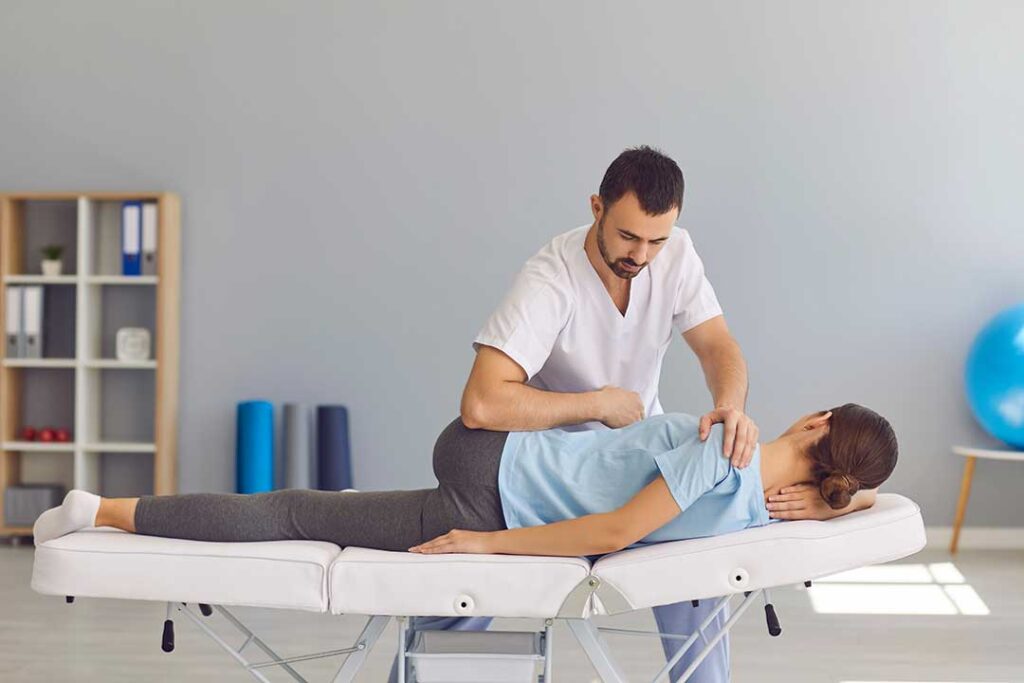
Scoliosis is a sideways curve of the spine that may also involve rotation of the vertebrae. It can appear during childhood, adolescence, or adulthood. For residents of Lynbrook, NY, a common question is whether chiropractic care can straighten the spine or stop scoliosis from progressing.
The short answer is that chiropractic treatment may help some people manage related discomfort, stiffness, or movement limitations, but current evidence does not show that spinal adjustments correct the underlying curve or reliably prevent scoliosis from worsening.
What is scoliosis?
Scoliosis is more than poor posture. A person with scoliosis may have a curved and rotated spine that creates uneven shoulders, a prominent shoulder blade, an uneven waistline, or a difference in hip height.
Some curves are mild and cause no symptoms. Others may contribute to:
- Back or rib-area discomfort
- Muscle fatigue after standing or sitting
- Uneven movement during walking or exercise
- Reduced flexibility
- Breathing limitations in severe cases
The most common form in adolescents is called idiopathic scoliosis, meaning the exact cause is not known. Adult scoliosis may result from a curve that began earlier in life, age-related changes in the spinal joints and discs, or a combination of these factors.
Can chiropractic care straighten a curved spine?
No reliable evidence shows that chiropractic adjustments can permanently straighten a structural scoliosis curve.
A spinal adjustment may temporarily change joint movement, muscle tension, or the way a person experiences pain. That is different from changing the measured angle of the spinal curve. Scoliosis is usually evaluated with a physical examination and, when appropriate, standing X-rays that measure the curve in degrees.
This distinction matters because a person may stand more comfortably or feel less stiff after treatment without the scoliosis itself being corrected. Claims that repeated adjustments can eliminate a structural curve or replace established scoliosis treatment should be viewed cautiously.
What symptoms might chiropractic care help manage?
Chiropractic care may have a role in managing certain musculoskeletal symptoms associated with scoliosis, particularly when treatment focuses on comfort and function rather than curve correction.
Possible goals may include:
- Improving short-term spinal or hip mobility
- Reducing muscle tightness
- Supporting comfortable movement
- Addressing ordinary mechanical back pain
- Developing a home program involving mobility and strengthening
Evidence for spinal manipulation is stronger for some types of general low-back pain than it is for scoliosis itself. If symptoms improve, the benefit may come from reducing muscle guarding, improving movement, or addressing a separate source of pain near the curved area.
Care should be individualized. A person with scoliosis may have different needs depending on age, curve location, curve severity, arthritis, osteoporosis, previous surgery, nerve symptoms, and overall health.
What treatments are used to manage scoliosis?
Treatment depends on the person’s age, remaining growth, curve size, symptoms, and risk of progression.
For children and adolescents, common medical approaches include:
- Observation for smaller curves
- Periodic examinations and imaging when needed
- Bracing for selected growing children with moderate curves
- Surgery for selected severe or progressive curves
For adults, treatment often emphasizes symptom control, strength, mobility, and function. Options may include exercise-based rehabilitation, medication when appropriate, physical therapy, and specialist evaluation. Surgery is considered in selected cases involving significant progression, severe pain, nerve compression, or major functional limitations.
Scoliosis-specific exercises may help some people improve posture, body awareness, breathing mechanics, and daily function. They should not be presented as a guaranteed method for reversing the spinal curve.
Is chiropractic treatment safe for someone with scoliosis?
Chiropractic treatment is not automatically unsafe for every person with scoliosis, but scoliosis is a reason for careful evaluation rather than routine, forceful treatment.
Mild soreness, stiffness, or a temporary increase in discomfort can occur after spinal manipulation. Risk may be greater when a person has osteoporosis, spinal instability, inflammatory disease, a history of spinal surgery, a significant disc problem, or other conditions affecting bone or nerve health.
Children and teenagers require particular caution. Their spines are still developing, and any manual treatment should be appropriate for their age and coordinated with evaluation of the curve.

High-velocity neck manipulation deserves separate consideration because rare but serious vascular or neurological complications have been reported. A person should not assume that a neck adjustment is necessary simply because scoliosis is present.
When should someone seek medical evaluation first?
A medical evaluation is especially important when scoliosis is newly noticed, rapidly changing, or accompanied by symptoms that do not fit ordinary muscle soreness.
Prompt evaluation is appropriate for:
- Numbness, tingling, or weakness in an arm or leg
- Loss of balance or difficulty walking
- New bowel or bladder problems
- Severe or steadily worsening pain
- Pain that repeatedly wakes someone at night
- Fever, unexplained weight loss, or unusual fatigue
- A recent fall or other injury
- A child whose shoulder, waist, or hip asymmetry is becoming more noticeable
In the community, everyday habits can also affect symptoms. Long periods of sitting, carrying heavy school bags, working from home, or reduced outdoor activity during cold or rainy seasons may increase stiffness. These factors can aggravate discomfort without being the cause of scoliosis.
How can residents make chiropractic care more useful?
If someone with scoliosis chooses chiropractic care, the most reasonable approach is to use it as one part of a broader plan. The goals should be specific and measurable, such as walking more comfortably, improving sleep, or reducing pain during household activities.
Useful questions include:
- Is the goal pain relief, improved movement, or curve correction?
- How will progress be measured?
- Are exercises part of the plan?
- What symptoms would require referral or imaging?
- Should care be coordinated with a physician, physical therapist, orthopedist, or other clinician?
- What treatment should be avoided because of age, osteoporosis, surgery, or nerve symptoms?
A plan that promises to “realign” or permanently straighten scoliosis through adjustments alone does not reflect the current evidence. A plan that emphasizes assessment, safe movement, strengthening, symptom monitoring, and appropriate referral is more consistent with responsible care.
For most people, the practical question is not whether chiropractic care can cure scoliosis. It is whether a carefully selected treatment can improve comfort and function without delaying evaluation or treatment that may be needed to monitor the curve itself.
