

Which sleeping position is healthiest for the spine?
The healthiest sleeping position is the one that keeps the head, shoulders, hips, and spine in a comfortable, neutral alignment. For many people, that means sleeping on the side with support between the knees or on the back with support beneath the knees.
There is no single position that works equally well for every body. Sleep quality, existing back or neck pain, breathing problems, pregnancy, shoulder conditions, and personal comfort all matter. A useful position should reduce strain rather than create pressure, twisting, or numbness.
For residents of Lynbrook, NY, sleep habits may also change with the seasons. A warmer bedroom in summer, dry indoor air during winter, or a mattress placed in a smaller bedroom can affect comfort and movement during the night. The goal is not a rigid posture but a supported position that allows relaxed, uninterrupted sleep.
Is side sleeping good for the back?
Yes. Side sleeping can be comfortable for the back when the hips and shoulders remain stacked and the spine is not bent sharply forward or backward.
Try these adjustments:
- Keep the knees slightly bent rather than pulling them tightly toward the chest.
- Place a pillow between the knees to keep the pelvis from rotating forward.
- Use a head pillow thick enough to keep the neck level with the rest of the spine.
- Avoid letting the top shoulder collapse toward the mattress.
- If the waist does not reach the mattress, a small, soft support beneath it may reduce sagging.
A full-length pillow can help people who move frequently during sleep. It may support the upper leg, abdomen, and arms at the same time. People with hip, shoulder, or knee pain may need to experiment with which side feels less compressed.
Side sleeping is also often more comfortable for people who snore or have breathing symptoms at night. However, persistent loud snoring, choking sensations, or pauses in breathing should not be treated as a simple sleep-position problem.
Can sleeping on the back help spinal alignment?
Back sleeping allows the body to rest symmetrically and may reduce twisting through the pelvis and torso. It is often helpful for people who prefer an even distribution of pressure.
A pillow beneath the knees can reduce tension through the lower back by allowing the hips and knees to bend slightly. The head pillow should support the natural curve of the neck without pushing the chin toward the chest.
Signs that a back-sleeping setup may need adjustment include:
- Morning stiffness that improves only after moving around
- A pillow that causes the head to tilt sharply upward
- A noticeable gap beneath the lower back that feels uncomfortable
- Increased pressure in the low back or tailbone
A small rolled towel may provide gentle support beneath the lower back for some people, but it should not create an exaggerated arch. If the position increases pain, tingling, or leg symptoms, another arrangement may be more suitable.
People who have sleep apnea, significant snoring, or difficulty breathing may find that lying flat on the back worsens symptoms. In those cases, side sleeping or a slightly elevated position may be more comfortable, but breathing-related symptoms deserve medical attention.
Is stomach sleeping harmful?
Stomach sleeping is not automatically harmful, but it commonly creates alignment problems. The head usually has to turn to one side for several hours, which can strain the neck. The lower back may also arch more than usual, especially on a soft mattress.
If changing positions is difficult, reduce strain by:
- Using a very thin head pillow or no head pillow if comfortable
- Placing a thin pillow beneath the lower abdomen or hips
- Avoiding a sharply twisted neck
- Alternating the direction the head faces rather than always turning the same way
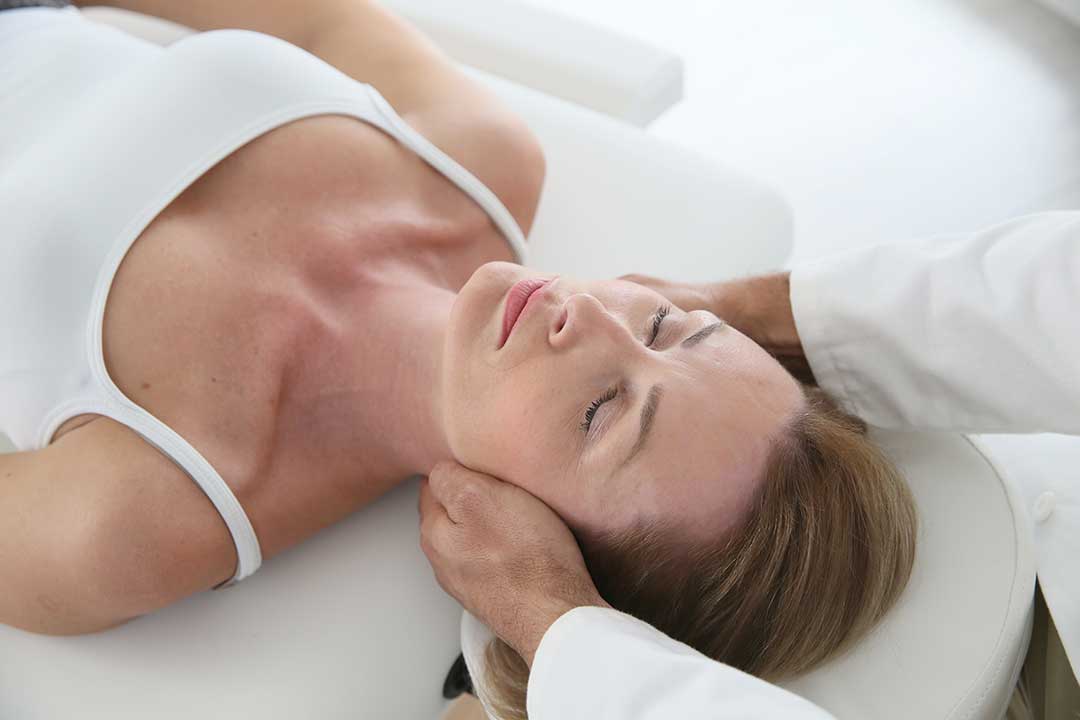
Gradually transitioning to side or back sleeping may be easier than trying to change overnight. Placing a pillow along the front of the body can make side sleeping feel more secure for people who are accustomed to lying on their stomach.
How should a pillow support the neck?
The right pillow keeps the neck in line with the chest and upper back. Pillow height depends largely on sleeping position, shoulder width, mattress firmness, and body shape.
Side sleepers generally need more height because the shoulder creates space between the head and mattress. Back sleepers often need a lower pillow that supports the neck without forcing the head forward. Stomach sleepers typically need the least height.
A pillow that is too high may cause morning neck pain, headaches, or stiffness between the shoulder blades. One that is too flat may allow the head to drop toward the mattress. A practical test is to ask whether the nose points generally toward the ceiling when lying on the back, or stays in line with the center of the chest when lying on the side.
Pillows also change over time. Flattened filling, uneven support, and visible lumps can alter spinal alignment even if the pillow once felt comfortable.
Does the mattress affect spinal health?
Yes. A mattress should support the body without allowing the hips to sink deeply or creating uncomfortable pressure at the shoulders and ribs. Very firm does not always mean supportive, and very soft does not always mean comfortable.
A useful check is whether the spine appears relatively straight in the usual sleeping position. For side sleepers, the hips should not sink so far that the waist bends downward. For back sleepers, the lower back should feel supported without being forced into an arch.
People in area households may also sleep on older mattresses in guest rooms, children’s rooms, or multipurpose spaces. Rotating a mattress according to its care instructions, checking for sagging, and replacing visibly deteriorated bedding may improve support more than adding extra pillows.
What position is best for specific problems?
For general lower-back discomfort, side sleeping with a pillow between the knees or back sleeping with a pillow beneath the knees often reduces strain.
For neck stiffness, the priority is keeping the neck neutral. A pillow that is too tall, sleeping with the arm above the head, or resting on the stomach may aggravate symptoms.
For leg pain or tingling, position changes may help, but symptoms that travel below the knee, cause weakness, or repeatedly interrupt sleep should not be managed only by changing pillows.
During pregnancy, side sleeping with support between the knees and beneath the abdomen may improve comfort. Advice may vary according to the stage of pregnancy and individual health circumstances.
When is nighttime back pain a warning sign?
Occasional stiffness after sleeping in an awkward position is common. Prompt medical evaluation is more appropriate when back pain is severe, follows a significant injury, or occurs with new weakness, loss of bladder or bowel control, numbness around the groin, fever, unexplained weight loss, or persistent pain that does not improve.
Pain that repeatedly wakes someone from sleep, progressively worsens, or is accompanied by unusual symptoms also deserves attention. Sleep positioning can reduce mechanical strain, but it cannot correct every cause of back or neck pain.
A comfortable starting point is simple: try side sleeping with a pillow between the knees, or back sleeping with support beneath the knees. Keep the neck level, avoid prolonged twisting, and judge the position by how the body feels during the night and the following morning.
