

Clicking, popping, or cracking in the neck is common and often harmless, especially when it happens without pain or other symptoms. The sound is sometimes called crepitus and may come from normal joint movement, changes in pressure inside a joint, tendons moving over nearby structures, or age-related changes in the cervical spine.
For residents of Lynbrook, NY, occasional neck noise may be noticed after sleeping in an awkward position, spending hours at a computer, looking down at a phone, or becoming less active during cold weather. The sound itself is usually less important than what accompanies it.
What causes clicking in the neck?
Neck clicking can have several explanations, and more than one may be present at the same time.
Pressure changes inside the joints
The small joints between the neck bones contain fluid that helps them move smoothly. When the neck changes position, pressure inside a joint can shift. This may create a popping sound, similar to the noise people hear when other joints crack.
This type of clicking is generally not a sign that bones are rubbing together or that the neck is being damaged. It may happen occasionally when turning the head, stretching, or looking over one shoulder.
Tendons and ligaments moving
Tendons and ligaments connect muscles and bones and help guide movement. A tendon may move slightly over a bony area as the neck turns, producing a snapping or clicking sensation.
This is more noticeable when the surrounding muscles are tight or fatigued. Long periods of driving, desk work, phone use, or household tasks can contribute to muscle tension and altered movement patterns.
Muscle tightness and posture
Forward-head posture can increase the workload on the muscles at the back and sides of the neck. This position is common during laptop work, gaming, reading, sewing, and phone use.
Poor posture does not necessarily mean the neck is permanently damaged. However, sustained positioning can make the muscles feel stiff and may cause clicking when the head returns to a more upright position.
The same pattern can occur after sleeping with the head turned, using a pillow that does not provide comfortable support, or remaining still for a long period. Seasonal habits may also play a role when people spend more time indoors and move less during colder or wet weather.
Age-related joint changes
As people age, the discs and joints in the cervical spine may gradually change. The discs can lose some height and flexibility, while the small spinal joints may develop mild arthritic changes.
These changes can produce rougher movement, stiffness, or a grinding sensation. Imaging may show age-related findings even in people who have little or no pain, so a neck sound alone does not establish a diagnosis.
Is neck clicking dangerous?
Neck clicking without pain, swelling, weakness, numbness, or loss of motion is usually not dangerous. Many healthy people notice occasional sounds when they rotate or extend the neck.
A sound deserves more attention when it is:
- New and persistent after a fall, collision, or sports injury
- Accompanied by significant pain or stiffness
- Becoming more frequent and uncomfortable
- Associated with a feeling that the neck is unstable or catching
- Occurring with arm pain, tingling, numbness, or weakness
- Limiting normal movement
The most useful question is not simply, “Why is my neck clicking?” It is, “What else is happening at the same time?”
Can cracking the neck cause harm?
Occasionally moving the neck until it naturally pops is not the same as forcefully twisting or repeatedly manipulating it. Repeated, forceful self-cracking can strain muscles and ligaments, irritate joints, or aggravate an already sensitive nerve.
A person who feels compelled to crack the neck every few minutes may be responding to stiffness, muscle tension, joint irritation, or a habit reinforced by temporary relief. The short-term sensation may feel better, but repeatedly forcing the movement can make the area more irritated.
Neck clicking does not automatically cause arthritis. However, pain or a need to manipulate the neck constantly should not be dismissed simply because a popping sound is present.
What can help reduce harmless clicking?
If the clicking is mild and there are no warning signs, conservative habits may reduce irritation and stiffness:
- Change position regularly during computer or phone use.
- Keep screens closer to eye level rather than bending the head downward for long periods.
- Take brief movement breaks during desk work or driving.
- Use slow, comfortable neck movements instead of forceful stretching.
- Support the head comfortably during sleep without forcing the neck into a sharply bent position.
- Apply gentle warmth if the muscles feel tight.
- Avoid repeatedly twisting the neck to produce a pop.
- Pay attention to whether clicking increases after a particular activity.
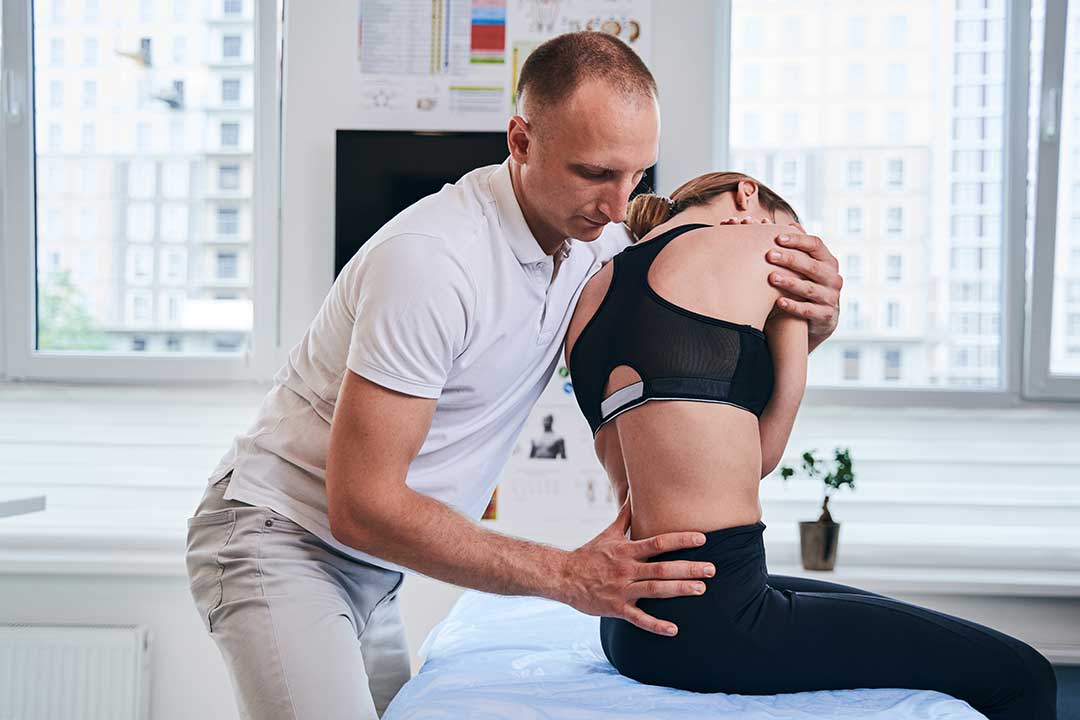
Exercises should be comfortable and controlled. Stop if a movement causes sharp pain, dizziness, spreading symptoms, or increased numbness.
When should neck clicking be evaluated?
Persistent clicking with pain or reduced movement is a reasonable reason to seek a clinical evaluation. An examination can help distinguish muscle tension from joint irritation, a disc-related problem, or another condition affecting the neck.
Evaluation becomes more important after trauma, including a car crash, fall, or blow to the head or neck. It is also appropriate when symptoms continue to worsen, interfere with sleep, or make ordinary activities difficult.
Imaging is not automatically needed for every neck sound. A clinician usually considers the history, physical findings, duration of symptoms, and presence of nerve-related signs before deciding whether imaging or other testing is useful.
Which symptoms require urgent medical attention?
Neck clicking with sudden neurological symptoms should be treated as urgent. Seek emergency care for signs such as:
- Sudden weakness or numbness in an arm or leg
- Difficulty walking, balancing, speaking, or coordinating movements
- Loss of bladder or bowel control after a neck or back injury
- Severe neck pain after trauma
- A sudden, unusual headache with neck pain
- Fainting, severe dizziness, double vision, or trouble swallowing
- Fever, severe illness, and marked neck stiffness
These symptoms are uncommon, but they can indicate nerve, spinal cord, blood vessel, or infectious problems that should not be managed with stretching or self-manipulation.
For most people, an occasional click is simply a sound produced by normal movement. Persistent pain, injury, neurological symptoms, or a noticeable decline in neck function provides more meaningful information than the noise alone.
