
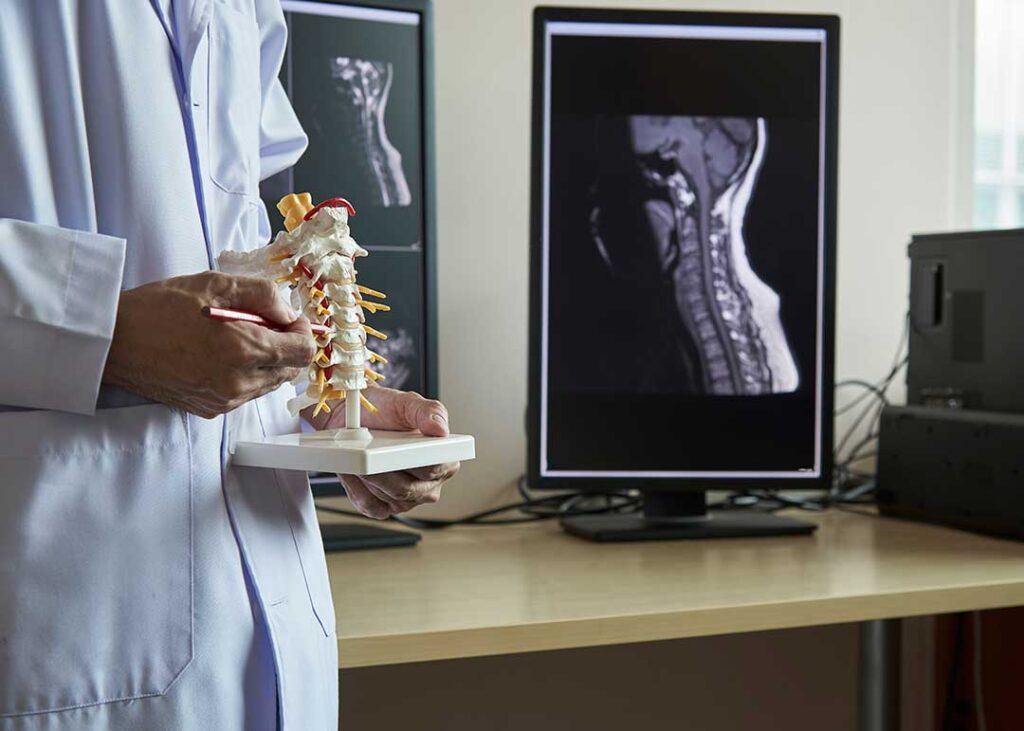
Regular spinal maintenance means supporting the spine through consistent movement, sensible ergonomics, strength, flexibility, and attention to early warning signs. It does not mean that every person needs routine spinal adjustments or that discomfort should be treated the same way in every situation.
The spine is involved in nearly every daily activity, including walking, lifting, sitting, turning, sleeping, and maintaining balance. A practical maintenance approach focuses on helping the back and neck tolerate normal demands while reducing avoidable strain.
What does regular spinal maintenance actually involve?
Spinal maintenance is a long-term approach to musculoskeletal health rather than a single treatment. It may include:
- Regular physical activity and walking
- Exercises that build trunk, hip, and upper-back strength
- Mobility work for the spine, hips, and shoulders
- Workstation and driving adjustments
- Safe lifting habits
- Adequate sleep and recovery
- Monitoring recurring pain, stiffness, numbness, or weakness
For some people, spinal care may also involve assessment or hands-on treatment from a qualified healthcare professional. The appropriate approach depends on a person’s symptoms, medical history, activity level, age, and goals.
The purpose is not to keep the spine perfectly aligned at every moment. Human posture naturally changes, and occasional stiffness is common. The more realistic goal is to preserve comfortable movement and physical capacity while identifying problems that need attention.
Can maintenance help prevent back and neck pain?
It may reduce some contributors to pain, but it cannot guarantee that pain will never occur. Back and neck symptoms can result from many factors, including muscle strain, joint irritation, disc problems, arthritis, injuries, prolonged inactivity, stress, and certain medical conditions.
Regular movement helps prevent the stiffness that often develops after long periods of sitting or inactivity. Strengthening the muscles around the abdomen, hips, pelvis, shoulders, and upper back can also improve the body’s ability to manage everyday loads.
For residents of Lynbrook, seasonal routines may influence spinal comfort. Colder weather can lead some people to spend more time indoors, while snow, ice, or wet pavement may change walking patterns and increase the physical demands of shoveling, carrying, or clearing outdoor areas. A gradual return to these activities is safer than attempting a demanding task after weeks of limited movement.
What exercises support spinal health?
A balanced program usually combines mobility, strength, and low-impact cardiovascular activity. The best choices vary by individual, but common examples include:
- Walking at a comfortable pace
- Hip-hinge practice for lifting mechanics
- Glute bridges
- Bird-dog exercises
- Side planks or modified side planks
- Gentle thoracic, hip, and shoulder mobility exercises
- Water-based exercise or stationary cycling
Exercises should be performed with controlled movement rather than forced range of motion. Mild muscle effort is expected, but sharp pain, increasing numbness, or symptoms traveling farther into an arm or leg are reasons to stop and reassess.
People with a recent injury, significant osteoporosis, prior spinal surgery, unexplained weight loss, cancer history, or progressive neurological symptoms may need individualized medical guidance before beginning a new exercise routine.
Does good posture prevent spinal problems?
Good posture can reduce strain during specific activities, but there is no single posture that must be maintained all day. Holding one “perfect” position for hours can be uncomfortable and may create its own fatigue.
A healthier approach is to change positions regularly. During computer work, useful adjustments may include:
- Keeping the screen near eye level
- Supporting the lower back without forcing an exaggerated arch
- Keeping feet supported
- Positioning the keyboard and mouse close enough to avoid reaching
- Taking brief movement breaks instead of remaining seated continuously

Household routines also matter. Repeated bending over low surfaces, lifting laundry baskets, carrying children, or working in confined spaces can place extra demand on the back. Alternating tasks, bringing objects closer before lifting, and using the legs and hips can help distribute the load.
How should people lift and carry objects?
Safe lifting is less about a rigid technique and more about controlling the load. Before lifting, consider the object’s weight, shape, distance, and destination.
A practical sequence is:
1. Move close to the object.
2. Set the feet in a stable position.
3. Bend through the hips and knees as needed.
4. Keep the object close to the body.
5. Rise smoothly rather than jerking.
6. Turn with the feet instead of twisting sharply while carrying.
For bulky or heavy objects, dividing the load or getting assistance may be safer than relying on strength alone. This is particularly relevant during seasonal household projects, moving tasks, and outdoor maintenance.
Are spinal adjustments necessary for everyone?
No. Spinal adjustments are not necessary for every person, and regular treatment should not be presented as a universal requirement. Some people may experience short-term relief from manual therapy for certain types of back or neck pain, especially when it is combined with exercise and education. Others may benefit more from movement-based care, medical evaluation, physical therapy, or a different approach.
A responsible care plan should be based on symptoms and functional needs rather than a fixed schedule applied to everyone. People should also understand what a treatment is intended to address, what improvement to expect, and when another type of evaluation may be appropriate.
Maintenance should support independence, not create anxiety about ordinary spinal movement or imply that the body will deteriorate without repeated treatment.
What symptoms should not be managed as routine stiffness?
Some symptoms require prompt medical evaluation rather than a routine maintenance approach. Seek urgent care for back or neck symptoms accompanied by:
- New loss of bladder or bowel control
- Numbness in the groin or inner-thigh region
- Significant or worsening weakness
- Difficulty walking or maintaining balance
- Severe pain after a fall, collision, or other injury
- Fever, unexplained weight loss, or a history of serious disease
- Pain that is severe, persistent, or rapidly worsening
Arm or leg numbness, tingling, or weakness may reflect nerve involvement. These symptoms do not always indicate an emergency, but they should not be ignored, particularly when they are new or progressing.
How often should someone focus on spinal maintenance?
There is no universal schedule. Daily movement is generally more useful than occasional intense effort. Short walking breaks, regular mobility, and gradual strengthening can be incorporated into ordinary routines.
A person who sits for much of the day may benefit from several brief movement periods. Someone who performs physical work may need more emphasis on recovery, lifting strategy, and strength balance. An older adult may prioritize stability, leg strength, and fall prevention, while a recreational athlete may focus on conditioning and sport-specific movement.
The most useful plan is one that is safe, realistic, and sustainable. Spinal health is supported by consistent habits, not by trying to eliminate every normal sensation of stiffness or fatigue.
