
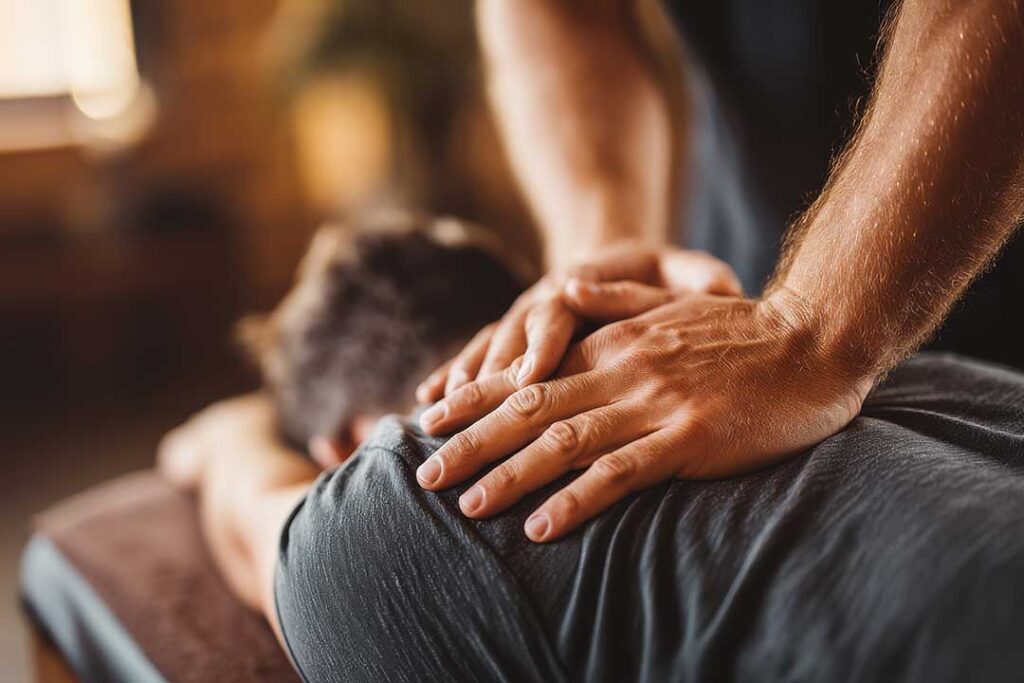
What is the Graston Technique?
The Graston Technique is a form of instrument-assisted soft-tissue mobilization. It uses smooth, handheld instruments to assess and treat areas involving muscles, tendons, fascia, and other soft tissues.
During treatment, a chiropractor moves the instrument over the skin using controlled strokes. The instrument does not cut or puncture the skin. The goal is to identify areas that feel restricted, sensitive, or less mobile and then combine soft-tissue work with movement-based care.
The technique is often used as one part of a broader plan rather than as a stand-alone treatment. Depending on the condition, care may also include mobility exercises, strengthening, posture guidance, spinal or joint mobilization, and changes to daily activities.
How does it work?
The instruments provide a firm, consistent contact with the tissue. This can help a practitioner detect changes in texture or movement that may be difficult to feel with the hands alone. Treatment is usually directed at muscles, tendons, fascia, or areas affected by repetitive strain and healing.
The proposed effects include:
- Temporarily improving soft-tissue mobility
- Reducing sensitivity in a painful area
- Supporting range of motion
- Encouraging movement after a period of stiffness
- Helping a person participate more comfortably in rehabilitation exercises
Some explanations describe the technique as “breaking up scar tissue.” That phrase can be misleading if taken literally. The instrument does not mechanically shred adhesions inside the body. A more accurate description is that it may influence pain sensitivity, local tissue motion, and how a person moves during recovery.
What conditions may be treated?
Graston-style soft-tissue work may be considered for certain musculoskeletal problems, including:
- Tendon irritation involving the elbow, wrist, shoulder, knee, or ankle
- Muscle strains and lingering tightness
- Plantar heel pain
- Limited range of motion after an injury
- Repetitive-use discomfort
- Some cases of neck, upper-back, or low-back pain
- Scar-related restrictions after healing, when appropriate
The technique is not suitable for every source of pain. Symptoms caused by a fracture, infection, nerve compression, inflammatory disease, circulation problem, or internal medical condition require a different evaluation. Soft-tissue treatment should not be used as a substitute for identifying the actual cause of persistent or severe symptoms.
For residents in Lynbrook, seasonal routines may also affect symptoms. Winter shoveling, prolonged indoor sitting, commuting, home maintenance, and spring or summer recreational activity can place repeated stress on the same muscles and tendons. Those patterns may be relevant when considering whether soft-tissue work is appropriate.
What does a treatment session feel like?
A session commonly begins with questions about symptoms, activity, previous injuries, medications, and health conditions. The area may then be examined through movement testing, touch, and comparison with the opposite side.
A small amount of lotion or similar medium may be used so the instrument glides over the skin. Pressure can range from light to moderately firm. Patients may feel warmth, pulling, mild tenderness, or a scraping sensation. Treatment should not feel like uncontrolled or sharp pain.
Temporary redness or small areas of bruising can occur, particularly when tissue is sensitive or the pressure is substantial. Mild soreness for a day or two is possible. Increasing pain, marked swelling, extensive bruising, numbness, weakness, or skin changes should not be dismissed as a normal response.
Does it hurt, and should bruising occur?
Some tenderness is common, but significant pain is not required for the technique to be effective. More pressure does not automatically mean better treatment.
Bruising is sometimes associated with instrument-assisted techniques, but it is not proof that treatment worked. Bruising reflects small blood-vessel injury under the skin and may be more likely in people who take blood-thinning medication, have fragile skin, or bruise easily.
A person should mention medications and health conditions before treatment, especially:
- Blood-thinning or antiplatelet medication use
- A bleeding or clotting disorder
- Easy or unexplained bruising
- Varicose veins or circulation concerns
- Recent surgery
- Active skin irritation, rash, or infection
- Osteoporosis or a known bone disorder
- Cancer treatment or a serious systemic illness
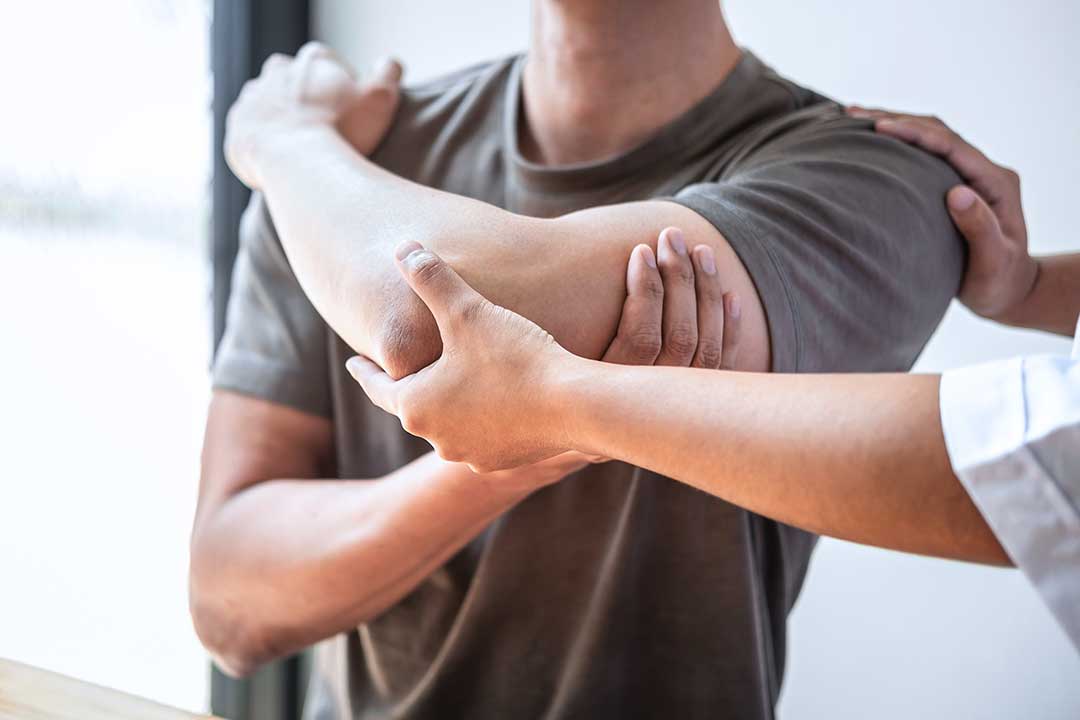
What does the research show?
Research on instrument-assisted soft-tissue mobilization suggests that it may help some people with short-term pain, function, or range-of-motion limitations. However, the findings are mixed, and studies vary in the instruments used, treatment methods, conditions treated, and other therapies provided at the same time.
The evidence is stronger for viewing the technique as a possible supportive tool than as a guaranteed treatment for a specific diagnosis. Benefits may come from several factors, including hands-on contact, movement exposure, reduced fear of using the area, and the exercises performed afterward.
A reasonable standard is whether function improves over time. Examples include walking more comfortably, turning the neck farther, lifting with less discomfort, returning gradually to exercise, or tolerating normal household activities. If symptoms and function do not improve after a sensible trial, the care plan should be reconsidered.
How is it different from massage or chiropractic adjustment?
Massage primarily uses the hands to influence muscles and other soft tissues. Graston Technique uses instruments to assist with soft-tissue assessment and treatment.
A chiropractic adjustment is a separate intervention directed toward joint movement. It may involve a controlled manual thrust or a lower-force mobilization, depending on the patient and the area being treated. Graston-style work does not replace an adjustment, and an adjustment is not required for the technique to be used.
These approaches may be combined, but they should not be grouped together as if they have the same purpose or evidence. The appropriate choice depends on the symptoms, examination findings, health history, and treatment goals.
Who should avoid it or ask questions first?
Instrument-assisted soft-tissue treatment should generally be postponed over an open wound, active skin infection, significant swelling, an acute fracture, or an area with unexplained severe pain. Extra caution is needed when there is a risk of bleeding, impaired sensation, poor circulation, or delayed healing.
A medical evaluation is more urgent when pain follows major trauma or is accompanied by chest pain, shortness of breath, fainting, progressive weakness, loss of bladder or bowel control, fever, unexplained weight loss, or a rapidly worsening condition.
People should also ask what training the provider has completed, what tissue is being treated, what outcome is expected, and how the technique fits with exercise or other care. Clear explanations are especially useful when symptoms have lasted for months or when prior treatment has not helped.
What should a person do after treatment?
After a session, ordinary gentle movement is usually preferable to complete inactivity unless specific restrictions have been given. Water, comfortable mobility, and gradual exercise may be part of the recovery plan. Heavy training or intense stretching immediately afterward may not be appropriate if the area is sore.
The most useful follow-up is often an active plan: strengthening, mobility work, ergonomic changes, pacing, or a gradual return to normal activities. For local residents managing seasonal chores or physically demanding household tasks, modifying workload for a short period may help prevent repeated irritation.
Graston Technique can be a reasonable adjunct for selected soft-tissue problems, but it is not a cure-all. Its value depends on accurate assessment, appropriate pressure, attention to safety, and a broader plan that addresses strength, movement, workload, and the underlying cause of symptoms.
