

Tension headaches often feel like pressure, tightness, or a steady ache around the forehead, temples, back of the head, or neck. Gentle stretching may help when muscle tension, prolonged sitting, screen use, stress, or limited neck movement contributes to the discomfort.
For residents in Lynbrook, NY, everyday routines such as commuting, working at a computer, studying, household tasks, and staying indoors during cold or rainy weather can all lead to sustained neck and shoulder tension. Stretching cannot address every type of headache, but it can be a useful part of a broader self-care routine.
What do tension headaches feel like?
Tension headaches commonly cause a dull, steady pressure rather than a throbbing sensation. The discomfort may affect both sides of the head and can spread from the neck and shoulders toward the temples or forehead.
Other common features include:
- Tightness across the forehead
- Tenderness in the scalp, neck, or shoulder muscles
- Stiffness when turning the head
- Discomfort that becomes more noticeable after extended screen use
- A headache that develops gradually and may last for several hours
Tension headaches are different from migraines, which may involve pulsing pain, nausea, vomiting, or increased sensitivity to light and sound. Stretching may be reasonable for mild muscle-related discomfort, but recurring or severe headaches deserve medical evaluation.
Which stretches may help relieve neck and shoulder tension?
The most useful stretches are usually slow, controlled movements that target the upper trapezius, neck, chest, and upper back. Stretching should create mild tension, not sharp pain, tingling, dizziness, or a feeling that the head is being forced into position.
Chin tuck
A chin tuck helps counter the forward-head posture that can develop during computer work or phone use.
1. Sit or stand with the shoulders relaxed.
2. Look straight ahead.
3. Gently draw the chin backward, as if making a small double chin.
4. Keep the head level rather than tipping it downward.
5. Hold for 3 to 5 seconds, then relax.
6. Repeat 8 to 10 times.
This is a small movement. Pulling the chin forcefully or bending the neck forward reduces its usefulness.
Upper trapezius stretch
This stretch targets the muscles that run from the base of the skull toward the shoulders.
1. Sit upright with one hand resting under the chair or by the side.
2. Tilt the right ear gently toward the right shoulder.
3. Keep the left shoulder relaxed and down.
4. Hold for 15 to 20 seconds.
5. Return to center and repeat on the other side.
For a slightly stronger stretch, the hand on the tilted side may rest lightly on top of the head, but it should not pull. Repeat each side two or three times.
Levator scapulae stretch
The levator scapulae connects the upper shoulder blade to the neck and may become tense with prolonged sitting.
1. Turn the head about 45 degrees to the right.
2. Angle the nose gently toward the right armpit.
3. Keep the right shoulder relaxed.
4. Hold for 15 to 20 seconds.
5. Repeat on the opposite side.
The stretch should be felt along the back and side of the neck, not as pressure at the front of the throat.
Doorway chest stretch
Tight chest muscles can encourage the shoulders to round forward, increasing strain on the neck and upper back.
1. Stand in a doorway with the forearms resting against the frame.
2. Place the elbows around shoulder height.
3. Step forward slowly until a mild stretch is felt across the chest.
4. Keep the ribs from flaring upward.
5. Hold for 20 to 30 seconds and repeat two or three times.
A smaller step is enough if the shoulders or arms feel uncomfortable.
Upper-back stretch
This movement can reduce stiffness between the shoulder blades.
1. Interlace the fingers in front of the chest.
2. Reach the hands forward while gently rounding the upper back.
3. Let the shoulder blades spread without shrugging.
4. Hold for 15 to 20 seconds.
5. Breathe slowly and return to a neutral posture.
Avoid collapsing the lower back or holding the breath.
How often should these stretches be performed?
For mild tension, a short routine once or twice a day may be enough. People who work at a desk or use screens for long periods may benefit from brief movement breaks every 30 to 60 minutes rather than waiting until the neck feels tight.
A practical routine might include:
- Five chin tucks
- One upper trapezius stretch on each side
- One levator scapulae stretch on each side
- A 20-second chest stretch
- A short walk or shoulder movement break
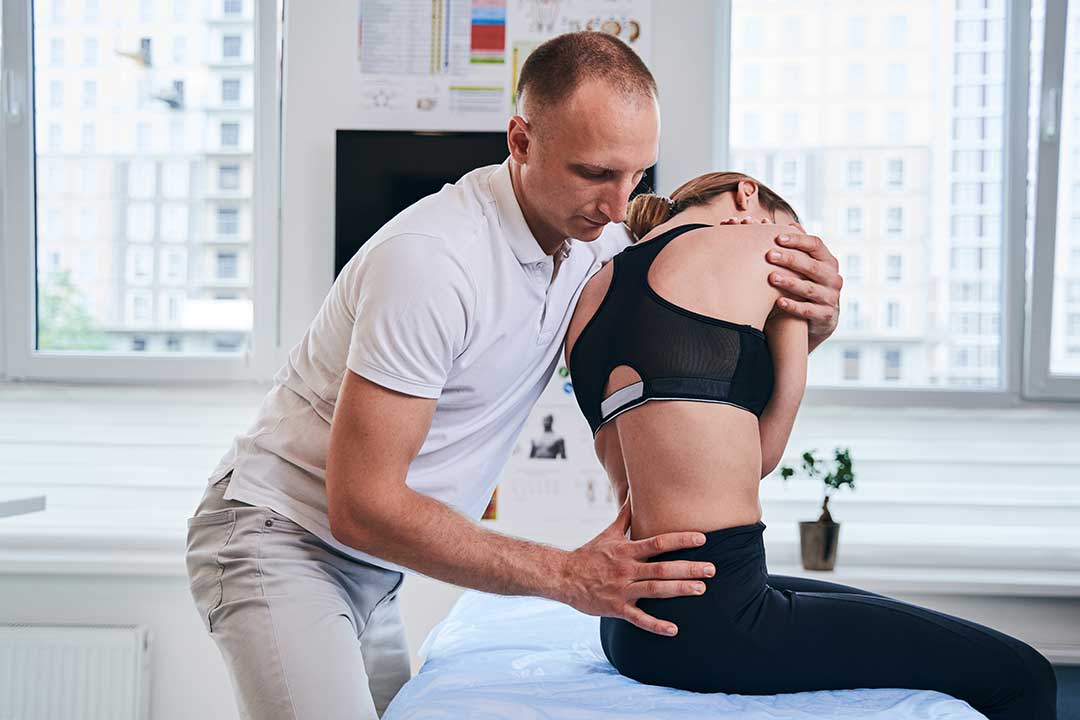
Stretching should feel easier afterward. If symptoms consistently intensify, reduce the range of motion or stop the exercise.
Should heat or movement be used with stretching?
Gentle heat may help relax tense muscles before stretching. A warm shower or a comfortably warm compress applied to the neck and shoulders for about 10 to 15 minutes can make movement feel easier. Heat should not be hot enough to irritate the skin, and it should not be used while sleeping.
Light movement can also help. A short walk, relaxed shoulder rolls, or changing from a seated to standing position may reduce the stiffness that contributes to a headache. Complete inactivity may allow the neck and shoulders to remain tense for longer.
Hydration, regular meals, adequate sleep, and moderation with caffeine may also matter. Skipping meals, sleeping in an awkward position, or relying heavily on caffeine can make headaches more likely for some people.
What stretching mistakes should be avoided?
Stretching is not safer simply because it is gentle in appearance. Avoid bouncing, forceful pulling, sudden neck circles, and stretches performed while the neck is already painful or unstable.
Common mistakes include:
- Shrugging the shoulders during a neck stretch
- Holding the breath
- Stretching through numbness or tingling
- Pressing hard on the head
- Performing rapid full-circle neck rotations
- Staying in one posture for several hours
- Assuming every headache is caused by tight muscles
Slow side-to-side neck movement is generally preferable to large, fast neck circles, which may irritate sensitive joints or muscles.
When should a headache be evaluated urgently?
A sudden, severe headache that reaches maximum intensity quickly requires urgent medical attention. Immediate evaluation is also appropriate for a headache accompanied by weakness, numbness, confusion, fainting, trouble speaking, a new vision problem, seizure, high fever, or a stiff neck.
Medical advice is also warranted when headaches begin after a head injury, occur with repeated vomiting, become progressively more frequent, or represent a significant change from a person’s usual pattern. New headaches during pregnancy or in people with serious medical conditions should also be discussed with a healthcare professional.
For recurring but non-urgent headaches, keeping a simple record can help identify patterns. Note the timing, duration, location, sleep quality, meals, screen time, stress, physical activity, and any symptoms such as nausea or light sensitivity. This information can help distinguish muscle-related discomfort from other headache patterns.
Stretching may ease tension-related symptoms, but it should be comfortable, gradual, and combined with regular movement and sound daily habits. The goal is not to force the neck into a deeper position; it is to restore relaxed, comfortable motion.
