
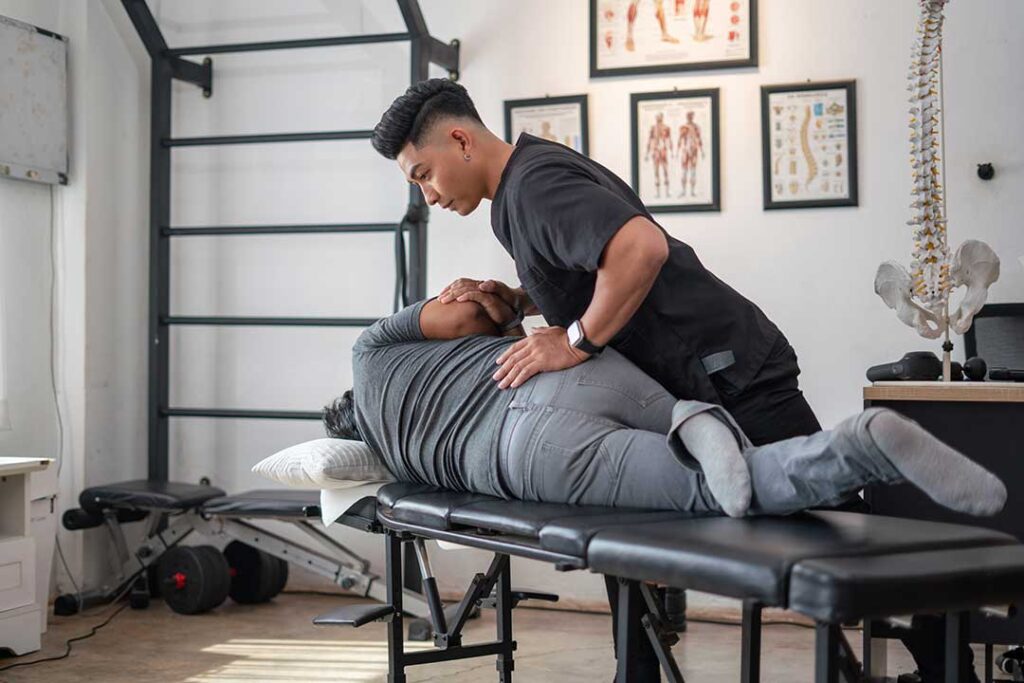
A minor back strain often improves with a combination of gentle movement, short periods of rest, temperature therapy, and gradual return to normal activities. For residents of Lynbrook, NY, these measures can be especially useful after lifting household items, shoveling, gardening, commuting, exercising, or spending long periods seated.
How can you tell if back pain may be a minor strain?
A minor strain commonly causes localized aching, tightness, stiffness, or soreness in the muscles and supporting tissues of the back. It may begin after lifting, bending, twisting, reaching, or making an awkward movement. Some people notice muscle spasms or discomfort when standing up, changing position, or walking.
A strain is more likely when the pain stays mainly in the back and gradually begins to ease with comfortable movement. Pain that travels below the knee, causes significant numbness or weakness, or follows a serious accident may have another cause and should not be treated as a simple strain without medical guidance.
Acute back pain can last several days to a few weeks. Many uncomplicated cases improve noticeably during the first week and continue resolving over the next several weeks.
Should you use ice or heat?
Both cold and heat may help, but they serve different purposes. Cold can be useful during the first day or two after a sudden strain, particularly if the area feels sore or irritated. Heat often feels better later, especially when stiffness or muscle tightness is the main problem.
Use either option safely:
- Wrap an ice pack or a bag of frozen food in a thin towel. Apply it for about 10 to 20 minutes.
- Use a heating pad, warm compress, or warm shower for about 15 to 20 minutes.
- Never place ice or a high-temperature heating device directly on the skin.
- Check the skin regularly and stop if it becomes numb, unusually red, blistered, or painful.
- Avoid heat or cold if reduced sensation makes it difficult to judge temperature.
There is no requirement to switch from ice to heat on an exact schedule. The more useful choice is the one that provides relief and allows easier, more relaxed movement.
Is bed rest helpful for a strained back?
Long periods of bed rest usually slow recovery by increasing stiffness and reducing muscle conditioning. A short rest period may be reasonable immediately after a painful movement, but most people should begin gentle activity as soon as they can do so safely.
Try changing positions regularly rather than remaining in one posture. Short, easy walks around the home can be a practical starting point. If sitting is unavoidable, use a chair that supports the lower back and stand up periodically. Long drives, extended desk work, and prolonged time on a couch can make stiffness worse.
During recovery, avoid heavy lifting, forceful twisting, repeated bending, and activities that clearly increase the pain. Resume them gradually instead of testing the back with a sudden return to full effort.
What positions may make resting and sleeping easier?
Comfort varies, but several positions reduce strain for many people:
- Lie on your side with a pillow between your knees.
- Lie on your back with a pillow beneath your knees.
- Use a small rolled towel at the lower back only if it feels supportive rather than forced.
- When getting out of bed, roll onto your side first, lower your legs, and use your arms to help push up.
A comfortable position should allow relaxed breathing and should not increase leg symptoms, tingling, or numbness. A very firm mattress is not automatically better; support and comfort matter more than a specific mattress type.
Can stretching help?
Gentle movement can help, but aggressive stretching immediately after an injury may aggravate the area. Begin with easy walking and normal movements that stay within a manageable range.
If a stretch is tried, it should feel mild and controlled rather than sharp, electric, or increasingly painful. Stop if symptoms spread down the leg, weakness develops, or pain remains noticeably worse afterward. Simple movements such as gentle pelvic tilting, slow knee-to-chest motion, or easy trunk rotation may be appropriate for some people, but not every exercise suits every back problem.
Strengthening exercises are usually more useful after the initial pain settles. Rushing into sit-ups, heavy resistance training, or intense household work can restart the strain.
Are over-the-counter pain medicines safe?
Some adults use an anti-inflammatory medicine or acetaminophen for short-term relief, following the package directions. However, these medicines are not appropriate for everyone.
Ask a pharmacist or medical provider before using them if you have kidney disease, stomach ulcers, bleeding problems, liver disease, heart disease, high blood pressure, medication allergies, or if you take blood thinners. Pregnancy and older age may also affect which medicines are safe. Do not combine products that contain the same active ingredient, and do not exceed the labeled dose.
Pain relief should support comfortable movement, not mask severe symptoms so that strenuous activity can continue.
What local habits can contribute to a back strain?
Household routines can place repeated stress on the back. In a densely settled community such as Lynbrook, residents may experience strains from carrying laundry, moving storage bins, lifting packages, cleaning floors, commuting, or working at compact home workstations.
Seasonal tasks can also be a factor. Cold weather may encourage people to remain seated longer, while spring cleanup, yard work, and home projects can involve sudden lifting after months of limited activity. Break larger tasks into shorter periods, keep frequently used items within easy reach, and bend at the hips and knees rather than rounding the lower back while lifting.
When should back pain be evaluated promptly?
Seek urgent medical attention for back pain accompanied by:
- Loss of bladder or bowel control
- New numbness around the inner thighs, buttocks, or genital area
- Severe or worsening weakness in one or both legs
- Difficulty walking or maintaining balance
- Pain after a major fall, collision, or other significant injury
- Fever, unexplained weight loss, or a history of cancer
- Severe pain that cannot be eased in any position
- Burning urination, blood in the urine, or other concerning abdominal symptoms
Arrange medical evaluation when pain is not improving after several days, keeps returning, becomes progressively worse, or continues beyond several weeks. Pain that travels below the knee, wakes you repeatedly at night, or is accompanied by persistent numbness also deserves attention.
For a straightforward strain, the goal is not complete immobility. It is to calm the irritated tissues, maintain safe movement, protect the back from repeated overload, and gradually rebuild normal activity as symptoms improve.
