
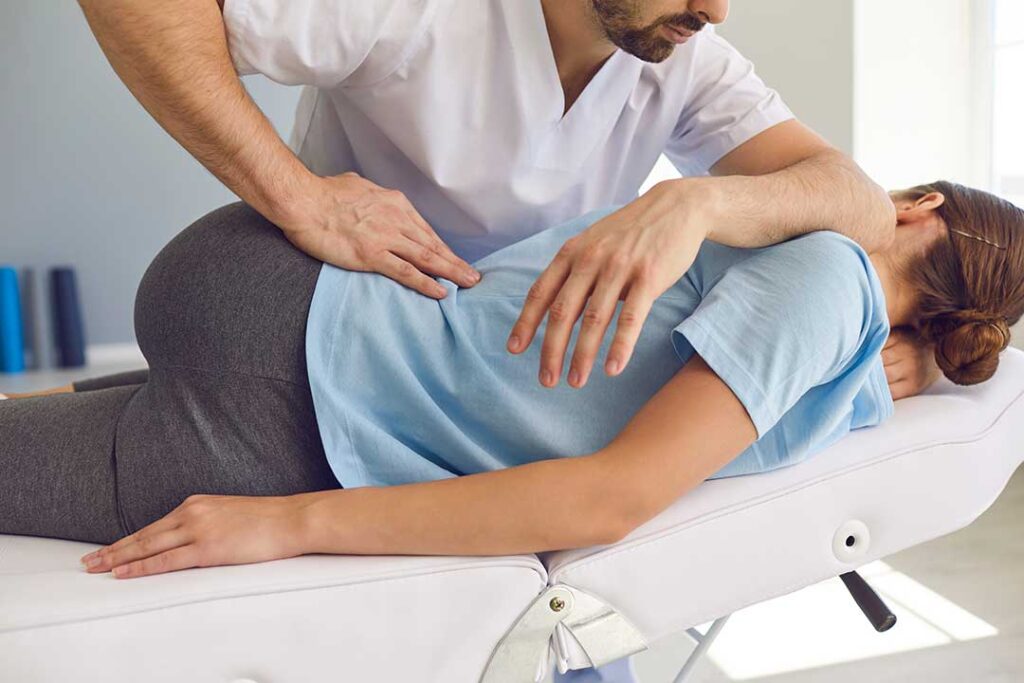
Poor posture is more than a matter of appearance. The way a person sits, stands, walks, sleeps, or uses a phone can influence muscle tension, joint movement, breathing, balance, and comfort throughout the day. For residents of Lynbrook, NY, posture often reflects everyday routines such as commuting, desk work, household tasks, schoolwork, driving, and extended time on mobile devices.
What counts as poor posture?
Poor posture occurs when the body is held in a position that places unnecessary strain on muscles, joints, ligaments, or the spine. Common examples include:
- Slouching in a chair
- Holding the head forward while looking at a phone
- Rounding the shoulders for long periods
- Leaning to one side while standing
- Sitting with the lower back unsupported
- Sleeping in a position that leaves the neck twisted
- Repeatedly lifting, bending, or reaching without using sound body mechanics
Healthy posture does not mean holding the body rigidly or forcing the shoulders sharply backward. The spine has natural curves, and comfortable alignment allows the head to remain generally over the shoulders, the shoulders over the hips, and the feet to provide a stable base.
Posture also changes during movement. Bending, carrying groceries, shoveling, climbing stairs, and getting in or out of a car all require dynamic posture. A position that is safe for a few minutes may become stressful if repeated for hours.
How can poor posture cause neck, shoulder, and back pain?
Poor alignment can make certain muscles work continuously while other muscles become less active. For example, a forward head position increases the demand on the neck and upper-back muscles. Over time, this may contribute to soreness, headaches related to muscle tension, stiffness, or aching between the shoulder blades.
Slumped sitting can also place added pressure on the lower back. The discomfort may be worse after working at a computer, sitting through a long commute, watching television, or spending an evening on a phone. Pain is not always caused by posture alone, but posture can contribute to symptoms or make existing problems harder to settle.
The body often adapts to repeated positions. A person may begin shifting weight, tightening the shoulders, or avoiding certain movements without realizing it. Those compensations can spread discomfort to nearby areas, including the hips, ribs, knees, or jaw.
Can posture affect breathing and digestion?
Yes. A collapsed sitting position can restrict how freely the rib cage and diaphragm move, which may make breathing feel shallow or less comfortable. Poor posture does not usually cause serious breathing disease, but it can make a person more aware of breathing effort, especially during prolonged sitting.
Slumping after meals may also compress the abdomen. This can contribute to feelings of pressure, discomfort, or reflux in some people. Posture is only one possible factor, and persistent digestive or breathing symptoms should not be assumed to result from alignment.
Does poor posture affect balance and movement?
It can. Balanced movement depends on the coordinated position of the head, spine, pelvis, hips, knees, and feet. If the body repeatedly leans forward or to one side, the muscles may have to work harder to maintain stability. This may make walking, climbing stairs, carrying objects, or standing for long periods more tiring.
Older adults may be especially affected because strength, flexibility, vision, and balance can change with age. Posture-related stiffness may add to the difficulty of recovering from a trip or stepping onto an uneven surface. In a community where winter weather can create wet, icy, or uneven walking conditions, maintaining leg strength and balance is particularly useful.
What role do phones, computers, and driving play?
Screens are a major source of sustained poor posture. Looking down at a phone for long periods commonly places the neck in a forward-bent position. Laptop use can create a similar problem when the screen is low and the keyboard is far away.
A practical workstation setup includes:
- Keeping the screen near eye level
- Supporting the lower back
- Allowing the feet to rest on the floor or a stable footrest
- Keeping the elbows near the sides of the body
- Relaxing the shoulders instead of lifting or rounding them
- Changing positions regularly rather than trying to remain perfectly still
Driving can also contribute to stiffness, particularly when the seat is too far from the pedals, the steering wheel is held with tense shoulders, or the head is pushed forward. Short movement breaks during longer trips can help reduce stiffness.
Is standing perfectly straight the answer?
No. There is no single posture that prevents all pain, and even a well-aligned position can become uncomfortable if held too long. The more useful goal is posture variety: sitting, standing, walking, stretching gently, and changing tasks throughout the day.
A person who works at home may benefit from alternating between a desk, a kitchen counter, and short walks around the home. Household chores also provide opportunities to notice body position. Washing dishes, folding laundry, carrying bags, or clearing snow can become harder on the back when performed with repeated twisting or prolonged bending.
Good posture should feel sustainable, not forced. Mild muscle effort is normal, but sharp pain, numbness, weakness, or symptoms that continue to worsen are warning signs to take seriously.
What daily habits can improve posture?
Posture often improves when the surrounding habits improve. Helpful steps include:
- Take brief movement breaks during extended sitting.
- Walk regularly and include exercises that build leg, abdominal, back, and shoulder strength.
- Adjust the height of work surfaces rather than bending the neck for long periods.
- Keep frequently used objects within easy reach.
- Use both hands when carrying uneven or bulky loads when practical.
- Bend through the hips and knees for low tasks instead of repeatedly rounding the back.
- Avoid spending an entire evening in one position.
- Choose supportive, comfortable footwear for extended standing or walking.
- Practice gentle mobility exercises without forcing a painful range of motion.
Physical activity matters because prolonged sitting and inactivity can affect general health beyond the muscles and joints. Regular movement supports sleep, mood, physical function, and long-term health. Activity can be divided into shorter periods, making it more realistic for people balancing work, family responsibilities, and household routines.
When should posture-related symptoms be medically evaluated?
Neck or back discomfort that is mild and improves with movement may respond to changes in daily habits. However, medical evaluation is appropriate for symptoms that are severe, persistent, recurrent, or interfering with normal activities.
Prompt attention is especially important for:
- New weakness in an arm or leg
- Numbness that spreads or does not improve
- Loss of bladder or bowel control
- Fever, unexplained weight loss, or severe night pain
- Pain after a significant fall or collision
- Chest pain, serious shortness of breath, or sudden neurological symptoms
- Headaches that are new, severe, or accompanied by vision, speech, or balance changes
Posture can influence comfort and movement, but it does not explain every symptom. A balanced approach recognizes the value of alignment while also considering strength, activity level, sleep, stress, previous injuries, medical conditions, and the demands of daily life.
