

Jaw pain can sometimes be connected to the neck, upper back, and the way the head is held over the body. The relationship is real, but it does not mean that every jaw problem starts in the spine or can be corrected through spinal care alone.
For residents of Lynbrook, NY, understanding this connection can help distinguish between temporary muscle tension, a temporomandibular disorder, dental problems, and symptoms that need prompt medical attention.
Why can neck and spinal tension affect the jaw?
The jaw, neck, and upper back work as part of a coordinated movement system. Muscles that help position the head also influence the jaw, while muscles used for chewing connect through the face, skull, and upper neck.
When the head moves forward—often during prolonged computer use, phone use, driving, or reading—the neck muscles may work harder to support it. This can increase tension in nearby muscles, including those around the jaw and temples. Some people respond by clenching their teeth, tightening the tongue, or holding the jaw in a rigid position.
Over time, this pattern may contribute to:
- Jaw soreness or fatigue
- Temple headaches
- Neck stiffness
- Pain near the ear
- Difficulty opening the mouth comfortably
- Clicking or popping during jaw movement
- Aching in the shoulders or upper back
Posture is only one possible influence. Jaw symptoms can also result from injury, arthritis, nighttime grinding, stress, changes in sleep, or irritation within the jaw joint itself.
What is the difference between jaw pain and a temporomandibular disorder?
Temporomandibular disorders, often called TMD, include more than 30 conditions involving the jaw joints, chewing muscles, and surrounding tissues. A person may have joint-related pain, muscle-related pain, or both.
Common symptoms include:
- Pain while chewing, yawning, or speaking
- Tenderness in the jaw or cheek muscles
- Limited or uncomfortable mouth opening
- A jaw that catches or locks
- Headaches near the temples
- Ear fullness or pain without an obvious ear infection
- Pain that spreads into the neck or upper back
A clicking or popping sound by itself does not always mean that the joint is damaged. If the sound is painless and the jaw moves normally, it may not require treatment. Pain, locking, swelling, or a noticeable change in movement is more significant.
The exact cause is often difficult to identify. TMD may involve several factors at once, such as muscle overuse, clenching, injury, sleep disturbance, emotional stress, or joint inflammation. A “bad bite” is not considered a universal explanation, and permanent changes to the teeth or jaw should not be assumed to be necessary.
How can spinal health and jaw symptoms influence each other?
The connection often works in both directions. Neck pain may encourage protective muscle tightening around the jaw. Jaw pain may also cause a person to hold the head and shoulders differently, creating additional strain in the neck and upper back.
For example, someone with jaw soreness may avoid opening the mouth fully and keep the chin slightly pulled back. Another person may raise the shoulders or rotate the head to one side while eating. These compensations can increase discomfort even when the original problem began in the jaw.
Headaches can make the pattern harder to interpret. Tension from the jaw, upper neck, or scalp may overlap, while migraine and other headache disorders can produce facial or jaw discomfort without a primary joint problem.
This is why a useful evaluation considers more than spinal alignment. It should include jaw movement, muscle tenderness, range of motion, recent injuries, dental symptoms, sleep habits, medication use, and other health conditions.
Can posture exercises help jaw pain?
Gentle posture and movement habits may help when neck tension contributes to symptoms, but they are not a complete treatment for every jaw disorder.
Helpful habits may include:
- Keeping screens near eye level rather than looking down for long periods
- Taking movement breaks during desk work
- Supporting the forearms while using a keyboard
- Avoiding prolonged phone use with the head bent forward
- Letting the teeth remain slightly apart when not eating
- Resting the tongue comfortably rather than pressing it forcefully
- Using relaxed, slow breathing during stressful tasks
A neutral resting position does not mean holding the jaw rigidly. The lips may rest together, but the upper and lower teeth generally do not need to touch except during chewing, swallowing, or speaking.
Aggressive stretching, forceful jaw exercises, or repeated attempts to “pop” the joint can worsen irritation. Exercises should be stopped if they increase pain, locking, numbness, dizziness, or difficulty opening the mouth.
What can residents try at home for mild symptoms?
For short-term, mild jaw or neck discomfort, conservative care is often reasonable. Softer foods can reduce chewing demand for several days. Avoiding gum, hard candy, very chewy foods, and wide yawning may also help.
A warm, moist compress over the jaw or side of the neck may relax tight muscles. Some people prefer a brief cold application after a flare-up, particularly if there is swelling or recent strain. Over-the-counter pain medicine may be appropriate for some adults, but it can interact with other medicines or be unsafe with certain stomach, kidney, liver, bleeding, or pregnancy-related concerns.
Nighttime grinding is another overlooked factor. Signs may include morning jaw soreness, worn teeth, temple headaches, or a partner noticing grinding sounds. A dental evaluation can help determine whether a protective appliance or another approach is appropriate. Store-bought mouthguards are not suitable for everyone and may increase discomfort in some cases.
Seasonal routines can also matter. During colder months, people may tense the shoulders, spend more time indoors at desks, or alter sleep and exercise patterns. These changes can increase muscle tension without being the original cause of the jaw problem.
When should jaw pain be evaluated promptly?
Jaw pain deserves timely medical or dental evaluation when it is persistent, worsening, or interfering with eating and sleep. Prompt attention is especially appropriate for:
- A jaw that locks open or closed
- Major difficulty opening the mouth
- Facial swelling, fever, or signs of infection
- Recent trauma to the face, jaw, or neck
- Numbness, weakness, vision changes, or severe dizziness
- Unexplained weight loss or a new lump
- Severe pain with chewing that is unusual for the person
- Chest pressure, shortness of breath, sweating, or pain spreading into the arm or neck
Heart-related pain can occasionally be felt in the jaw, so jaw discomfort with chest or breathing symptoms should be treated as an emergency rather than a posture problem.
What role can chiropractic care play?
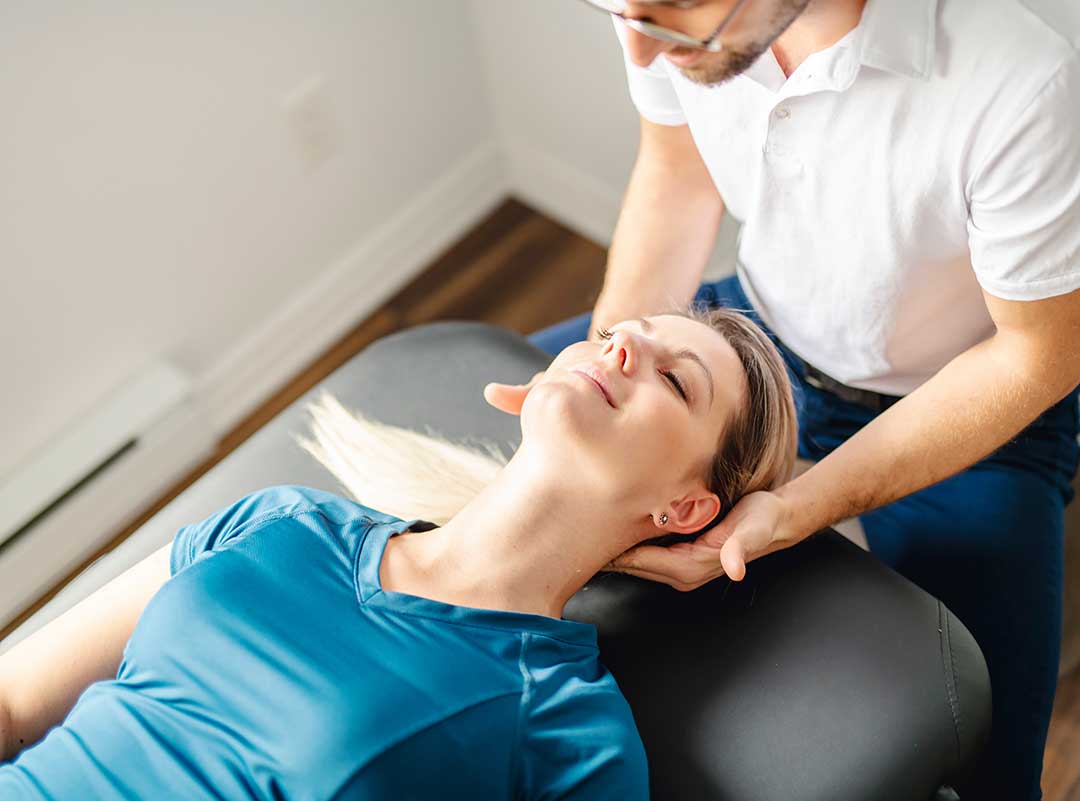
Care directed at the neck or upper back may be considered when examination suggests that muscular tension, restricted movement, or posture-related strain is contributing to jaw symptoms. The goal should be to improve comfortable movement and reduce related muscle tension—not to claim that spinal adjustments treat every form of TMD.
Jaw pain may require evaluation by a dentist, physician, physical therapist, oral and maxillofacial specialist, or another clinician depending on the suspected cause. Spinal treatment should not replace assessment for dental infection, joint injury, neurological symptoms, or other medical conditions.
The most useful approach is usually conservative and coordinated: identify aggravating habits, protect the jaw from excessive loading, address neck and upper-body mechanics, and reassess symptoms if they do not improve.
