

Scoliosis is a three-dimensional change in the shape of the spine that can affect posture, movement, comfort, and—in some cases—breathing or nerve function. Chiropractic care may help some people manage related pain and stiffness, but current evidence does not show that spinal adjustments can reliably straighten a structural scoliosis curve or prevent it from progressing.
For residents of Lynbrook, NY, the most useful approach is to understand what chiropractic care can reasonably do, what it cannot do, and when evaluation by a medical spine specialist is necessary.
What is scoliosis?
Scoliosis is usually defined as a spinal curve measuring at least 10 degrees on an X-ray. The spine may curve from side to side and rotate, which can make one shoulder, hip, or side of the rib cage appear higher than the other.
Scoliosis may be:
- Adolescent idiopathic scoliosis, which develops during childhood or the teenage growth period without a known single cause
- Adult degenerative scoliosis, which can develop as spinal discs and joints change with age
- Congenital scoliosis, which is present because of differences in spinal development
- Neuromuscular scoliosis, which is associated with conditions affecting muscles or the nervous system
- Functional or postural curvature, which may be related to leg-length differences, muscle imbalance, pain, or another condition rather than a fixed spinal deformity
A visible uneven posture does not automatically confirm scoliosis. A proper assessment may include a physical examination and, when appropriate, standing spinal X-rays.
Can chiropractic treatment straighten scoliosis?
Usually, no. Chiropractic adjustments may temporarily improve joint motion, muscle tension, or comfort, but there is not strong evidence that manipulation permanently corrects a structural spinal curve.
This distinction matters because scoliosis is more than a simple misalignment that can be “put back into place.” The vertebrae, ribs, discs, muscles, and connective tissues may all be involved. A short-term change in posture or pain does not necessarily mean the curve itself has changed.
Some chiropractic treatment plans also include stretching, strengthening, balance work, breathing exercises, and posture education. Those components may support function, even though they should not be presented as a proven way to eliminate scoliosis.
What symptoms might chiropractic care help manage?
For some adults, conservative manual care may help reduce discomfort associated with:
- Muscle tightness around the lower back, pelvis, shoulders, or ribs
- Reduced spinal or hip mobility
- Mechanical back pain during standing, walking, or household activities
- Muscle fatigue related to uneven loading
- Stiffness after sitting, driving, or working at a desk
- Difficulty maintaining comfortable movement during exercise
The possible benefit is generally symptom management rather than curve correction. Results vary, and pain may come from arthritis, disc problems, hip conditions, osteoporosis, or nerve irritation rather than scoliosis alone.
In a dense suburban community where residents may combine commuting, desk work, walking, household responsibilities, and seasonal outdoor activity, daily movement patterns can influence symptoms. Cold weather may also make muscles feel stiffer, although it does not cause scoliosis or prove that a curve is worsening.
What treatments have stronger roles in scoliosis management?
Treatment depends on age, curve size, symptoms, growth status, and the likelihood of progression.
For children and adolescents, monitoring is often appropriate for smaller curves. A brace may be considered when a growing child has a curve at meaningful risk of progression. Surgery is reserved for selected cases involving larger or progressive curves, significant imbalance, or other medical concerns.
For adults, treatment often focuses on pain control, maintaining strength and mobility, improving endurance, and addressing related conditions. Options may include:
- Scoliosis-specific exercise under qualified supervision
- General strengthening and aerobic activity
- Physical therapy
- Medication when medically appropriate
- Bracing for selected situations
- Injections or surgery in carefully evaluated cases
Exercise is not automatically unsafe. Many people with scoliosis can walk, swim, cycle, perform resistance training, or participate in recreational activities. The activity may need modification if it repeatedly causes sharp pain, numbness, weakness, or loss of function.
How should chiropractic care fit into a treatment plan?
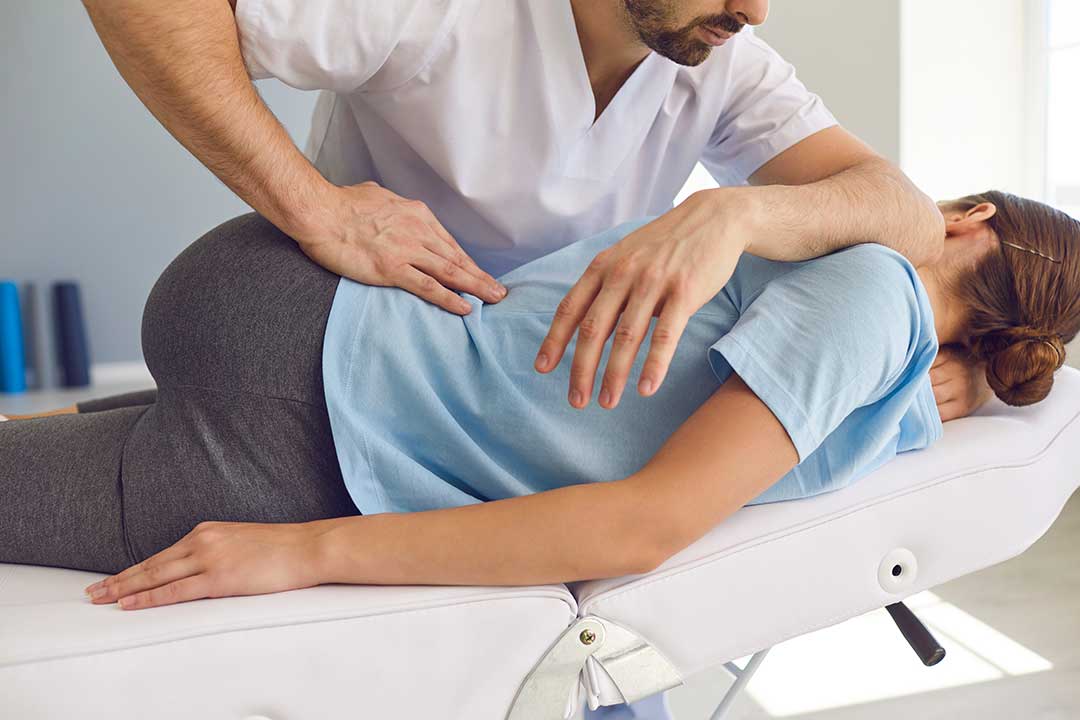
Chiropractic care is best viewed as one possible supportive option rather than a stand-alone cure. A responsible plan should begin with a clear understanding of the diagnosis and treatment goals.
Useful questions include:
- Is the curve confirmed by appropriate imaging?
- Is the goal pain relief, improved movement, better endurance, or curve control?
- How will progress be measured?
- Are exercises included, and can they be performed safely at home?
- Will treatment be coordinated with a primary care clinician, orthopedist, physiatrist, or physical therapist when needed?
- What symptoms would require stopping treatment or seeking further evaluation?
Repeated X-rays are not usually needed simply to document posture changes. Imaging decisions should be based on clinical need, age, symptoms, and whether the results would change management.
Claims that adjustments can reverse scoliosis, permanently rotate the spine into place, or prevent surgery should be treated cautiously. The available research on chiropractic manipulation for scoliosis remains limited, and several studies have not been strong enough to establish reliable curve correction.
When should someone seek medical evaluation promptly?
Some findings should not be attributed to ordinary scoliosis discomfort. Prompt medical assessment is appropriate for:
- New or worsening weakness in an arm or leg
- Numbness that persists or spreads
- Loss of bladder or bowel control
- Severe or rapidly increasing pain
- Fever, unexplained weight loss, or feeling generally ill
- Pain that repeatedly wakes someone from sleep
- A new spinal curve in adulthood
- Significant breathing difficulty
- A child whose curve appears to be changing quickly during growth
Older adults also deserve special attention because osteoporosis, vertebral compression fractures, and degenerative changes can alter spinal alignment. A sudden change in posture or new severe back pain should not be managed solely as routine scoliosis.
What can residents do at home?
Daily habits cannot remove a structural curve, but they may support comfort and function. Helpful basics include changing position regularly, building gradual core and hip strength, maintaining general physical activity, and avoiding prolonged inactivity after a flare-up.
A supportive routine should be individualized. Exercises that feel reasonable for one person may aggravate another, particularly when there is nerve compression, a significant curve, osteoporosis, or a history of spinal surgery. Heavy lifting during icy or wet winter conditions also increases the risk of slips and sudden strain, so controlled movement and safe footing matter.
The practical answer is that chiropractic care may help some people with scoliosis-related pain or restricted movement, especially when combined with exercise and coordinated care. It should not be promoted as a proven method for straightening the spine or replacing evaluation for progressive, neurologic, or medically complex scoliosis.
