

A herniated disc can cause anything from localized back or neck pain to sharp, traveling pain, numbness, or weakness in an arm or leg. Chiropractic care may help some people manage symptoms and restore movement, but it should be based on a careful examination and coordinated with medical care when nerve problems are significant.
What is a herniated disc?
A disc is a flexible cushion between the bones of the spine. Each disc has a firm outer layer and a softer center. A herniation occurs when part of the inner material pushes through a weakened or damaged area of the outer layer.
The displaced material may irritate or compress a nearby spinal nerve. In the lower back, this can produce sciatica-like symptoms that travel through the buttock and leg. In the neck, irritation may cause pain, tingling, or weakness that extends into the shoulder, arm, or hand.
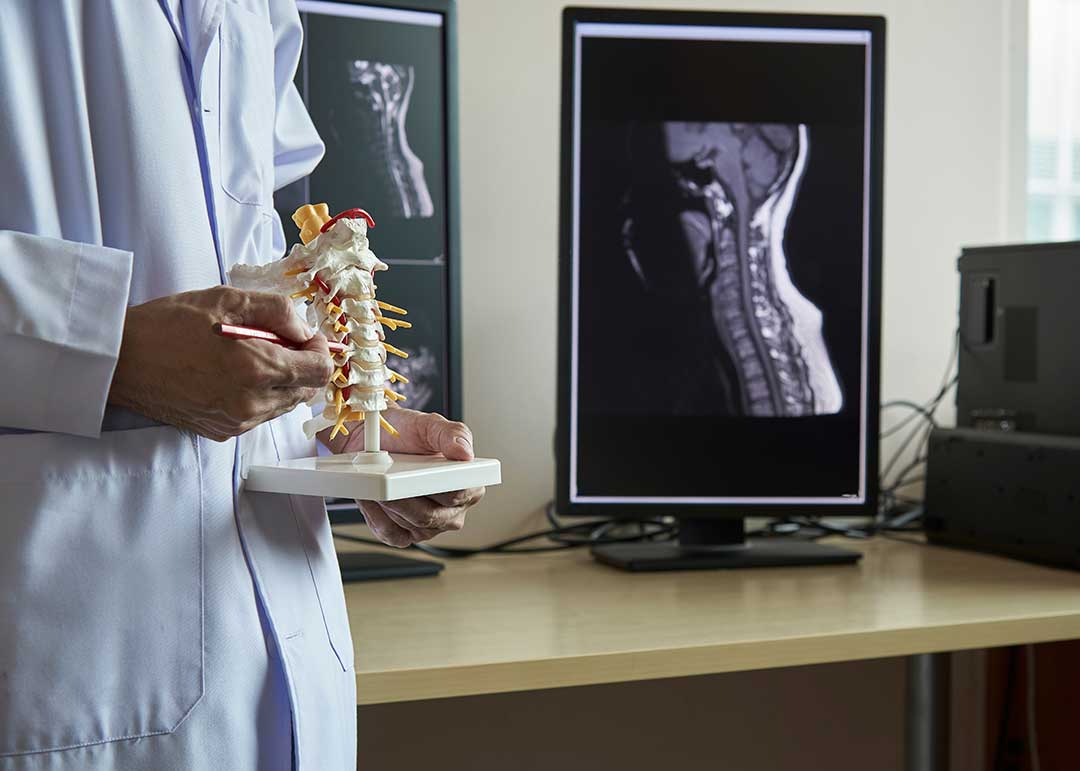
A disc visible on an MRI does not always explain a person’s symptoms. Some people have disc bulges without pain, while others experience substantial symptoms from a relatively small protrusion. The location of the disc, the degree of nerve involvement, and the findings on a physical examination all matter.
What symptoms should residents watch for?
Common symptoms depend on whether the affected disc is in the neck or lower back. They may include:
- Back or neck pain that changes with movement, sitting, coughing, or bending
- Pain that travels into the buttock, leg, shoulder, arm, or hand
- Tingling or pins-and-needles sensations
- Numbness in part of an arm, hand, leg, or foot
- Muscle weakness, such as difficulty lifting the foot or gripping objects
- Muscle spasms or restricted movement
A herniated disc does not always cause constant pain. Symptoms may flare after lifting, prolonged sitting, repetitive bending, or an awkward movement. For residents managing long commutes, desk work, household tasks, or seasonal snow and ice removal, repeated strain can make existing symptoms more noticeable.
Severe or worsening weakness deserves prompt medical evaluation. Emergency care is needed for new loss of bladder or bowel control, difficulty urinating despite a full bladder, numbness around the inner thighs or groin, or rapidly progressing weakness. These symptoms can indicate serious compression of the nerves at the base of the spine.
How is a herniated disc diagnosed?
Diagnosis usually begins with a health history and physical examination. A clinician may check muscle strength, reflexes, sensation, walking ability, and the way certain movements affect symptoms.
Imaging is not automatically necessary for every episode of back or neck pain. X-rays do not show the disc itself but may help identify fractures, arthritis, or alignment changes. Magnetic resonance imaging, commonly called an MRI, provides a more detailed view of discs and nerves and may be considered when symptoms persist, neurological deficits develop, or an invasive treatment is being evaluated.
A scan should be interpreted alongside the person’s symptoms. Treating an MRI finding without understanding the clinical picture can lead to unnecessary worry or inappropriate treatment.
Can chiropractic care help a herniated disc?
Chiropractic care may be useful as part of conservative management for selected patients, particularly when symptoms are primarily mechanical and there is no sign of serious nerve compromise. Care may include gentle spinal mobilization, carefully selected manipulation, soft-tissue techniques, movement guidance, and exercises intended to improve strength and tolerance for daily activity.
The purpose is not to force a disc back into place with a single adjustment. That description is misleading. A more realistic goal is to reduce pain, improve movement, decrease protective muscle tension, and help the person gradually resume normal activities while the irritated tissues settle.
Evidence for spinal manipulation in people with confirmed disc herniation is more limited than evidence for general mechanical low back pain. Treatment should therefore be individualized. High-force or poorly selected techniques may not be appropriate during an acute flare, particularly when leg or arm weakness, progressive numbness, severe inflammation, or other warning signs are present.
What might a conservative care plan include?
Most people without serious neurological problems begin with non-surgical care. Depending on the examination, this may involve:
- Remaining gently active rather than staying in bed for long periods
- Short, comfortable walks or other low-impact movement
- Temporary changes to lifting, bending, and prolonged sitting
- Exercises for trunk, hip, shoulder, or neck control
- Heat or cold used for short periods, depending on which feels better
- Medication discussed with a medical clinician or pharmacist
- Physical therapy, chiropractic care, or another form of guided rehabilitation
The right exercise depends on the location and behavior of the symptoms. A movement that helps one person may aggravate another. Pain that travels farther down an arm or leg, increasing numbness, or new weakness should not be ignored simply because an exercise was recommended generally.
Recovery may occur over several weeks, although the timeline varies. Improvement is often gradual rather than sudden. A person may first notice better sleep or walking tolerance before pain disappears completely.
Does everyone need an MRI or surgery?
No. Many disc-related episodes improve without surgery. An MRI is more useful when symptoms are persistent, severe, or associated with neurological changes, or when the results would change treatment decisions.
Surgery may be considered when a person has persistent disabling nerve pain despite appropriate conservative care, significant or progressive weakness, or emergency symptoms caused by severe nerve compression. Surgery is not automatically required because an MRI shows a herniation.
Chiropractic care should not delay medical or surgical evaluation when red flags are present. Coordinated care may involve a primary-care clinician, neurologist, orthopedic or spine specialist, physical therapist, and chiropractor, depending on the findings.
How can daily habits reduce aggravation?
Small changes can reduce repeated stress while the spine is recovering. Use a hip-hinge motion when lifting, keep loads close to the body, avoid twisting while carrying, and change position regularly during desk work or driving.
During colder months, outdoor chores can be especially demanding. Clearing snow, moving wet materials, or carrying bags on uneven or slippery surfaces combines bending, lifting, and rotation. Breaking tasks into shorter periods, using safe equipment, and avoiding rushed movements may reduce flare-ups.
Long-term prevention also depends on regular activity, adequate sleep, strength in the trunk and hips, and addressing smoking or other factors that may affect disc health. Good posture is useful, but no single posture prevents all disc problems. Frequent movement is generally more practical than trying to hold a rigid position all day.
What questions should be asked before treatment?
Before beginning chiropractic treatment for suspected disc symptoms, a patient should understand:
- What findings suggest a disc problem rather than a muscle strain or joint condition?
- Are there signs of nerve compression?
- Which movements or techniques will be avoided if symptoms worsen?
- What changes should prompt medical evaluation?
- How will progress be measured?
- When should another clinician or imaging be involved?
A careful plan should include reassessment. Treatment that consistently increases radiating pain, numbness, or weakness needs to be reconsidered. The safest approach combines symptom monitoring, appropriate activity, and timely referral when the clinical picture falls outside routine musculoskeletal care.
