

Headaches are common, but the reason behind them is not always obvious. For some people, prolonged slouching, forward-head posture, or holding the neck in one position can contribute to head pain. Posture is rarely the only possible cause, however, and a headache should not automatically be blamed on the way someone sits or stands.
Can poor posture really cause headaches?
Yes, poor posture can contribute to certain headaches, particularly tension-type headaches and headaches related to the neck. Slouching or leaning the head forward may increase the workload on the muscles of the neck, shoulders, upper back, and scalp. Over time, those muscles can become tight or fatigued, producing pain that travels toward the back, sides, or front of the head.
Posture may also influence how the joints and nerves in the upper neck move. A headache that begins in the neck and spreads toward the head is sometimes called a cervicogenic headache. This type of headache is less common than ordinary tension headaches and migraine, and it can be difficult to distinguish without a careful evaluation.
The more accurate answer is that posture can be a contributing factor, not necessarily the complete explanation.
What does a posture-related headache feel like?
A posture-related headache often develops gradually rather than appearing suddenly. It may feel like pressure, tightness, aching, or a band around the head. Many people also notice stiffness in the neck or tension across the shoulders.
Common patterns include:
- Pain that develops after extended computer use, reading, driving, or phone use
- Aching at the base of the skull or upper neck
- Tenderness in the shoulders or upper back
- Head pain that improves after changing position, walking, or resting
- Symptoms that become worse after holding the head in one position
- Reduced neck movement or discomfort when turning the head
A cervicogenic headache may be more prominent on one side and can radiate from the back of the head toward the forehead or behind the eye. That pattern does not prove that posture is responsible, since migraine and other headache disorders can also cause neck discomfort.
How can sitting or phone use affect the neck?
The neck is designed to support the head while it remains balanced over the spine. When the head moves forward, the muscles behind the neck may need to work harder to keep it from dropping. Holding that position for a long time can increase muscle fatigue and irritation.
This commonly happens during:
- Laptop work at a kitchen table or sofa
- Looking downward at a phone
- Reading in bed
- Long periods of driving
- Sewing, crafting, or other close-up activities
- Watching television with the head turned or unsupported
Local household routines can make this more noticeable during colder months, when people may spend more time indoors, use couches or dining tables as work areas, and remain in one position for long stretches. The issue is usually not a single sitting position. It is the combination of limited movement, sustained strain, and insufficient recovery.
Is “bad posture” always the problem?
No. The phrase “bad posture” can be misleading. There is no single perfect posture that must be maintained all day, and sitting with a rounded back for a short time does not automatically cause injury.
Movement variety often matters more than trying to hold a rigidly upright position. Even a well-aligned posture can become uncomfortable if it is maintained without breaks. Stress, poor sleep, eye strain, dehydration, skipped meals, jaw clenching, and excessive use of pain medication may also contribute to headaches.
A person may also have migraine with neck pain. In that situation, neck tightness may be part of the migraine rather than the original cause. Treating posture alone may not address the full problem.
What practical changes may help?
Small adjustments can reduce strain without requiring a stiff or unnatural sitting position.
Keep the top of a computer screen near eye level so the head does not remain tilted downward. The back should be supported, and the feet should rest comfortably on the floor or a stable support. Shoulders should remain relaxed rather than lifted toward the ears.
For phone use, raise the device closer to eye level when possible. Avoid bending the neck forward for long periods. During desk work, change position regularly instead of waiting until pain appears.
Helpful habits include:
- Taking brief movement breaks every 30 to 60 minutes
- Gently turning the head and rolling the shoulders within a comfortable range
- Alternating sitting, standing, and walking when practical
- Adjusting reading materials so they are not held in the lap for long periods
- Checking whether the pillow allows the neck to remain comfortably aligned
- Drinking water and eating regularly
- Relaxing the jaw instead of clenching the teeth
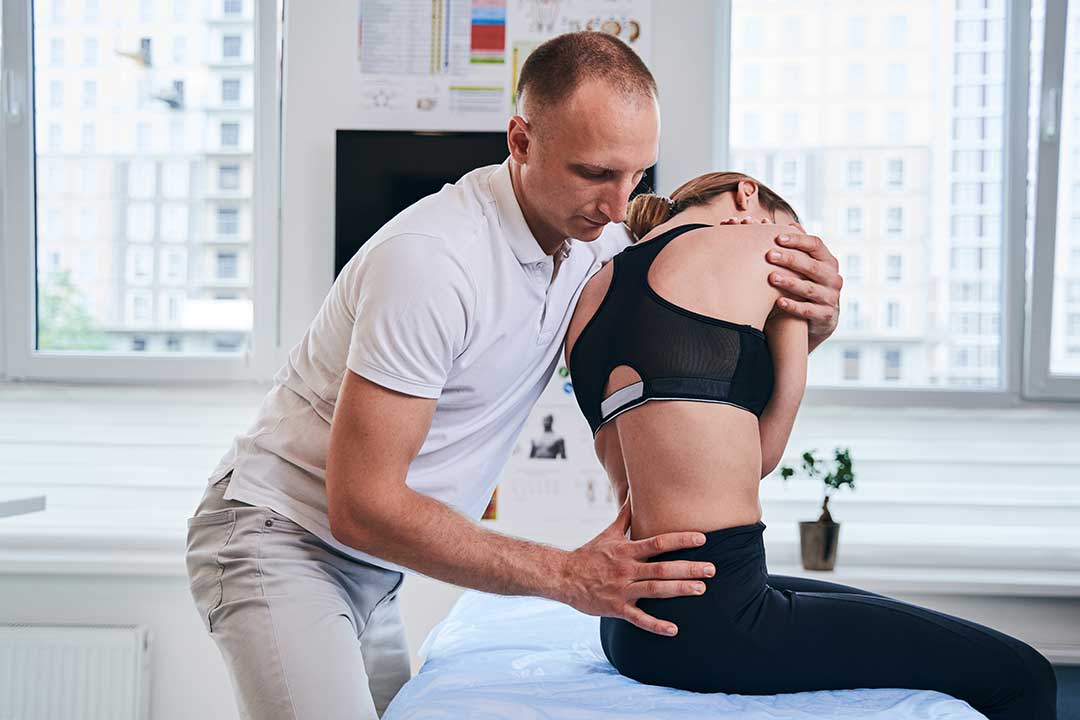
Stretching should feel mild and controlled. Forceful neck movements, repeated cracking, or exercises that cause dizziness, numbness, sharp pain, or worsening symptoms should be stopped.
Can chiropractic care help with headaches related to posture?
Some people seek chiropractic evaluation for headaches accompanied by neck stiffness or movement restrictions. A qualified clinician may assess posture, neck motion, muscle tension, joint function, work habits, and other possible contributors.
The important point is that headaches have many causes. Chiropractic care should not be treated as a universal solution, and neck manipulation is not appropriate for everyone. A thorough history and examination are especially important when symptoms are new, severe, changing, or associated with neurological symptoms.
Treatment may involve education, movement exercises, ergonomic changes, soft-tissue techniques, or other conservative approaches. The appropriate plan depends on the suspected cause and the person’s overall health.
When should a headache be evaluated promptly?
A sudden, severe headache that reaches maximum intensity quickly requires urgent medical assessment. Immediate evaluation is also appropriate for a headache associated with fainting, confusion, weakness, numbness, trouble speaking, vision loss, fever with a stiff neck, repeated vomiting, or a recent head or neck injury.
Medical assessment is also advisable when headaches:
- Become more frequent or severe
- Begin for the first time later in adulthood
- Wake someone from sleep
- Persist despite reasonable self-care
- Occur with unexplained weight loss or significant illness
- Are accompanied by new dizziness, balance problems, or arm symptoms
For recurring headaches without emergency warning signs, keeping a simple record can help identify patterns. Note the timing, duration, location, severity, sleep, meals, screen time, stress, neck symptoms, and any medication used.
Posture can play a meaningful role in some headaches, especially when neck tension builds during prolonged sitting or device use. It is best viewed as one possible contributor among several, not as a diagnosis by itself.
