
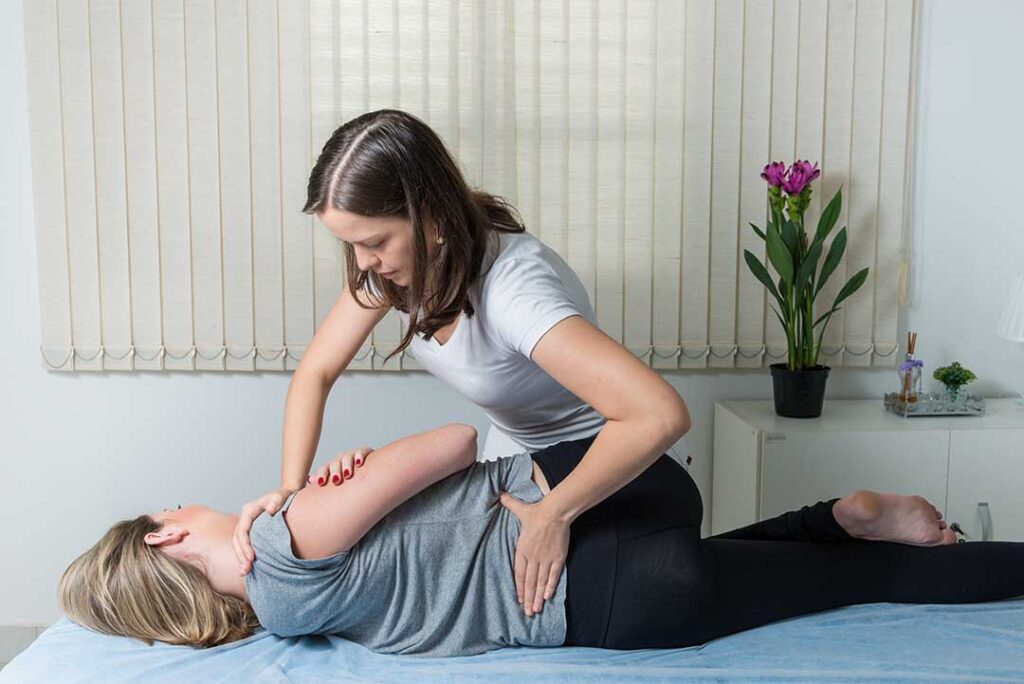
What is the main difference between chiropractic care and massage therapy?
Chiropractic care generally focuses on the relationship between the spine, joints, nerves, and movement. Massage therapy focuses primarily on muscles, connective tissue, circulation, and relaxation. Both may involve hands-on treatment, but they use different techniques and often address different parts of a person’s symptoms.
A chiropractor may evaluate joint movement, posture, spinal motion, and musculoskeletal function. Treatment can include spinal manipulation, joint mobilization, stretching, exercise guidance, and soft-tissue techniques.
A massage therapist uses pressure, kneading, gliding, stretching, or other manual techniques to affect muscles and surrounding soft tissue. Massage may be used for muscle tightness, stress, soreness after activity, or general relaxation.
The two approaches can overlap. For example, a chiropractor may use massage techniques, while a massage therapist may work on muscles surrounding a painful joint. The practitioner’s training, scope of practice, and treatment goals determine what is provided.
How do the treatments feel different?
Chiropractic treatment may involve controlled movements of a joint or spine. Some techniques are gentle and involve slow pressure or mobilization. Others use a quick, controlled thrust. A person may hear a popping sound during some spinal adjustments, although the sound is not required for treatment to be effective.
Massage therapy usually involves sustained pressure or repeated movement over muscles and soft tissue. The pressure may range from light to firm. A therapeutic massage can feel relaxing, mildly uncomfortable, or temporarily tender, depending on the tissues being treated and the intensity used.
Neither approach should cause severe or escalating pain. Clear communication matters. Patients should describe discomfort during treatment rather than assuming that more pressure or a stronger technique will produce better results.
Which problems may each approach address?
Chiropractic care is commonly considered for certain musculoskeletal problems, including:
- Low-back pain
- Neck stiffness
- Some types of joint discomfort
- Limited spinal or joint movement
- Mechanical pain related to posture or movement
- Certain headaches associated with neck tension
Massage therapy may be useful for:
- Tight or tired muscles
- Delayed muscle soreness after exercise
- Stress-related muscle tension
- Temporary discomfort from prolonged sitting or standing
- Shoulder, hip, or leg muscle tightness
- General relaxation and body awareness
These categories are not exclusive. Someone with low-back pain may benefit from soft-tissue work, joint-focused care, exercise, or a combination of approaches. The cause of the pain matters more than the label of the service.
For example, a person who spends long periods driving, working at a desk, lifting household items, or caring for children may develop both restricted joint movement and muscle tension. Treating only one component may provide incomplete relief.
Does chiropractic care realign the body permanently?
No hands-on treatment can guarantee permanent correction of posture or spinal position. Joint movement and muscle tension can change temporarily after treatment, but lasting improvement usually depends on the underlying cause.
Helpful factors may include strengthening, mobility exercises, sleep, activity habits, ergonomic changes, and gradual return to normal movement. Repeated treatment without attention to contributing habits may not address the reason symptoms keep returning.
The term “adjustment” describes a treatment technique. It should not be interpreted as proof that a bone has been placed permanently into a new position or that every health problem is caused by spinal alignment.
Is massage therapy only for relaxation?
No. Massage therapy can be used for relaxation, but it may also address specific soft-tissue complaints. A therapeutic session may focus on an area of muscle guarding, restricted movement, or soreness related to work, exercise, or repetitive activity.
Massage does not replace evaluation for unexplained, severe, or persistent pain. Muscle tension can sometimes be a response to another problem, such as a joint injury, nerve irritation, infection, or systemic illness. In those situations, relaxing the muscles may not address the primary cause.
Which is better for low-back or neck pain?
Neither is automatically better. The more useful option depends on the source of the symptoms, the person’s health history, and how the body responds.
Spinal manipulation may offer modest short-term relief for some people with acute or chronic low-back pain. Massage may help reduce muscle tension and provide short-term relief for certain pain conditions. Evidence varies by condition, technique, and individual.
A practical distinction is this:
- Choose a joint- and movement-focused evaluation when stiffness, restricted motion, or pain with specific spinal movements is the main concern.
- Consider soft-tissue-focused treatment when muscle tightness, soreness, stress, or activity-related tension is more prominent.
- Seek medical evaluation when pain follows significant trauma, is accompanied by weakness or numbness, or does not behave like a typical muscle or joint problem.

Some people use both approaches at different times. That does not mean both are necessary, and combining them should not delay appropriate medical care.
What safety issues should residents consider?
Both chiropractic treatment and massage therapy are generally considered low-risk for many healthy adults when performed appropriately, but neither is risk-free.
Temporary soreness, fatigue, bruising, or increased tenderness can occur after massage. Chiropractic treatment may also cause temporary soreness or stiffness. Serious complications are uncommon, but certain health conditions require extra caution or make some techniques inappropriate.
People should disclose relevant health information before treatment, including:
- Recent falls, collisions, or other injuries
- Osteoporosis or a history of fractures
- Blood-clotting disorders or use of blood thinners
- Cancer, infection, or unexplained fever
- Severe or worsening headaches
- Numbness, weakness, or loss of coordination
- Pregnancy or recent surgery
- New loss of bladder or bowel control
Neck manipulation deserves particular caution because the neck contains delicate blood vessels and nerves. Sudden, severe neck pain or headache, facial drooping, difficulty speaking, dizziness, or weakness requires urgent medical attention rather than massage or spinal manipulation.
How does local life affect the choice?
Residents in Lynbrook may experience seasonal patterns that contribute to discomfort. Winter conditions can lead to shoveling, carrying supplies, slipping hazards, and more time indoors. Warmer months may bring yard work, recreational activity, commuting changes, and longer periods spent outdoors.
Housing and work routines can matter as well. Repeated stair use, compact workspaces, prolonged computer use, driving, lifting laundry, or caring for family members may create recurring muscle and joint strain.
A treatment choice is more likely to help when it is paired with practical changes, such as adjusting a workstation, using safer lifting habits, taking movement breaks, improving sleep position, or increasing activity gradually after a period of inactivity.
When should pain be evaluated medically first?
A person should seek medical evaluation before relying on chiropractic care or massage for pain that is severe, unexplained, rapidly worsening, or associated with symptoms beyond the muscles and joints.
Warning signs include chest pain, shortness of breath, fainting, persistent fever, unexplained weight loss, significant swelling, a major injury, progressive weakness, or new changes in bladder or bowel control.
For ordinary muscle tightness or uncomplicated mechanical discomfort, either approach may be reasonable for some people. The safest choice is based on a clear understanding of the symptoms, realistic expectations, and a treatment plan that does not discourage necessary medical evaluation.
