
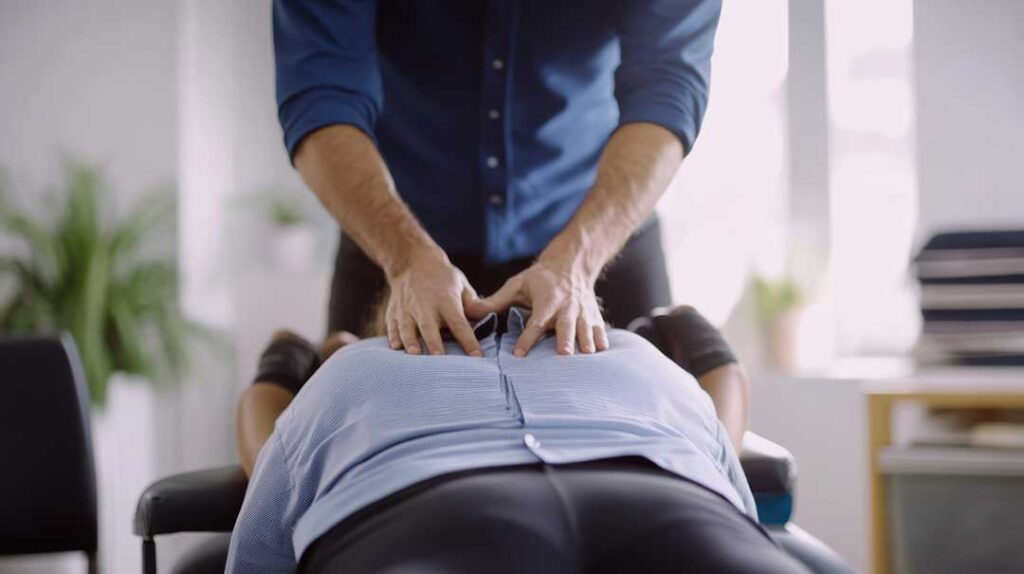
Chiropractic care may support sports injury prevention by addressing movement limitations, joint mobility, muscle balance, and recovery habits. It does not make an athlete injury-proof, and it should complement—not replace—proper conditioning, equipment, coaching, rest, and medical evaluation when symptoms are serious.
What role can chiropractic play before an injury occurs?
Chiropractic care may help identify physical factors that make certain movements more difficult or place extra stress on muscles and joints. These factors can include limited spinal or extremity mobility, reduced flexibility, poor movement coordination, and strength differences between opposing muscle groups.
A sports-focused evaluation may include questions about:
- The activity or sport being performed
- Training frequency and recent changes in workload
- Previous injuries
- Pain, stiffness, or restricted movement
- Warm-up and recovery routines
- Work, school, sleep, and daily physical demands
The purpose is not to assume that every joint needs to be adjusted. A careful assessment should determine whether manual therapy, mobility exercises, strengthening, activity modification, or referral to another healthcare professional is more appropriate.
For a recreational runner, this might involve looking at how the hips, lower back, knees, and ankles work together. For someone who plays a field or court sport, the assessment may focus on repeated cutting, jumping, landing, throwing, or rapid changes in direction.
Does an adjustment prevent sports injuries?
No single adjustment can guarantee injury prevention. Research on spinal manipulation is stronger for some types of musculoskeletal pain than for preventing sports injuries in people who have no symptoms.
Chiropractic treatment may temporarily improve joint motion or reduce discomfort for some people. That can make it easier to perform prescribed exercises or move with better control. However, injury prevention depends on a broader program that includes adequate strength, coordination, gradual training progression, sound technique, and enough recovery.
Claims that chiropractic care can prevent all injuries, correct every athletic problem, or eliminate the need for conditioning are not supported by reliable evidence.
How does mobility relate to injury risk?
Mobility is the ability of a joint or body region to move through the range needed for a task. Too little mobility in one area can cause other areas to compensate. For example, restricted ankle motion may alter a squat or landing pattern, while limited hip rotation may place additional movement demands on the lower back or knee.
Chiropractic care may include joint mobilization or manipulation when an examination suggests that restricted motion is contributing to a problem. It may also include stretching, breathing exercises, motor-control drills, or home movements.
Mobility should not be confused with flexibility alone. An athlete may be flexible but lack the strength and control needed to stabilize a joint during fast activity. Injury prevention usually requires both usable range of motion and the ability to control that range under load.
Why are strength and conditioning still essential?
Strength training is one of the central parts of injury prevention. Muscles help absorb force, stabilize joints, and control deceleration. A person who only receives passive treatment without improving strength may continue to experience the same problem when returning to sport.
Useful conditioning may include:
- Single-leg balance and control
- Hip and core strengthening
- Calf and lower-leg exercises
- Hamstring and quadriceps training
- Shoulder-blade and rotator-cuff work
- Landing, stopping, and change-of-direction practice
- Gradual increases in running, lifting, or throwing volume
The correct exercises depend on age, training history, sport, current symptoms, and physical capacity. A plan for a teenager beginning a seasonal sport should not be identical to a plan for an adult returning to exercise after years of inactivity.
What local conditions can affect injury prevention?
Residents in Lynbrook often move between indoor and outdoor activities as weather changes. Cold winter conditions may reduce outdoor training, leading some people to increase activity abruptly when spring leagues, running routines, or recreational games begin.

Cool temperatures can also make muscles feel stiff at the start of exercise. A progressive warm-up is generally more useful than beginning intense activity immediately. This may include several minutes of easy movement followed by sport-specific drills.
Summer heat and humidity can create separate concerns, including dehydration and heat illness. Training intensity may need to be reduced during unusually hot conditions, particularly for children, older adults, and people who are not acclimated. Hydration, shade, breathable clothing, and rest breaks matter as much as joint mobility.
Uneven pavement, wet sidewalks, crowded recreational spaces, and poorly maintained playing surfaces can also contribute to falls or awkward landings. Chiropractic care cannot correct an unsafe environment, so attention to footwear, visibility, surface conditions, and surroundings remains necessary.
Can chiropractic help with previous injuries?
It may help some people manage lingering pain or movement restrictions after an injury, but the correct treatment depends on the diagnosis. A history of ankle sprains, for example, may involve reduced balance and weakness that require progressive rehabilitation. A recurring shoulder problem may require evaluation of the neck, upper back, shoulder blade, and rotator cuff.
Returning to sport too quickly is a common reason injuries recur. Pain relief alone does not prove that tissue has recovered or that the body is ready for full-speed activity. A gradual return may begin with low-intensity practice, limited duration, and controlled movements before progressing to competition-level demands.
Persistent swelling, instability, weakness, numbness, or loss of function warrants medical assessment rather than repeated attempts to train through symptoms.
When is chiropractic care not enough?
Certain signs require prompt medical evaluation. These include suspected fractures, dislocations, major ligament injuries, severe or worsening pain, loss of sensation, progressive weakness, inability to bear weight, chest pain, fainting, or symptoms after a significant head or neck impact.
After a possible concussion, an athlete should be removed from play and assessed according to current concussion guidance. Chiropractic treatment should not be used as a substitute for emergency care or a structured concussion evaluation.
Neck manipulation also requires particular caution. People should disclose relevant medical conditions, medications, recent trauma, and neurological symptoms before any manual treatment. Mild soreness or stiffness can occur after manipulation, while serious complications are rare but possible.
What does a practical prevention plan look like?
A balanced plan usually includes:
- A gradual warm-up before intense activity
- Sport-specific technique practice
- Strength and balance training throughout the year
- Slow increases in training volume and intensity
- Rest days and adequate sleep
- Appropriate footwear and protective equipment
- Attention to heat, cold, wet surfaces, and visibility
- Early evaluation of pain that changes movement or performance
Chiropractic may have a useful supporting role when it is based on an individual assessment and combined with active rehabilitation. The main objective is not simply to make a joint move more freely for a short time. It is to help the person move safely, build capacity, recognize warning signs, and return to activity with appropriate control.
