

Clicking or popping in the neck is common and often harmless, especially when it occurs without pain or other symptoms. The sound may come from normal joint movement, tendons or ligaments shifting, changes in pressure inside small spinal joints, or age-related changes in the neck.
For residents of Lynbrook, NY, neck noises may become more noticeable after long periods at a computer, driving, using a phone, sleeping awkwardly, or spending time with the head tilted forward. The sound itself is usually less important than what accompanies it.
What causes clicking in the neck?
Neck clicking, sometimes called crepitus, can have several causes. The most common are related to ordinary movement rather than damage.
Small joints in the cervical spine help the head turn, tilt, and bend. When these joints move, pressure changes can create tiny gas bubbles in the joint fluid. The release or movement of those bubbles may produce a pop or click.
Other possible sources include:
- Tendons or ligaments moving over nearby bone
- Tight muscles changing how the neck moves
- Mild joint stiffness after sitting or sleeping in one position
- Irritation from repetitive posture or overuse
- Normal age-related wear in the joints or discs
- Previous strain, whiplash, or other injury
A single click when turning the head is generally not a sign that a bone is “out of place.” The neck is made to move, and joint sounds can occur even when the tissues are healthy.
Is neck cracking dangerous?
Occasional, gentle clicking is usually not dangerous if there is no pain, weakness, numbness, dizziness, or loss of movement. Many people notice harmless sounds when looking over a shoulder or stretching after sitting for a while.
Forcefully twisting or repeatedly manipulating the neck is different. Deliberately trying to produce a crack can strain muscles, irritate joints, or aggravate an already sensitive nerve. Repeated forceful movements may also contribute to joint irritation or instability in some people.
Rarely, sudden high-force neck movement can injure a blood vessel in the neck. This is uncommon, but a sudden severe headache, dizziness, trouble speaking, vision changes, facial weakness, or difficulty walking after forceful neck movement requires emergency medical attention.
A useful rule is to avoid chasing the sound. If the neck clicks naturally during comfortable movement, there is usually no reason to keep repeating the motion.
Why does my neck click when I turn my head?
Clicking during rotation may reflect movement in one or more of the small facet joints at the back of the cervical spine. It can also result from a tendon or ligament gliding across a bony area.
The sound may be more noticeable when:
- The neck is stiff after sleep
- The shoulders are tense
- The head has been held forward while reading or using a phone
- A person has been seated for a long time
- The neck is being moved farther than usual
- The muscles are tired after lifting, exercise, or household work
In a dense suburban community such as Lynbrook, many daily routines involve driving, desk work, commuting, or extended screen use. These activities do not necessarily injure the neck, but they can increase muscle tension and make normal joint noises easier to notice.
Does clicking mean arthritis?
Not necessarily. Arthritis and other age-related changes can contribute to grinding, stiffness, or reduced range of motion, but a neck that clicks is not automatically arthritic.
Some people have visible wear on imaging without significant pain. Others have painful neck symptoms with little or no obvious structural change. The sound alone cannot determine whether arthritis, a disc problem, or another condition is present.
Concern rises when clicking occurs with persistent pain, swelling, marked stiffness, reduced movement, or symptoms traveling into the shoulder, arm, or hand. Those patterns deserve a more complete evaluation rather than an assumption that the noise explains everything.
When should neck clicking be checked?
Neck sounds are more concerning when they are new, worsening, or connected with other symptoms. Medical evaluation is appropriate if clicking is accompanied by:
- Ongoing or increasing neck pain
- Pain that travels into an arm or hand
- Numbness, tingling, or weakness
- Loss of coordination or balance
- Frequent headaches that began with the neck symptoms
- A feeling that the neck is catching or locking
- Significant stiffness that does not improve
- Symptoms that began after a crash, fall, sports injury, or other trauma
Emergency care is warranted for severe neck pain after an injury, new weakness in an arm or leg, trouble walking, loss of bladder or bowel control, high fever with a stiff neck, or sudden neurological symptoms such as facial drooping, difficulty speaking, or major vision changes.
These warning signs are not typical of simple, harmless crepitus.
What can help reduce irritating neck noises?
The goal is not always to eliminate every sound. A better goal is comfortable, controlled movement and reduced strain.
Helpful steps may include:
- Change positions regularly rather than holding the head still for hours.
- Keep screens closer to eye level so the chin does not remain angled downward.
- Support the back while sitting and allow the shoulders to relax.
- Move the neck gently through a comfortable range instead of forcing stretches.
- Use warmth for muscle tightness or a brief cold application after a recent strain.
- Pay attention to pillow height and sleeping position.
- Build general strength and mobility gradually rather than performing aggressive neck exercises.
- Avoid repeatedly twisting the neck to make it crack.
People who spend much of the winter indoors may also become less active, which can increase overall stiffness. Short movement breaks during work, driving, or household tasks can help the neck and upper back tolerate daily activity more comfortably.
Can a chiropractor help with a clicking neck?
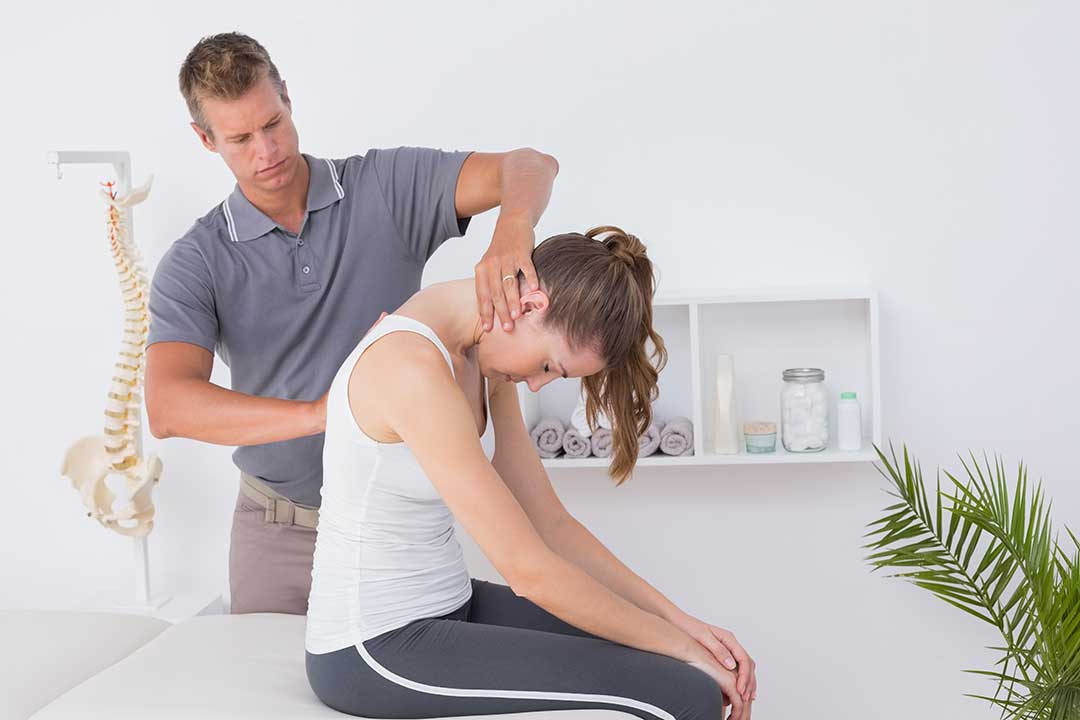
A chiropractor may assess posture, joint movement, muscle tension, and the relationship between neck symptoms and the upper back or shoulders. However, clicking by itself does not automatically require spinal manipulation.
A careful assessment should consider the full pattern: when the sound began, whether it hurts, what movements trigger it, whether there has been an injury, and whether neurological symptoms are present. Depending on the findings, appropriate care may involve education, gentle mobility work, strengthening, activity changes, or referral for medical evaluation.
Neck manipulation should not be treated as a routine response to every clicking sound. People with recent trauma, unexplained neurological symptoms, severe pain, infection symptoms, or certain medical conditions may need medical assessment before any manual treatment is considered.
The main distinction is simple: painless, occasional clicking is commonly benign, while clicking paired with pain, weakness, numbness, injury, or loss of function deserves attention. Observing the pattern—and avoiding forceful attempts to reproduce the sound—can help separate a normal body noise from a symptom that needs further evaluation.
