
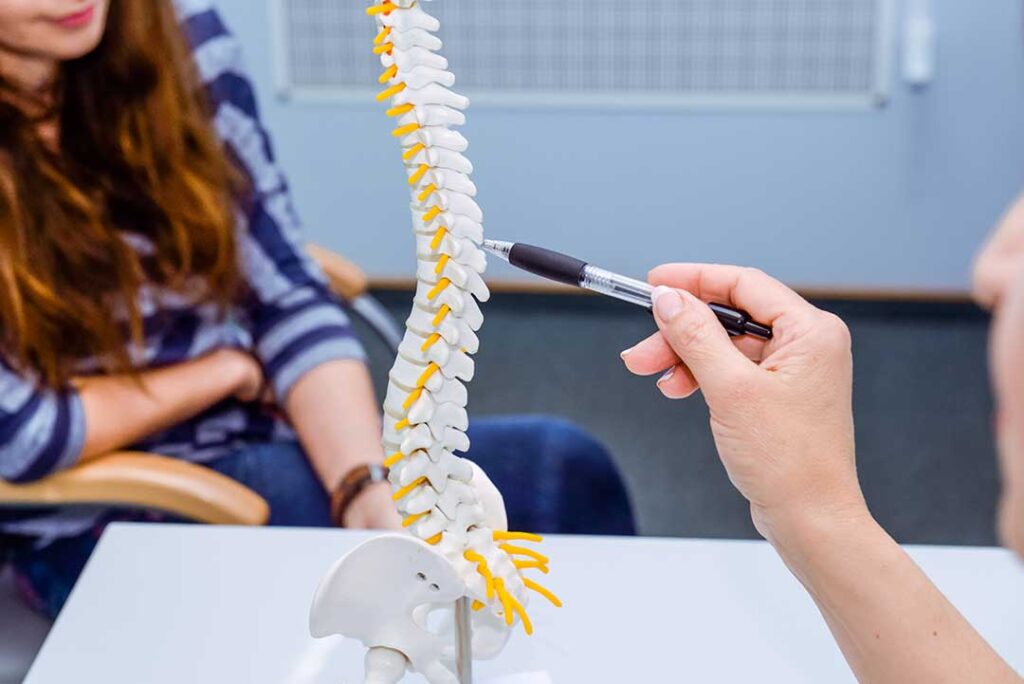
Balance problems can sometimes be related to how the spine, joints, muscles, and nervous system work together. However, poor balance is not automatically caused by spinal misalignment, and dizziness often begins in the inner ear, brain, eyes, medications, or circulation rather than the back.
For residents in Lynbrook, balance concerns may become more noticeable while walking on uneven sidewalks, navigating wet pavement, using stairs, or moving between indoor and outdoor surfaces during seasonal weather changes. Understanding the possible connection can help people respond appropriately without assuming that every balance issue requires spinal treatment.
How does spinal alignment affect balance?
The spine helps position the head, shoulders, pelvis, and legs over the feet. When posture changes because of pain, stiffness, muscle weakness, or an uneven walking pattern, the body may use extra effort to remain upright.
Balance depends on information from three primary systems:
- Vision, which shows where the body is in relation to its surroundings
- The inner ear, which detects head movement and changes in position
- Proprioception, which allows the brain to sense joint position, muscle tension, and body movement
The joints and muscles around the neck, back, hips, knees, and feet contribute to proprioception. If pain or restricted movement changes how a person holds the head or distributes weight, the brain may receive altered information about body position. This can contribute to unsteadiness, especially during turning, standing quickly, or walking on uneven ground.
That does not mean the spine is “out of place” in a simple mechanical sense. The term spinal alignment is often used broadly to describe posture, movement patterns, joint motion, and the way the body manages load.
Can neck problems cause dizziness or unsteadiness?
Neck pain and stiffness can be associated with a sensation of imbalance, particularly after an injury or during prolonged postural strain. Limited neck movement may affect visual orientation and the sensory signals coming from muscles and joints in the neck.
Some people describe this as feeling “off,” lightheaded, or unsteady rather than experiencing true spinning. This pattern is sometimes called cervicogenic dizziness, but it is generally considered a diagnosis made after other causes have been considered. Inner-ear disorders, medication effects, blood pressure changes, migraine, neurological conditions, and vision problems can produce similar symptoms.
A neck-related explanation should not be assumed simply because dizziness occurs with neck pain. New, persistent, or unexplained symptoms deserve a proper medical evaluation.
What balance symptoms may be related to posture or movement?
Balance problems associated with musculoskeletal factors often vary with movement and position. Examples can include:
- Feeling less steady after prolonged sitting
- Difficulty turning the head while walking
- A tendency to shift weight toward one leg
- Stiffness in the hips, ankles, or upper back
- Increased wobbling when standing with the feet close together
- Hesitation on stairs or uneven surfaces
- A shorter stride caused by pain or fear of falling
These signs can also occur with many other conditions. Their presence does not identify the cause by itself.
A useful observation is whether symptoms are primarily related to movement, or whether they occur even while sitting still. Spinning sensations, hearing changes, faintness, chest symptoms, severe headache, numbness, or weakness suggest that the balance system may involve more than posture and should not be attributed to spinal alignment without assessment.
Does a spinal adjustment fix balance problems?
There is no single adjustment or spinal technique that can correct every cause of imbalance. If pain, restricted joint motion, or altered movement is contributing to poor stability, care directed at mobility, strength, coordination, and body mechanics may be one part of a broader plan.
The goal should be improved function rather than forcing the spine into a perfect position. A balanced approach may include:
- Gentle movement and range-of-motion exercises
- Strengthening of the legs, hips, trunk, and postural muscles
- Walking and turning practice
- Footwear and home-safety changes
- Vestibular rehabilitation when the inner ear is involved
- Vision, medication, blood pressure, or neurological evaluation when appropriate

People with osteoporosis, recent trauma, inflammatory disease, severe nerve symptoms, or a history of spinal surgery may need specific precautions. Forceful neck movements are not appropriate for everyone.
When should balance problems be medically evaluated?
A sudden change in balance should be treated seriously. Urgent evaluation is appropriate when imbalance occurs with facial drooping, trouble speaking, one-sided weakness or numbness, fainting, severe headache, new vision loss, chest pain, or inability to walk safely. These symptoms can signal a neurological or cardiovascular emergency.
Medical evaluation is also sensible when balance problems:
- Begin after a fall or head injury
- Continue for more than a short period
- Are getting progressively worse
- Lead to repeated falls
- Occur with hearing loss or ringing in the ears
- Are accompanied by numbness, weakness, tremors, or coordination changes
- Begin after a new medication or dose change
A clinician may examine walking, coordination, eye movements, sensation, strength, blood pressure, hearing, and neck motion. Depending on the findings, evaluation may involve primary care, neurology, ear and balance specialists, physical therapy, or another appropriate discipline.
What can residents do safely at home?
Until the cause is clearer, safety is more important than testing balance with risky exercises. Practical steps include keeping walkways free of loose rugs and clutter, improving lighting on stairs, using handrails, and avoiding ladders when feeling dizzy or unsteady.
During icy or wet conditions, slower walking and supportive footwear can reduce hazards around homes and public walkways. Indoors, rising slowly from a chair or bed may help people who feel lightheaded with position changes.
Simple activities such as regular walking, comfortable mobility exercises, and lower-body strengthening may support balance for many adults. Exercises should be performed near a stable surface, with another person present when falling is a concern. Standing on one foot or closing the eyes during balance practice can be unsafe without appropriate supervision.
The practical takeaway
Spinal alignment can influence balance through posture, joint motion, pain, muscle control, and proprioception. It is one piece of a larger system that also includes the inner ear, vision, brain, circulation, medications, and general strength.
The most useful question is not simply whether the spine is aligned. It is which body system is producing the balance change and whether the symptoms are new, worsening, or accompanied by warning signs. That distinction helps prevent both unnecessary alarm and the mistaken assumption that dizziness or unsteadiness is only a back or neck problem.
