
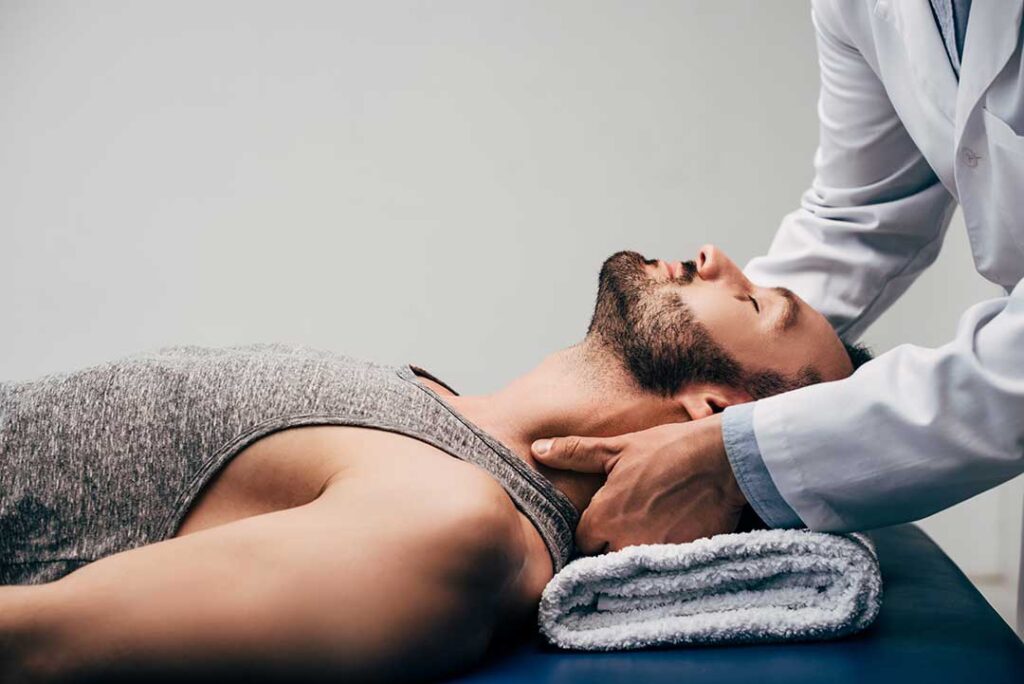
Can chiropractic adjustments help with PMS?
Chiropractic adjustments may help some people manage muscle tension, low-back discomfort, or pelvic-area soreness that occurs before or during menstruation. However, there is not strong evidence that spinal adjustments directly treat the hormonal and emotional symptoms of premenstrual syndrome, or PMS.
PMS is a group of symptoms that may appear during the one to two weeks before a period and improve after menstruation begins. Symptoms can include:
- Abdominal cramping or bloating
- Breast tenderness
- Headaches
- Low-back pain
- Fatigue and sleep changes
- Irritability, anxiety, sadness, or mood swings
- Food cravings or appetite changes
An adjustment may address related musculoskeletal discomfort, but it should not be viewed as a proven treatment for PMS itself.
Why might an adjustment feel helpful?
Some premenstrual symptoms involve pain or stiffness in the lower back, hips, pelvis, or upper back. Hormonal changes, fluid retention, reduced activity, disrupted sleep, and muscle guarding may all affect how the body feels during this part of the menstrual cycle.
A chiropractic visit may include an assessment of spinal or joint movement and, when appropriate, manual treatment intended to improve mobility or reduce muscle tension. If a person’s main concern is mechanical low-back pain that becomes worse before a period, treatment directed at the back may provide short-term comfort.
That benefit is different from changing the underlying menstrual cycle. There is no established mechanism showing that an adjustment can reliably correct hormone fluctuations, prevent PMS, or treat mood symptoms.
For residents balancing work, school, commuting, household responsibilities, and seasonal changes in outdoor activity, it can also be easy to mistake general back stiffness or reduced exercise for a purely menstrual symptom. Tracking both symptoms together may help clarify what is actually occurring.
What does the research say?
Research specifically examining chiropractic care for PMS is limited. Studies of spinal manipulation for menstrual pain have produced mixed findings, and earlier reviews found insufficient evidence to determine whether it consistently reduces period-related pain.
This means that some individuals may report feeling better after manual care, but those experiences do not establish that adjustments treat PMS for most people. Research is also limited on whether chiropractic treatment improves bloating, breast tenderness, headaches, irritability, depression, or other common premenstrual symptoms.
A reasonable interpretation is:
- Adjustments may be useful for coexisting back, neck, or joint discomfort.
- Evidence is not strong enough to recommend adjustments as a primary PMS treatment.
- Treatment should not delay evaluation of severe, new, or worsening menstrual symptoms.
- Results may vary depending on whether the main problem is muscle and joint pain, menstrual cramping, migraine, or a separate gynecologic condition.
How is PMS usually managed?
PMS treatment depends on the symptoms, their severity, and whether they follow a consistent monthly pattern. Common evidence-based measures include regular aerobic activity, adequate sleep, stress-management techniques, and heat applied to painful areas.
For some people, nonsteroidal anti-inflammatory drugs, such as ibuprofen or naproxen, can reduce cramps and other pain when used safely and according to label directions. These medicines are not appropriate for everyone, including some people with a history of ulcers, certain kidney or liver problems, bleeding disorders, or medication allergies.
Hormonal treatment may reduce symptoms for some individuals by changing ovulation or hormone patterns. Antidepressant medicines may be considered when mood symptoms are prominent, especially in cases of premenstrual dysphoric disorder, or PMDD. PMDD is a more severe condition that can significantly affect work, relationships, and daily functioning.
Dietary changes may also help some people. Limiting excess sodium can reduce fluid retention, while regular meals and attention to caffeine or alcohol intake may be useful when those substances worsen symptoms. Supplements should be discussed carefully because “natural” products can interact with medicines or be inappropriate during pregnancy.

Can adjustments help with menstrual cramps?
Menstrual cramps, known medically as dysmenorrhea, are not exactly the same as PMS. PMS occurs before menstruation and often includes mood, breast, digestive, and energy changes. Dysmenorrhea is pain caused by uterine contractions during or around the period.
An adjustment may help if a person also has back or hip pain related to posture, muscle tension, or restricted movement. Current evidence does not show that spinal manipulation reliably reduces uterine cramping itself. It should therefore be considered supportive care for possible musculoskeletal symptoms, not a replacement for appropriate evaluation and treatment of painful periods.
Severe cramps may be caused by conditions such as endometriosis, adenomyosis, fibroids, pelvic infection, or other gynecologic problems. Those conditions require medical assessment rather than relying only on spinal care.
Is chiropractic care safe for everyone with PMS?
Spinal manipulation is generally associated with temporary effects such as soreness, stiffness, or increased discomfort. A careful health history matters, particularly if there is osteoporosis, a bleeding disorder, recent trauma, infection, cancer, significant neurologic symptoms, or pregnancy-related concerns.
The treatment approach should match the person’s symptoms and health history. Forceful treatment is not automatically better, and there is no reason to continue a therapy that repeatedly worsens pain or causes new symptoms.
A person should seek prompt medical care for sudden severe pelvic pain, fainting, fever, unusually heavy bleeding, bleeding after pregnancy, new weakness or numbness, or thoughts of self-harm. These symptoms are not typical PMS complaints.
What can a symptom diary reveal?
Recording symptoms for at least two menstrual cycles can make patterns easier to identify. Note the first day of each period, the days symptoms begin and end, pain location, bleeding changes, sleep, exercise, stress, medications, and mood.
A diary can help distinguish:
- PMS that improves shortly after menstruation begins
- Pain that occurs throughout the month
- Back pain that changes with sitting, lifting, or activity
- Headaches that may be menstrual migraines
- Mood symptoms that may require evaluation for PMDD or another condition
For someone considering chiropractic care, the diary can also show whether back or pelvic discomfort improves independently from other PMS symptoms. That makes it easier to judge whether the treatment is addressing a specific musculoskeletal problem rather than the full syndrome.
The practical answer
Chiropractic adjustments may provide relief for some PMS-related back, hip, or muscle discomfort, but evidence does not support describing them as a reliable treatment for PMS as a whole. They are best viewed as one possible supportive option alongside sleep, movement, heat, appropriate medication, and evaluation of persistent or severe symptoms.
If symptoms interfere with daily life, become progressively worse, or include severe pain or major mood changes, medical evaluation is warranted. PMS is common, but disabling symptoms should not simply be accepted as something that must be endured.
