
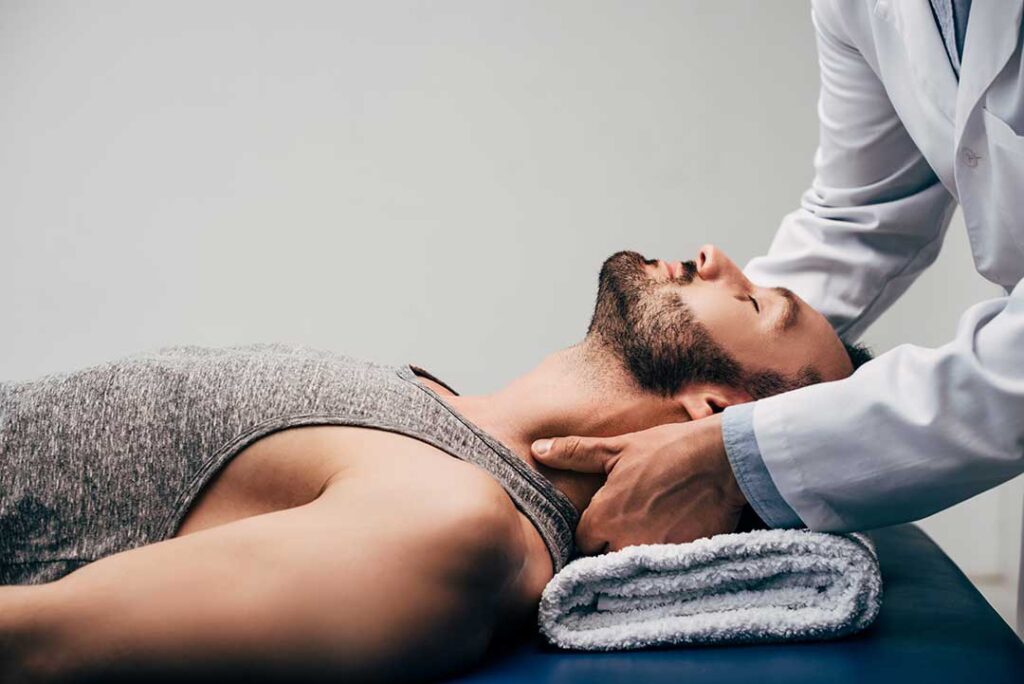
What is the Graston Technique?
The Graston Technique is a form of instrument-assisted soft-tissue mobilization, often abbreviated as IASTM. It uses smooth, specially shaped tools along the skin over muscles, tendons, fascia, and other soft tissues.
In chiropractic care, the technique may be used as one part of a broader plan that can also include exercise, mobility work, joint mobilization, posture education, and activity modification. It is not a form of spinal adjustment, and it is not intended to replace a complete evaluation.
The instruments do not cut the skin. A practitioner applies a controlled amount of pressure while moving the tool across a targeted area. The goal is to help assess and treat areas that feel restricted, sensitive, or less mobile.
How does the technique work?
The proposed effects are both mechanical and sensory, although the exact biological process is still being studied. The tool may help a practitioner detect changes in tissue texture or movement while also providing pressure and movement that influence how the nervous system responds to discomfort.
Treatment may be directed toward:
- Muscles that feel tight after repetitive activity
- Tendons affected by overuse
- Scar tissue or adhesions after healing
- Areas with reduced soft-tissue mobility
- Regions contributing to restricted movement or altered mechanics
The term “breaking up scar tissue” is often used in casual explanations, but it can be misleading. A tool used on the skin does not literally scrape away internal scar tissue. Any benefit may instead involve changes in pain sensitivity, tissue motion, muscle tone, or the way movement is performed.
What conditions may be treated?
IASTM is sometimes used for musculoskeletal complaints involving the neck, shoulders, back, hips, knees, elbows, wrists, ankles, and feet. Examples include muscle strains, tendon irritation, restricted range of motion, and discomfort associated with repetitive work or recreational activity.
For local residents, common contributing factors may include long periods of desk work, commuting, home renovation, lifting, household maintenance, walking, running, or seasonal outdoor activity. Cold weather may also lead some people to reduce movement or remain in more guarded postures, which can make stiffness feel more noticeable.
The technique is not appropriate for every condition. Pain caused by a fracture, infection, advanced joint disease, nerve compression, vascular problems, or a serious internal disorder requires a different evaluation. Soft-tissue treatment should not be used to delay medical assessment when symptoms are unusual, severe, or rapidly worsening.
What happens during a session?
A typical session begins with questions about symptoms, activity, previous injuries, medications, and health conditions. The area may then be examined for tenderness, strength, movement, swelling, and skin changes.
The skin is usually covered with a small amount of lotion or another lubricant. The practitioner moves the instrument over selected tissues using short or long strokes. Pressure should be controlled and adjusted to the person’s tolerance.
Treatment can feel like firm scraping, pressure, or rubbing. Mild tenderness during or afterward is possible. A properly performed session should not feel like uncontrolled force or sharp, escalating pain.
Many treatment plans pair the technique with active movement. For example, a person with limited ankle mobility may perform controlled ankle movements while the practitioner works on nearby soft tissue. Someone with elbow or shoulder discomfort may be given strengthening or mobility exercises to address the factors that caused the irritation.
Can it cause bruising?
Temporary redness or small areas of bruising can occur, especially when pressure is excessive for a person’s sensitivity or when the tissues are already irritated. Bruising is not proof that treatment was effective, and more discoloration does not mean more healing.
People who bruise easily, take blood-thinning medication, have a bleeding disorder, or have fragile skin should discuss those factors before treatment. The same applies to people with significant swelling, reduced sensation, circulation problems, or a history of abnormal scarring.
Skin should be checked before and after treatment. Treatment over an open wound, active rash, unexplained discoloration, or suspected infection is generally inappropriate.
Is the Graston Technique supported by research?
Research on IASTM has produced mixed results. Some studies report short-term improvements in pain, flexibility, or movement, while broader reviews have found that the evidence is limited by small samples, different treatment methods, and inconsistent study quality.
The research does not establish that the technique is superior to exercise, education, gradual activity, or other conservative care for every condition. It is more accurate to view Graston-style treatment as an optional hands-on tool rather than a guaranteed solution.
A useful treatment plan should measure meaningful outcomes, such as improved walking, lifting, sleeping, work tolerance, or joint movement. If symptoms and function do not improve over a reasonable period, the plan should be reassessed rather than continued automatically.
How is it different from massage or scraping therapies?
Massage generally uses the hands to apply pressure and movement to soft tissues. IASTM uses a handheld instrument to concentrate contact over a smaller area and may help the practitioner identify changes in tissue resistance.
The Graston Technique is also different from traditional scraping practices sometimes used in other healing systems. Similar-looking tools do not necessarily represent the same method, training, clinical reasoning, or treatment goals. Skin bruising or redness alone cannot identify which technique was used or determine whether it was suitable.
Who should be cautious?
Extra caution is appropriate for people with:
- Active skin infections, wounds, or unexplained rashes
- Blood-clotting disorders or easy bruising
- Use of anticoagulant or antiplatelet medication
- Severe osteoporosis or recent fracture
- Significant swelling or suspected vascular disease
- Reduced sensation from nerve problems or diabetes
- Active cancer in the treatment area
- Recent surgery unless the treating medical team has cleared the area
Pregnancy does not automatically rule out all soft-tissue care, but treatment location, positioning, symptoms, and medical history matter. Any person with a complex health condition should discuss the technique with an appropriate medical clinician before proceeding.
What questions should a resident ask?
A few practical questions can make the treatment easier to evaluate:
- What specific problem is this intended to address?
- How will progress be measured?
- What exercises or activity changes are part of the plan?
- What soreness, redness, or bruising should be expected?
- Are medications or health conditions relevant to safety?
- What symptoms would mean the treatment should stop?
- What alternatives are available if it does not help?
The most reasonable use of the Graston Technique is usually as one component of individualized care, not as a stand-alone explanation for pain. For persistent, severe, unexplained, or neurologic symptoms—such as progressive weakness, loss of coordination, fever, major swelling, or loss of bladder or bowel control—prompt medical evaluation is more appropriate than continued soft-tissue treatment.
