

Neck pain can begin with something ordinary: a long period at a computer, an awkward night of sleep, a sudden turn while driving, or carrying a heavy bag on one shoulder. In Lynbrook, NY, many residents balance desk work, commuting, household responsibilities, and seasonal outdoor chores, all of which can place repeated stress on the neck and upper back.
Most neck pain is related to muscles, joints, posture, or minor strain. However, pain that follows an injury or occurs with numbness, weakness, fever, severe headache, or problems with balance requires prompt medical attention.
What are the most common causes of neck pain?
The most common causes are prolonged positioning, muscle tension, joint irritation, injury, and age-related changes. Several causes may occur at the same time.
Prolonged screen use and forward-head posture
Looking down at a phone, tablet, or book for extended periods can fatigue the muscles that support the head. The same problem may occur when a computer monitor is too low or when a person leans toward the screen.
A forward head position does not automatically mean the neck is damaged. The concern is the amount of time spent in that position without changing posture. Muscles may remain contracted for hours, leading to aching, stiffness, headaches, or reduced movement.
Muscle strain and repetitive activity
Neck muscles can become irritated after lifting, reaching, gardening, cleaning, painting, or working with the arms raised. Repeating the same movement or holding the head turned to one side can also create strain.
Seasonal chores may contribute. Clearing snow, carrying wet equipment, or spending a cold day outdoors can lead to guarded movements and tightened muscles, especially when a person is not accustomed to the activity.
Sleep position and pillow support
A pillow that is too high, too flat, or too firm may leave the neck bent for several hours. Sleeping facedown often requires the head to remain turned to one side, which can aggravate morning stiffness.
A comfortable sleep position keeps the head generally aligned with the torso. Side sleepers may need enough pillow height to fill the space between the head and mattress. Back sleepers often do better with a pillow that supports the natural curve of the neck without pushing the head forward.
Stress and muscle tension
Emotional stress can cause unconscious tightening in the neck, shoulders, and jaw. Some people raise their shoulders, clench their teeth, or hold their head rigidly when concentrating or feeling anxious.
Stress may not be the only cause of pain, but it can make existing irritation feel worse and may slow recovery by keeping muscles tense.
Arthritis, disc changes, or irritated nerves
The joints and discs in the neck naturally change over time. These changes may cause stiffness, reduced range of motion, or pain with certain movements. Some people have visible changes on imaging without symptoms, so test results do not always explain the full experience of pain.
A bulging disc or bone growth may irritate a nearby nerve. This can cause pain traveling into the shoulder, arm, or hand, along with tingling, numbness, or weakness. Those symptoms deserve medical evaluation rather than repeated self-treatment alone.
Injuries, including whiplash
A sudden forward-and-backward movement of the head can strain muscles and ligaments. This may happen during a vehicle collision, fall, sports activity, or other impact. Symptoms may appear immediately or develop over the following hours.
Severe neck pain after trauma should be assessed promptly, particularly if movement is very limited or there are neurological symptoms.
How can residents reduce everyday neck strain?
Prevention is usually more effective when it focuses on frequent small adjustments rather than trying to maintain one rigid “perfect” posture all day.
Make screens easier to use
For computer work:
- Place the top portion of the monitor near eye level.
- Keep the screen close enough that leaning forward is unnecessary.
- Let the shoulders relax instead of lifting them toward the ears.
- Keep the elbows supported when possible.
- Change position regularly rather than sitting still for long stretches.
For phone use, raise the device closer to eye level and alternate hands. Voice-to-text can reduce the time spent bending the neck to type.
Break up sitting and driving
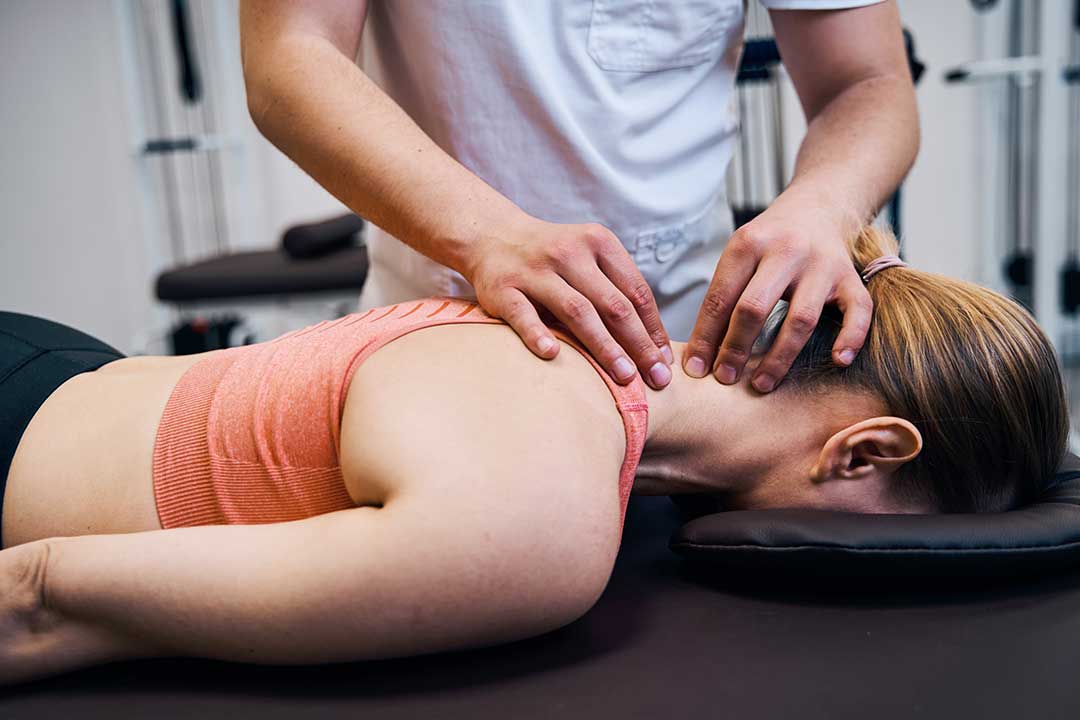
Long periods of sitting can make the neck and upper back stiff, even when the seating position seems comfortable. During a workday, stand, walk briefly, or move the shoulders and arms every 30 to 60 minutes.
For longer drives, adjust the seat so the head is not pushed forward. Avoid turning to look behind while the vehicle is moving, and use mirrors properly to reduce repeated neck rotation.
Build general strength and mobility
Regular physical activity supports the muscles of the neck, shoulders, upper back, and trunk. Walking, swimming, and appropriately paced strengthening can help reduce the effects of prolonged sitting.
Gentle movements may include slowly turning the head within a comfortable range, bringing the chin slightly backward without looking down, and rolling the shoulders. Movement should not cause sharp pain, dizziness, numbness, or symptoms traveling into an arm. Stop if those symptoms occur.
Carry household items carefully
A heavy bag on one shoulder can pull the neck and upper back to one side. Use lighter loads, switch sides, or distribute weight evenly. When lifting, keep the object close to the body and avoid twisting while carrying it.
During outdoor chores, take breaks before fatigue changes body mechanics. Cold temperatures may make muscles feel tighter, so a gradual warm-up and sensible clothing can make movement more comfortable.
Is poor posture the only explanation?
No. Posture is one factor, not a complete diagnosis. Neck pain can also result from an injury, arthritis, nerve irritation, infection, inflammatory disease, or another medical condition.
Pain that persists despite reasonable activity changes, keeps returning, or limits normal work and sleep deserves an evaluation. Repeatedly forcing the neck into stretches or attempting forceful self-adjustments can sometimes increase irritation.
When is neck pain urgent?
Seek urgent medical care for neck pain accompanied by:
- New weakness, numbness, or tingling in an arm or leg
- Trouble walking, loss of coordination, or unusual balance problems
- Severe headache, fever, confusion, or marked illness
- Loss of bowel or bladder control
- Chest pain, shortness of breath, or unexplained sweating
- Severe pain after a fall, collision, or other injury
For less urgent pain, medical guidance is appropriate when symptoms are intense, worsen, spread into an arm, or do not begin improving after several days of sensible rest and gentle movement.
The most useful prevention strategy is to notice patterns early: the screen that sits too low, the commute that leaves the shoulders tense, the pillow that causes morning stiffness, or the household task that is being repeated without breaks. Addressing those habits before pain becomes persistent can help protect comfortable neck movement and everyday function.
