
Persistent back or neck pain can make ordinary activities—driving, working at a desk, carrying groceries, or sleeping—much harder. A recommendation for surgery may feel overwhelming, but surgery is not the first treatment for many common musculoskeletal conditions.
For residents of Lynbrook, NY, non-surgical care may include exercise-based rehabilitation, physical therapy, medication management, activity changes, manual therapy, and carefully selected injections. The right option depends on the diagnosis, symptom severity, nerve involvement, general health, and response to earlier treatment.
Does needing surgery always mean surgery is the only option?
No. Many people with low back pain, neck pain, disc-related symptoms, or joint irritation improve with conservative care. Treatment is usually more successful when it addresses both pain and the factors affecting movement, strength, sleep, work, and daily activity.
Non-surgical care may be reasonable when:
- Symptoms are mild or moderate
- Strength and sensation are mostly normal
- Pain is gradually improving
- There is no major injury or suspected serious disease
- Imaging findings do not clearly match the symptoms
- A structured rehabilitation plan has not yet been tried
A scan can show disc bulges, arthritis, or other age-related changes without proving that those findings are the source of pain. Treatment decisions should be based on the full clinical picture rather than an imaging report alone.
Which treatments may help avoid or delay surgery?
Exercise and physical rehabilitation
Exercise is often the foundation of non-surgical care. A plan may include gentle mobility work, core or neck strengthening, aerobic activity, balance training, and gradual return to normal tasks.
The goal is not simply to stretch the painful area. A useful program is adjusted to the person’s diagnosis and tolerance. Someone with spinal stenosis may need a different approach from someone recovering from a disc injury, muscle strain, or shoulder problem.
Progress is usually measured by function: walking farther, sitting longer, lifting more safely, sleeping better, or returning to work—not only by whether pain disappears immediately.
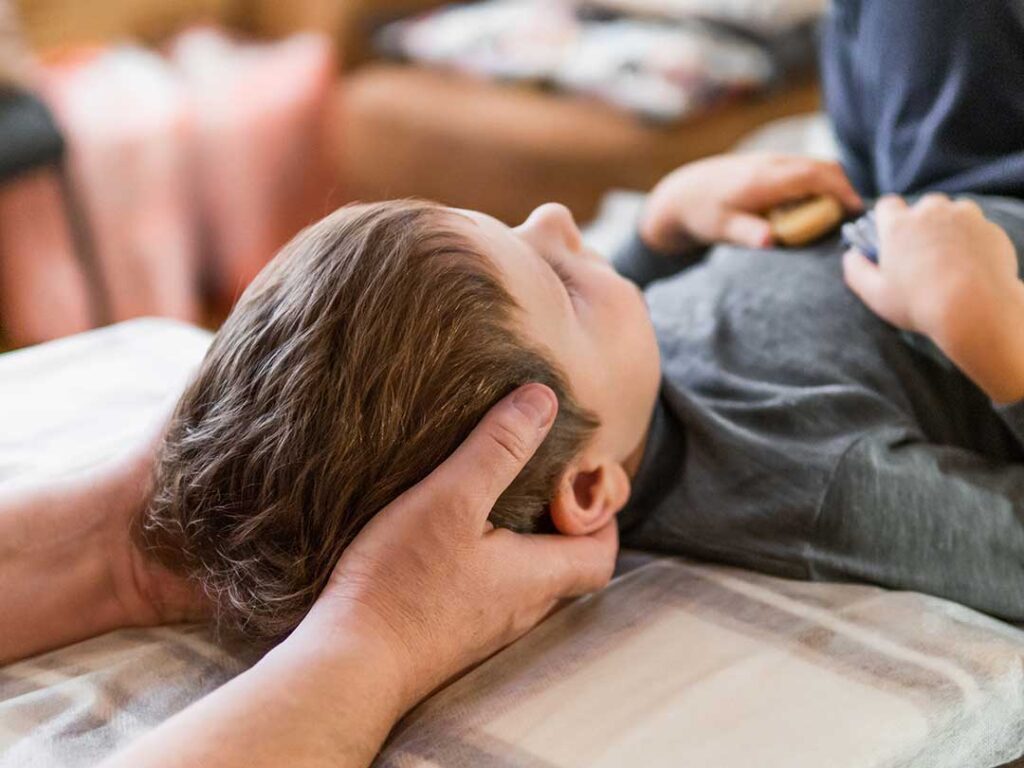
Chiropractic and manual therapy
Chiropractic care may include spinal manipulation, mobilization, soft-tissue techniques, movement advice, and home exercises. Evidence-based guidelines generally view manual therapy as one possible part of a broader plan, particularly when combined with exercise and self-management.
Manual treatment should not be presented as a way to “put a disc back in place” or permanently correct every structural problem. Its potential role is to reduce pain, improve movement, and help a person participate in rehabilitation. Care should be modified or avoided when there is fracture risk, severe osteoporosis, infection, active cancer affecting the spine, significant instability, or progressive neurological loss.
Physical therapy
Physical therapy may focus on posture, joint mobility, muscle performance, walking mechanics, lifting technique, and gradual exposure to activities that have become difficult. It can also help people understand which movements are safe and which symptoms should prompt reassessment.
For residents managing symptoms during cold weather, snow, or periods spent indoors, a home program can be especially practical. Short movement breaks, safe indoor walking, and consistent strengthening may be more sustainable than occasional intense workouts.
Medication and short-term symptom control
Medication can sometimes make it easier to move and participate in rehabilitation. Nonsteroidal anti-inflammatory drugs may help certain people, but they are not appropriate for everyone. Kidney disease, stomach ulcers, blood-thinning medication, cardiovascular disease, pregnancy, and other factors can change the risk.
Medication decisions should account for the shortest reasonable duration and the lowest effective dose. Opioids and sedating medicines are not routine solutions for chronic back pain, and self-medicating with leftover prescriptions can create avoidable risks.
Injections
Injections are not the same as surgery, but they are still invasive procedures and are not suitable for every diagnosis. An epidural steroid injection may provide short-term relief for some people with severe nerve-root pain. It does not remove the underlying cause and may not help ordinary mechanical back pain.
Injections should be considered only after the suspected pain source, expected benefit, risks, and alternatives have been discussed. They should not be used simply because an MRI shows an abnormality.
Activity modification and workplace changes
Complete bed rest usually slows recovery. A better approach is often temporary modification: changing lifting technique, alternating sitting and standing, reducing repeated bending, using supportive equipment, and increasing activity gradually.
In dense residential settings, everyday tasks such as stairs, commuting, childcare, household repairs, and carrying laundry can expose a problem repeatedly. Identifying the specific activity that triggers symptoms may be more useful than avoiding all movement.
Can a herniated disc improve without surgery?
Often, yes. A herniated disc can cause back pain, leg pain, numbness, or weakness when nearby nerve tissue is irritated. Symptoms may improve as inflammation settles and the body adapts.
Non-surgical care may include walking as tolerated, targeted exercise, medication guidance, and sometimes an injection for severe nerve pain. Surgery becomes more likely when pain remains disabling despite appropriate treatment, when symptoms match imaging findings, or when neurological problems are worsening.
A visible disc herniation does not automatically require an operation. The more relevant questions are whether it is causing the symptoms, whether function is improving, and whether the nerves remain safe.

When is surgery more urgent?
Non-surgical treatment should not delay urgent evaluation when warning signs suggest serious nerve compression, infection, fracture, cancer, or another medical emergency.
Prompt medical assessment is warranted for:
- New loss of bladder or bowel control
- Numbness in the groin or inner-thigh region
- Rapidly worsening leg or arm weakness
- Difficulty walking that is new or progressing
- Severe pain after a significant fall or collision
- Fever, unexplained weight loss, or a history of cancer with new spinal pain
- Severe pain that is constant, rapidly worsening, or unrelated to movement
These signs do not prove that surgery is needed, but they require timely evaluation rather than routine chiropractic or exercise-based care.
How should someone decide whether to continue conservative treatment?
A reasonable treatment plan should have measurable goals and a reassessment point. Useful questions include:
- What is the working diagnosis?
- What symptoms suggest nerve involvement?
- What improvement should occur, and over what period?
- Which activities should be continued or temporarily changed?
- What findings would require imaging or specialist evaluation?
- What are the risks and expected benefits of surgery compared with continued non-surgical care?
If symptoms are improving and function is returning, continuing conservative care may make sense. If there is no meaningful progress after a well-designed trial, the diagnosis may need to be reconsidered. A second opinion can be appropriate before an elective operation, especially when the proposed procedure is based mainly on imaging rather than matching symptoms.
The most useful alternative to surgery is rarely a single technique. It is usually a coordinated plan that identifies the pain source, preserves safe movement, builds capacity gradually, and recognizes when conservative care has reached its limit.
