

A healthy spine supports far more than movement. It helps the body stand, bend, walk, balance, absorb impact, and coordinate activity between the brain, spinal cord, nerves, muscles, and joints. When spinal function is affected by pain, stiffness, injury, or reduced mobility, ordinary tasks can become more difficult and quality of life may decline.
For residents of Lynbrook, NY, spinal health can influence commuting, household responsibilities, recreational activities, sleep, work, and participation in community life. Understanding the connection can make it easier to recognize problems early and choose sensible ways to protect mobility.
How does spinal health affect quality of life?
Spinal health affects quality of life by influencing comfort, movement, independence, sleep, mood, and physical activity. Even moderate back or neck discomfort can gradually change how a person sits, walks, lifts, exercises, or interacts with others.
A person with ongoing spinal pain may:
- Avoid stairs, exercise, driving, or social activities
- Have trouble sleeping or changing positions in bed
- Need more time to complete cooking, cleaning, or personal care
- Feel irritable, tired, or less focused
- Rely more heavily on other household members
- Reduce activities that previously provided enjoyment
These effects do not always come from a serious spinal disorder. Muscle strain, joint irritation, poor movement habits, prolonged sitting, and deconditioning can all contribute to discomfort. The effect on daily life, however, can still be significant.
Why is the spine important for movement?
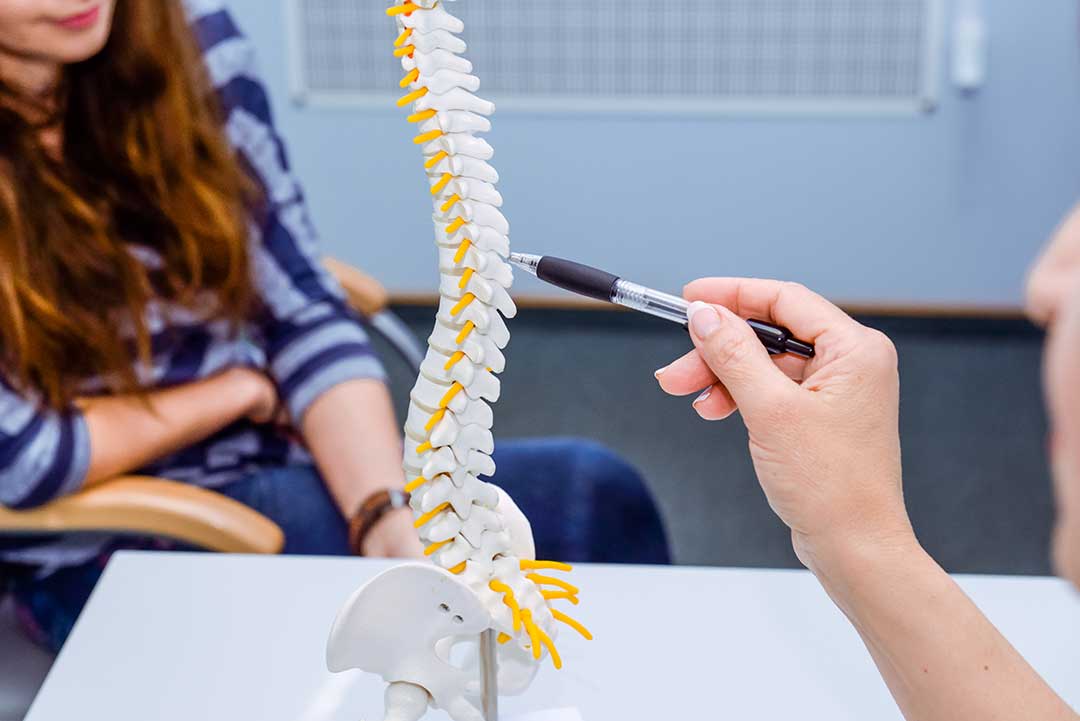
The spine is a flexible column made of bones, joints, discs, ligaments, muscles, and nerves. Its natural curves help distribute forces while standing, walking, lifting, and turning. The spinal cord and nerve roots also connect the brain with the rest of the body.
Healthy spinal movement does not mean being perfectly straight or rigid. The spine is designed to move in different directions. Problems are more likely when movement is limited, painful, poorly coordinated, or repeatedly performed under excessive strain.
For example, lifting a laundry basket, carrying groceries, shoveling after a winter storm, or reaching into a low cabinet may place stress on the back if the load is heavy or the movement is rushed. Repeated small stresses can matter as much as a single obvious injury.
Can posture change how a person feels?
Posture can influence how muscles and joints share physical load, but posture is only one part of spinal health. There is no single perfect position that must be maintained all day.
Sitting in the same position for hours may cause stiffness even if the posture appears good. This can occur during computer work, schoolwork, television viewing, or long periods of driving. Looking down at a phone may also increase strain in the neck and upper back, especially when the position is held for a long time.
Helpful habits include:
- Changing position regularly rather than sitting continuously
- Keeping frequently used items within comfortable reach
- Supporting the feet when seated if they do not rest easily on the floor
- Holding reading material or screens closer to eye level
- Using the hips and knees as well as the back when lifting
- Taking brief walking or stretching breaks during sedentary activities
The goal is not to hold the body stiffly. It is to vary positions and avoid spending most of the day in one strained posture.
What role do strength and physical activity play?
Regular movement helps maintain the strength, flexibility, balance, and endurance needed for spinal support. Strong abdominal, hip, back, and leg muscles can help the body manage daily tasks more efficiently.
Physical activity does not have to be intense. Walking, water exercise, mobility work, resistance exercises, and balance activities may all be useful when suited to a person’s abilities. During colder months, residents may spend more time indoors, making it easier to become less active. Short indoor walking periods, gentle mobility exercises, and safe household movement can help reduce prolonged inactivity.
A common misconception is that complete bed rest is the best response to ordinary back pain. Extended inactivity can lead to weakness and greater sensitivity to movement. After a short period of modifying aggravating activities, gradual return to comfortable movement is often more helpful than remaining still for long periods.
Exercise should be adjusted when pain is sharp, worsening, or associated with weakness, numbness, or loss of coordination.
How can spinal problems affect sleep and mental well-being?
Pain and stiffness can interfere with falling asleep, staying asleep, or finding a comfortable position. Poor sleep may then increase fatigue, reduce concentration, and make discomfort feel more difficult to manage the next day.
Ongoing pain can also affect mood. People may become frustrated when they cannot perform familiar activities or when symptoms repeatedly interrupt work and family responsibilities. This does not mean the pain is “just stress.” Physical discomfort and emotional strain can influence each other, creating a cycle of reduced activity, poorer sleep, and increased sensitivity.
A consistent sleep schedule, comfortable positioning, daytime movement, and attention to factors such as mattress support and pillow height may help. Persistent sleep disruption deserves attention because it can become a major part of the overall quality-of-life problem.
When should back or neck symptoms be evaluated promptly?
Most routine muscle and joint discomfort is not caused by a dangerous condition, but certain symptoms require timely medical evaluation. Prompt attention is especially important after a significant fall, collision, or other injury.
Seek urgent evaluation for back or neck symptoms accompanied by:
- New loss of bladder or bowel control
- Numbness around the inner thighs or groin
- Severe or progressive weakness in an arm or leg
- Difficulty walking or sudden loss of coordination
- Fever, unexplained weight loss, or a history of cancer
- Severe pain that does not improve with rest or position changes
- Pain following a substantial injury
These warning signs do not identify a diagnosis by themselves, but they can indicate a need for examination and possibly further testing. Routine spinal discomfort that persists, repeatedly returns, or limits work and daily activities also merits a thorough assessment.
What does chiropractic care address?
Chiropractic care commonly focuses on evaluating movement, joint function, muscle tension, posture, and activity-related factors affecting the spine and surrounding areas. Treatment may include hands-on techniques, movement education, exercises, and guidance about modifying aggravating activities.
Spinal manipulation is not appropriate for every person or every condition. A careful health history and examination help determine whether conservative care is reasonable, whether another type of care is more appropriate, or whether medical evaluation is needed first.
A useful plan should be based on the individual’s symptoms, health history, goals, and response over time. Treatment should not rely on the assumption that every problem has the same cause or requires the same approach.
What practical habits protect spinal health?
Spinal health is supported by consistent, ordinary habits rather than by one special posture or isolated exercise. Useful steps include staying physically active, building strength gradually, using safe lifting techniques, taking movement breaks, and responding early to recurring symptoms.
Households in Lynbrook may also need to account for seasonal tasks such as clearing snow, carrying supplies, navigating slippery walkways, or spending more time seated indoors. Preparing for these demands by pacing activities, using manageable loads, and avoiding rushed twisting motions can reduce unnecessary strain.
The broader goal is to preserve comfortable movement and independence. A spine that functions well supports participation in work, family routines, recreation, and the everyday activities that give life structure and meaning.
