
Waking up with stiffness does not always mean something is seriously wrong. Overnight inactivity, sleeping position, a soft or unsupportive mattress, cooler indoor temperatures, and long hours spent sitting can all make the back, neck, hips, and shoulders feel tight in the morning. A short, gentle stretching routine can help restore comfortable movement before the day begins.
For residents in Lynbrook, NY, morning stiffness may be especially noticeable during colder months, when muscles and joints can feel less flexible after several hours of stillness. The goal is not to force a deep stretch. It is to gradually increase circulation, mobility, and body awareness.
Should stretching happen before getting out of bed?
Yes, gentle movements can begin in bed, especially if the body feels stiff immediately after waking. Bed-based mobility is useful because it reduces the need to move suddenly from a lying position to standing.
Start with slow breathing. Inhale through the nose, allow the ribs and abdomen to expand, and exhale without straining. Then try:
- Ankle pumps: Point the toes away and then draw them back toward the shins 10 to 15 times.
- Knee bends: Bend one knee while keeping the other leg relaxed, then switch sides.
- Pelvic tilts: With knees bent, gently flatten the lower back toward the mattress and release. Repeat 8 to 10 times.
- Arm reaches: Extend one arm overhead while keeping the shoulder relaxed. Alternate sides.
These movements should feel easy. Sharp pain, tingling, or a feeling of catching is a reason to stop rather than push through.
Which stretches help a stiff lower back?
For mild morning tightness, the lower back often responds well to movements that also involve the hips and upper legs. The following sequence can be performed on a firm surface, such as a carpeted floor or exercise mat.
Single-knee-to-chest stretch
Lie on the back with both knees bent. Bring one knee toward the chest using the hands behind the thigh, not by pulling aggressively on the kneecap. Hold for 15 to 20 seconds, then change sides. If comfortable, both knees may be brought toward the chest briefly, but the movement should remain relaxed.
Gentle trunk rotation
Lie on the back with knees bent and feet supported. Allow both knees to move slowly toward one side while keeping the shoulders as comfortable and level as possible. Hold for a few breaths, return to center, and repeat on the other side.
This movement should create a mild stretch through the lower back, waist, or hips. It should not cause pain that travels down the leg.
Cat-cow movement
Begin on hands and knees with the wrists under the shoulders and knees under the hips. Slowly round the back while allowing the head to relax, then gently extend the spine without dropping heavily into the lower back. Move with the breath for 6 to 8 repetitions.
The purpose is controlled motion, not maximum bending.
How can tight hips affect morning comfort?
Hip stiffness can make the lower back work harder during standing, walking, bending, and climbing stairs. A simple hip stretch may improve comfort without directly stretching the spine.
Half-kneeling hip stretch
Place one knee on a folded towel and the opposite foot forward. Keep the torso upright and gently shift the pelvis forward until a stretch is felt at the front of the hip on the kneeling side. Hold for 15 to 20 seconds, then switch sides.
Avoid arching the lower back to create a stronger sensation. The movement should come from a small forward shift of the pelvis.
Seated figure-four stretch
Sit near the edge of a sturdy chair. Place one ankle over the opposite thigh and keep the raised knee relaxed. Lean forward slightly with a straight, comfortable back until a stretch is felt in the outer hip. Hold briefly and switch sides.
This version can be useful for people who do not feel steady on the floor.
What stretches are useful for the neck and shoulders?
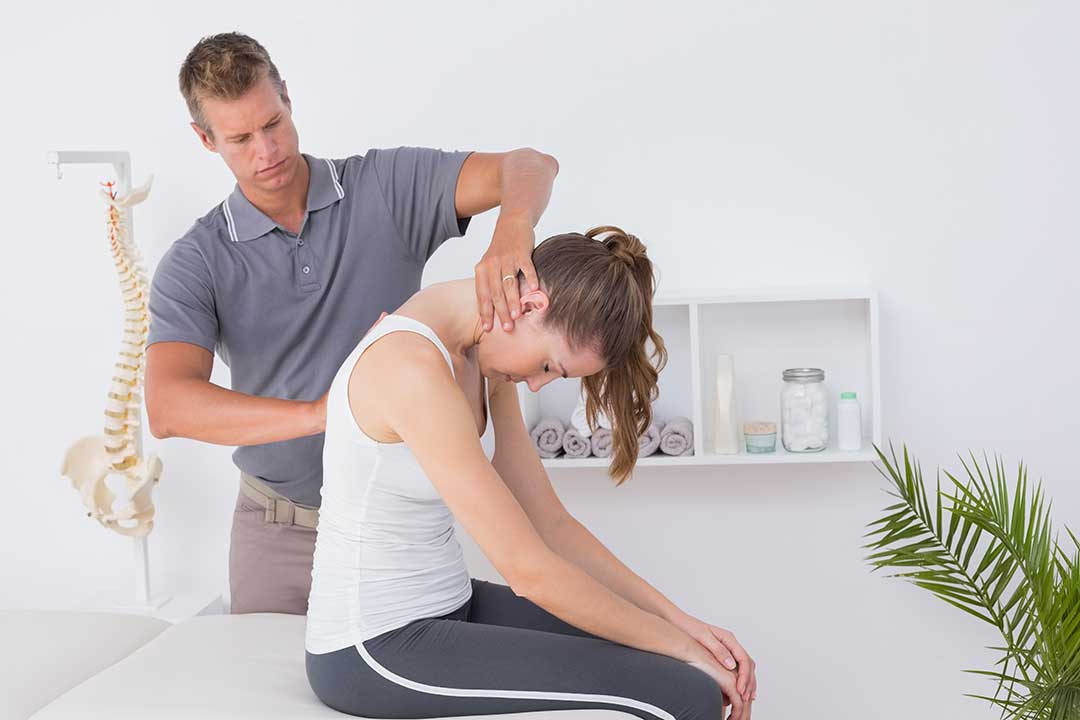
Neck stiffness is often linked to sleeping posture, pillow height, prolonged device use, or tension held in the shoulders. Neck stretches should always be gentle and slow.
Try these movements:
- Turn the head gradually to the right and left without forcing the range.
- Tilt one ear toward the shoulder while keeping the opposite shoulder relaxed.
- Draw the chin slightly backward, as if making a small double chin, then release.
- Roll the shoulders backward in slow circles 5 to 10 times.
Avoid making large, fast neck circles. Do not pull the head with the hand or stretch into dizziness, numbness, or a headache that is new or severe.
How long should a morning routine take?
A useful routine can take five to ten minutes. Consistency generally matters more than duration. A practical sequence is:
1. Take several slow breaths.
2. Perform ankle pumps and knee bends in bed.
3. Continue with pelvic tilts or cat-cow movements.
4. Add a hip stretch on each side.
5. Finish with gentle shoulder and neck mobility.
6. Stand up slowly and walk for a minute or two.
If the body feels more comfortable after movement, normal morning activities can continue. If stretching causes increasing soreness, reduce the range, shorten the holds, or skip the movement that provokes symptoms.
Should stretching be done before or after a shower?
Either option can be reasonable. A warm shower may make the routine feel more comfortable by reducing the sense of stiffness, but heat is not required. Stretching after a few minutes of easy walking around the home can also help prepare the body.
A common mistake is to stretch aggressively because the muscles feel tight. Warmth may make movement feel easier, but it does not eliminate the need for control. Gentle mobility is preferable to forcing a deep position.
When is morning pain a sign to seek medical evaluation?
Morning stiffness that improves with movement is often related to inactivity or positioning, but persistent or worsening symptoms deserve attention. Medical evaluation is particularly appropriate when pain:
- Continues for several weeks or repeatedly interrupts sleep
- Travels down an arm or leg
- Occurs with numbness, weakness, or loss of coordination
- Follows a fall, collision, or other injury
- Is accompanied by fever, unexplained weight loss, or unusual fatigue
- Causes difficulty controlling bladder or bowel function
Emergency care is appropriate for sudden severe weakness, major loss of sensation, or symptoms involving chest pain or difficulty breathing.
Stretching should support comfortable movement, not serve as a test of how much discomfort can be tolerated. A calm routine, gradual transitions, supportive sleep habits, and regular movement during the day can help many people begin the morning with less stiffness.
