
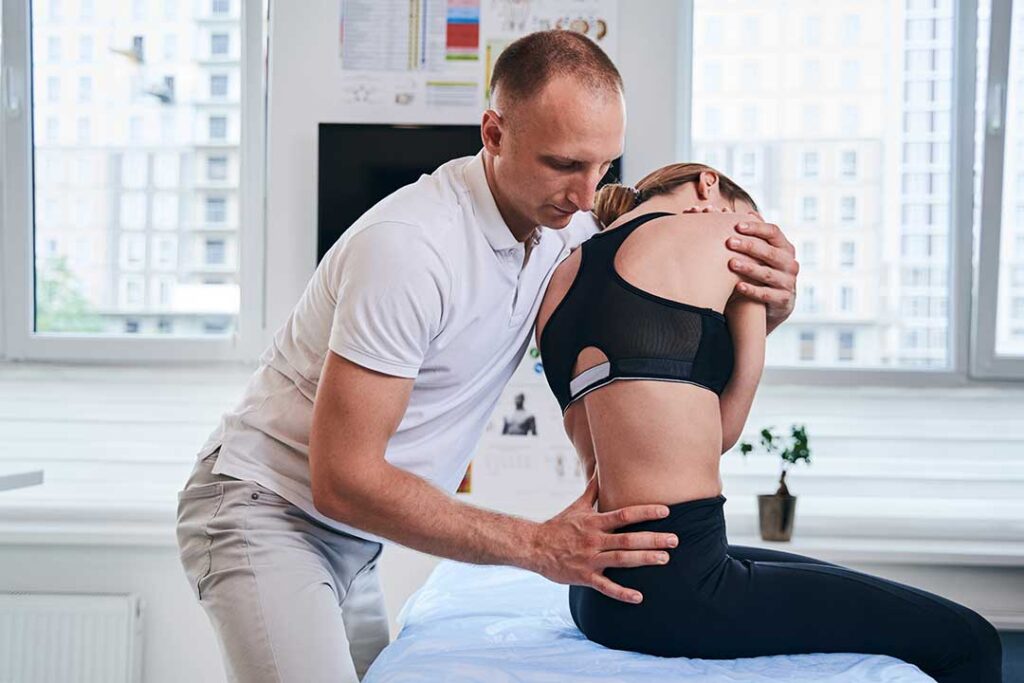
Core strength is more than having visible abdominal muscles. It refers to the coordinated strength and control of the muscles around the abdomen, back, pelvis, hips, and diaphragm. These muscles help support the spine during ordinary activities such as walking, sitting, lifting laundry, carrying groceries, climbing stairs, and shoveling after a winter storm.
For residents of Lynbrook, NY, maintaining core strength can be especially useful because daily routines often combine commuting, prolonged sitting, household work, and seasonal outdoor tasks. A stable, well-coordinated trunk does not prevent every back problem, but it can help the body handle movement with greater efficiency.
What does the core do for the spine?
The core acts as a support system between the upper and lower parts of the body. Muscles in the abdomen and back help control spinal movement, while the hips and pelvis influence how force travels through the lower back and legs.
A strong core can help:
- Maintain balance during walking and standing
- Control bending, twisting, and reaching
- Reduce unnecessary movement through the lower back
- Transfer force more efficiently between the legs and upper body
- Support posture during sitting and other sustained positions
- Improve confidence with everyday movement
Core strength is not the same as keeping the abdomen tightly contracted all day. Healthy spinal support depends on strength, endurance, breathing, balance, and the ability to relax and activate muscles at the appropriate time.
Can core strength reduce back pain?
Core-focused exercise may help some people with nonspecific low back pain, particularly when it is combined with gradual activity and other appropriate forms of care. Research generally shows improvements in physical function and, for some individuals, pain levels. Results vary because back pain can have many causes, including muscle strain, joint irritation, disc-related conditions, arthritis, nerve involvement, and factors unrelated to muscle strength.
Core exercises should not be viewed as a guaranteed cure or as a substitute for evaluation when symptoms are severe, persistent, or unusual. A person with back pain may need a different exercise approach than someone who is simply trying to improve general fitness.
A common misconception is that more abdominal effort always means better spinal protection. Excessive bracing, breath-holding, or forcing the spine into a rigid position can increase discomfort. Effective training emphasizes controlled movement rather than maximum tension.
Which muscles are part of the core?
The core includes more than the front abdominal muscles. Important contributors include:
- The deep abdominal muscles, including the transversus abdominis
- The muscles along the spine, including the multifidus and erector spinae
- The internal and external obliques
- The diaphragm, which contributes to breathing and pressure control
- The pelvic floor muscles
- The gluteal muscles
- The hip muscles that help stabilize the pelvis
These muscle groups work together. For example, a person lifting a box uses the legs and hips, but the trunk must also stabilize the spine while the load is moved. Weakness or poor coordination in one area can cause other muscles to work harder.
What are practical core exercises for beginners?
A beginner usually benefits from exercises that emphasize control and endurance before adding heavy resistance. The following movements can often be adapted to different fitness levels:
Abdominal bracing: Lie on the back with the knees bent. Gently tighten the abdominal muscles as though preparing for a light touch, while continuing to breathe normally. Hold for several breaths and release.
Bridge: From the same position, press through the feet and lift the hips gradually. Avoid arching the lower back. The movement should come primarily from the hips and buttocks.
Bird dog: Begin on the hands and knees. Slowly extend one arm and the opposite leg while keeping the pelvis level. Return to the starting position and switch sides.
Modified plank: Use the forearms and knees rather than the hands and feet if a full plank is too demanding. Keep the body aligned without allowing the lower back to sag.

Side-lying leg lift: Lie on one side and lift the upper leg in a controlled manner. This strengthens muscles around the hip that help support pelvic alignment.
Start with a small number of repetitions or brief holds. Quality matters more than duration. A useful exercise should create muscular effort without sharp pain, increasing numbness, unusual weakness, or symptoms traveling farther down an arm or leg.
How often should core exercises be performed?
Many adults can begin with two or three short sessions per week, allowing recovery between more demanding workouts. General physical activity guidelines also encourage muscle-strengthening activity on at least two days each week, with exercises that address the major muscle groups.
Core training works best as part of a broader routine that includes walking, strength exercises for the legs and upper body, mobility work, and regular changes in position. A person who performs core exercises but sits for many uninterrupted hours may still experience stiffness or discomfort.
For people who spend much of the day at a desk, small changes can help:
- Stand or walk briefly during long sitting periods
- Adjust the chair and screen so the head is not constantly angled forward
- Keep frequently used objects within easy reach
- Change positions instead of trying to maintain one “perfect” posture
- Use controlled hip and leg movement when lifting from the floor
Does core strength prevent all spinal problems?
No. Strong core muscles cannot eliminate the effects of aging, injury, medical conditions, genetics, or sudden physical stress. They also do not guarantee that a person will never experience back or neck pain.
Spinal health depends on several factors, including physical activity, sleep, recovery, body mechanics, general conditioning, stress, and health conditions. Core strength is one part of that picture. It is most useful when developed gradually and applied to real-life movements.
There is also no single ideal posture that must be maintained continuously. The spine is designed to move. Alternating between sitting, standing, walking, bending, and reaching is often more practical than trying to hold one rigid position throughout the day.
When should exercise be paused?
Exercise should be stopped and medically evaluated when back symptoms are accompanied by significant leg weakness, loss of bladder or bowel control, numbness in the groin area, fever, unexplained weight loss, major trauma, or severe pain that is rapidly worsening.
A medical evaluation is also appropriate when symptoms persist despite reduced activity and gentle movement, repeatedly interfere with sleep, or make ordinary tasks increasingly difficult. People with osteoporosis, recent surgery, pregnancy-related concerns, or known spinal conditions may need individualized exercise modifications.
For most healthy adults, the safest approach is steady progress: begin with manageable movements, breathe normally, avoid sudden increases in workload, and build strength alongside walking and other regular activity. That approach can help the spine meet the demands of work, home responsibilities, and seasonal routines throughout the Lynbrook community.
