
Why lifting technique matters
Safe lifting is not only about keeping the back straight. Injury risk also depends on the weight, shape, distance from the body, lifting height, repetition, footing, and whether the person twists or reaches while carrying the object.
A box that feels manageable once may become hazardous after several trips, especially when muscles are tired. Household tasks such as moving storage bins, carrying laundry, lifting children, shoveling snow, handling groceries, or rearranging furniture can place stress on the lower back when done quickly or from an awkward position.
The goal is to keep the load close, maintain control, and avoid combining heavy weight with bending, reaching, or twisting.
What should be done before lifting?
Take a few seconds to plan the movement. Preparation often reduces more risk than trying to correct posture in the middle of a lift.
Before picking something up:
- Test the weight by nudging or tipping the object slightly.
- Check whether the load is leaking, shifting, or unevenly distributed.
- Clear the walking path, including rugs, toys, cords, and clutter.
- Make sure the destination is open and at a reasonable height.
- Wear shoes with good traction, particularly during wet, icy, or snowy conditions.
- Decide whether the item can be divided into smaller loads.
- Use a cart, hand truck, rolling bin, or another aid when carrying would require excessive effort.
Do not rely on a specific weight number as a universal safe limit. A 30-pound object held close to the body may be easier to manage than a lighter, bulky item held at arm’s length. Repeated lifting, low starting positions, overhead placement, and poor handholds can substantially increase the strain.
What is the safest way to lift from the floor?
For many objects, the safest approach is to face the load, move close to it, and lower the body by bending at the hips and knees rather than folding sharply at the waist.
Use this sequence:
1. Stand close enough that the object will not need to be reached for.
2. Place the feet about shoulder-width apart, with one foot slightly ahead if that feels stable.
3. Bend at the hips and knees while keeping the chest reasonably open.
4. Secure the object with both hands.
5. Tighten the abdominal muscles gently without holding the breath.
6. Rise smoothly by pushing through the feet.
7. Keep the object close to the midsection as it comes upward.
8. Stand fully before beginning to walk.
The spine does not need to be rigid or perfectly vertical. A neutral position means avoiding extreme rounding, over-arching, or side-bending. The best posture is one that allows the load to remain close and controlled.
Why should twisting be avoided?
Twisting while lifting combines force with an unstable position. The back is especially vulnerable when a person bends forward, lifts, and rotates at the same time.
Instead of turning the torso while holding the object:
- Move the feet and turn the whole body.
- Set the load down before changing direction if necessary.
- Position the destination directly in front of you.
- Ask for help when the object is too large to carry without blocking your view.
This matters in narrow hallways, stairways, garages, and compact storage areas, where people often twist because there is not enough room to turn normally. Rearranging the path before lifting is safer than trying to maneuver around obstacles with a heavy item.
How should objects be carried and placed down?
Keep the load near the waist or chest, depending on its size. Holding it away from the body increases the leverage placed on the spine and shoulders.
While carrying:
- Take short, steady steps.
- Keep the view ahead rather than looking down continuously.
- Avoid sudden changes in direction.
- Do not carry a load that blocks the feet or walking path.
- Set down the object if grip strength, balance, or breathing begins to deteriorate.
To lower an object, reverse the lifting process. Move close to the destination, bend at the hips and knees, keep the load near the body, and lower it gradually. Do not drop suddenly or rotate while placing it down. The lowering phase can strain the back just as much as lifting.
What changes when the item is bulky, awkward, or overhead?
Large objects create problems even when they are not especially heavy. A mattress, furniture panel, filled laundry basket, or oversized storage container may shift unexpectedly or force the body into a leaning position.
For bulky objects, consider:
- Carrying one side at a time with another person.
- Using handles, straps, or a rolling device when appropriate.
- Dividing the contents into smaller containers.
- Sliding the item rather than lifting it, if the surface allows.
- Keeping one hand free for balance when working near a stable support.
Avoid starting a heavy lift from below mid-thigh height or finishing it above shoulder level whenever possible. Overhead placement increases demand on the shoulders and upper back, while very low lifts encourage excessive bending. Raise the receiving surface first or choose a temporary location closer to waist height.
Does “lifting with the legs” prevent every back injury?
No. Using the hips and knees can reduce stress from stooped lifting, but technique alone does not make an unsafe load safe. A heavy, unstable, repetitive, or poorly positioned task may still cause injury even with careful posture.
Common misconceptions include:
- “If I can lift it once, I can carry it safely.” Repetition and fatigue change the risk.
- “A back belt makes heavy lifting safe.” External support does not eliminate excessive load, twisting, or poor footing.
- “Fast lifting is more efficient.” Sudden force can reduce control and increase strain.
- “Only the lower back is affected.” Lifting can also stress the neck, shoulders, hips, knees, and hands.
For household projects, alternate demanding tasks with lighter activity and brief recovery periods. During seasonal cleanup, storm preparation, or winter chores, avoid completing long stretches of lifting after prolonged sitting or when muscles are cold and fatigued.
When should lifting-related pain be evaluated?
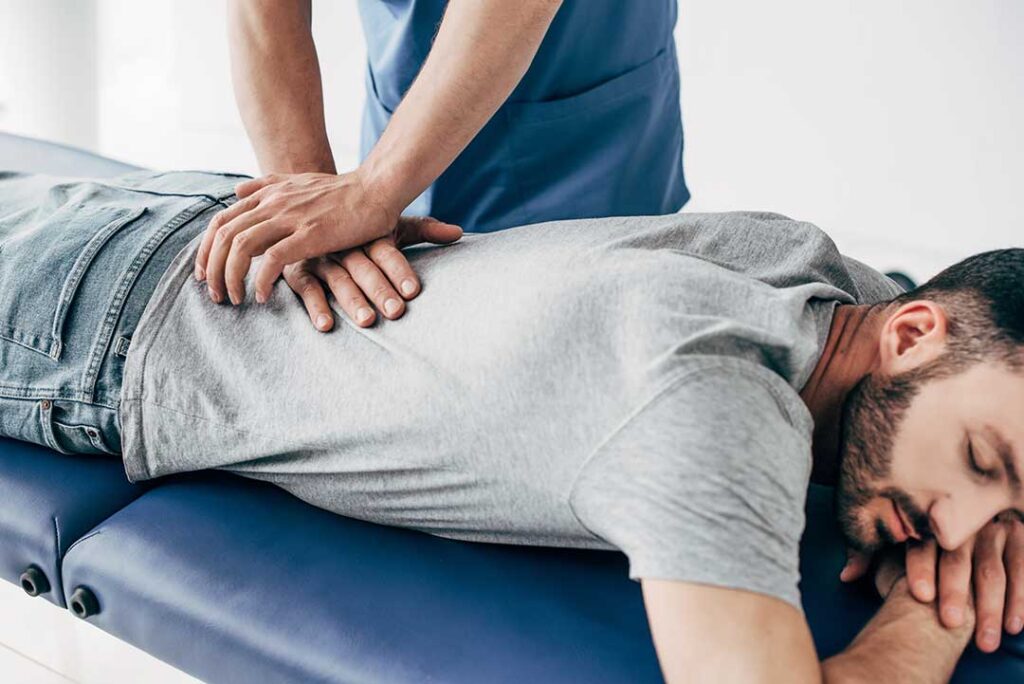
Mild soreness may improve with relative rest, gentle movement, and avoiding the activity that triggered it. Continuing to lift through sharp or escalating pain can worsen the problem.
Prompt medical evaluation is appropriate for severe pain, pain after a fall or collision, notable weakness, worsening numbness, or symptoms that travel down an arm or leg. Urgent care is needed for back pain accompanied by loss of bladder or bowel control, numbness in the groin or inner thighs, severe leg weakness, fever, or unexplained weight loss.
If pain keeps returning during ordinary lifting, that pattern deserves attention even when symptoms are not severe. The underlying issue may involve technique, load management, mobility, strength, work setup, or a condition unrelated to lifting itself. A qualified healthcare professional can help determine the appropriate evaluation and activity plan.
A practical lifting checklist
Before lifting, ask:
- Can the load be made lighter?
- Is the path clear and the destination ready?
- Can the item stay close to the body?
- Can the feet turn instead of the spine twisting?
- Would a second person or wheeled aid improve control?
- Am I tired, rushed, or standing on a slippery surface?
If the answer to several questions raises concern, change the task rather than trying to force it. Safer lifting is usually a combination of planning, stable footing, controlled movement, and recognizing when a load should not be handled alone.
