

Headaches are common, but the reason behind them is not always obvious. Spending long periods with the head bent forward, shoulders rounded, or neck held still can contribute to head pain in some people—especially when muscle tension and limited movement build throughout the day.
Posture is rarely the only cause. Sleep, stress, dehydration, vision problems, migraine tendencies, jaw tension, and other health conditions can also play a role.
Can poor posture really cause headaches?
Yes, poor posture can contribute to headaches, particularly tension-type headaches and some headaches linked to the neck. A forward-leaning head position may increase the workload on the muscles of the neck, upper back, and shoulders. Those tissues can become tired, tight, or tender and may refer discomfort toward the back of the head, temples, forehead, or area behind the eyes.
This does not mean that a visibly rounded posture automatically causes pain. Research suggests that posture and pain have a more complicated relationship than the simple idea that “bad posture” directly creates every headache. Holding one position for too long, moving too little, or repeatedly working in an uncomfortable position may matter as much as the posture itself.
For local residents, this can happen during extended computer use, phone scrolling, studying, driving, or indoor work during colder months when more time is spent sitting inside.
What does a posture-related headache feel like?
A headache associated with neck or upper-body strain often feels like pressure, tightness, or a dull ache rather than a sudden, severe pounding sensation. It may begin in the neck or base of the skull and spread upward.
Common features include:
- Tight or sore neck and shoulder muscles
- Pain that increases after sitting, reading, or screen use
- Reduced ability to turn or tilt the neck comfortably
- Tenderness at the base of the skull
- A band-like sensation around the forehead or temples
- Improvement after changing position, walking, or gently moving
A headache caused by the neck is sometimes called a cervicogenic headache. It can be one-sided or focused around the back of the head, although symptoms vary. Migraine can also include neck pain, so neck discomfort does not automatically prove that posture is the cause.
How does screen use affect the neck?
Screens can encourage a person to lean the head forward, lift the shoulders, or keep the eyes and neck fixed in one position. The farther the head moves in front of the body, the more sustained effort the neck muscles may need to provide.
The main issue is often not a single position but the length of time spent there. Even a generally comfortable posture can become uncomfortable after an hour without movement.
Helpful adjustments include:
- Raise a monitor so the top portion is near eye level.
- Keep the screen close enough to avoid leaning forward.
- Let the shoulders rest instead of lifting them toward the ears.
- Keep both feet supported when seated.
- Change position regularly rather than trying to hold a rigid “perfect” posture.
- Place frequently used items within easy reach.
A phone held low in the lap can create a similar pattern. Bringing the device closer to eye level and taking brief movement breaks may reduce strain.
What can be done at home?
Most mild posture-related discomfort can be approached with simple, low-risk changes. The goal is not to force the spine into one ideal position. The goal is to reduce prolonged strain and restore normal movement.
Try taking a short movement break every 30 to 60 minutes. Walk briefly, roll the shoulders gently, or move the neck through a comfortable range without forcing or bouncing. Light activity may be more useful than remaining completely still.
Other practical steps include:
- Use a warm shower or heating pad for muscle tightness, following safe temperature and time limits.
- Adjust chair, desk, and screen height.
- Alternate sitting and standing when possible.
- Avoid cradling a phone between the shoulder and ear.
- Drink enough fluids and avoid skipping regular meals.
- Pay attention to sleep position and pillow height.
- Notice whether clenching the jaw occurs during concentration or stress.
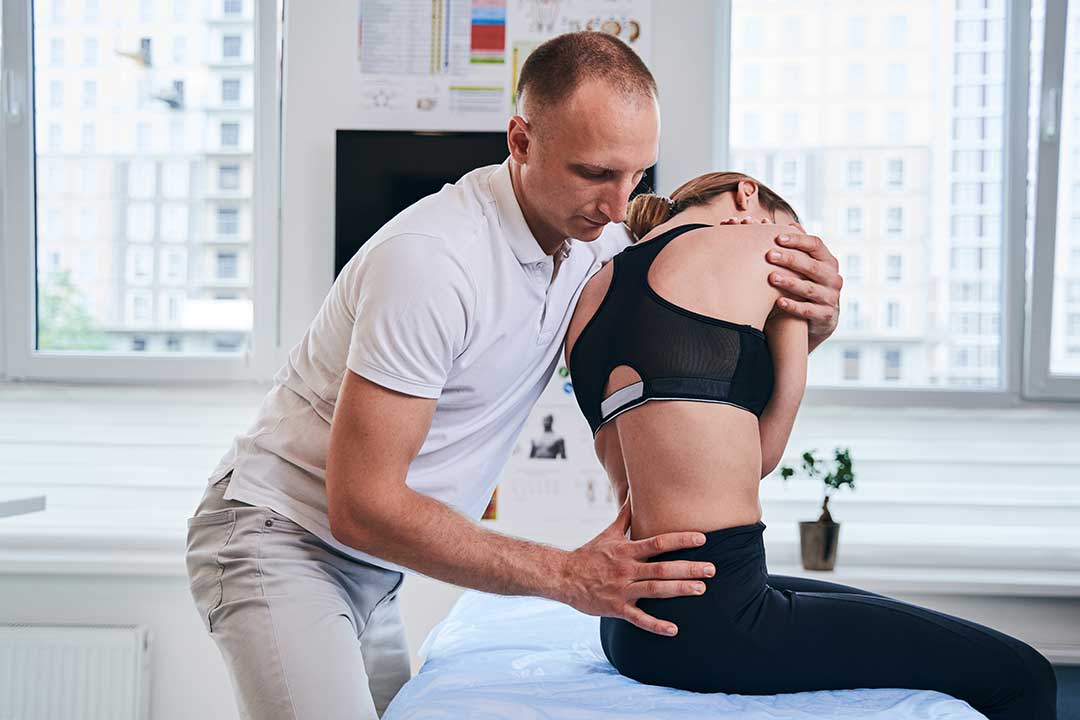
Stretching should feel mild, not sharp or forceful. If an exercise increases headache intensity, causes dizziness, or produces numbness or tingling, stop that activity.
Does better posture eliminate headaches?
Not necessarily. Improving posture may reduce one contributing factor, but headaches can have several causes. Migraine, sinus or allergy symptoms, eye strain, medication overuse, poor sleep, stress, high blood pressure, jaw disorders, and viral illness can all produce head pain.
It is also possible for someone with a noticeably uneven or rounded posture to have no symptoms at all. Posture should be viewed as one part of a broader health picture rather than a diagnosis by itself.
Keeping a brief headache record can help identify patterns. Note the timing, location, duration, activities beforehand, sleep, meals, hydration, screen use, and any neck or jaw symptoms. Patterns are often more useful than trying to judge posture from a mirror or photograph.
When should a headache be evaluated promptly?
A sudden, severe headache that reaches maximum intensity quickly requires urgent medical attention, especially if it is unlike previous headaches. Immediate evaluation is also appropriate when head pain occurs with:
- Weakness, numbness, confusion, fainting, or trouble speaking
- New vision loss or major vision changes
- Fever and a stiff neck
- Repeated vomiting
- A recent head or neck injury
- Loss of balance or a new seizure
- Chest pain or severe shortness of breath
A recurring headache should also be assessed if it is becoming more frequent, steadily worsening, disrupting sleep, or not improving with reasonable changes in rest and daily habits. New headaches in someone with cancer, immune suppression, or a significant medical condition deserve particular caution.
What is the practical takeaway?
Poor posture can contribute to headaches by increasing neck and shoulder strain, especially during long periods of sitting or screen use. However, posture is not a universal explanation, and “perfect posture” is neither realistic nor necessary.
A better approach is to combine comfortable alignment with frequent movement, reasonable screen setup, adequate sleep, hydration, and attention to other headache triggers. Persistent, changing, or severe symptoms should not be dismissed as a posture problem alone.
