
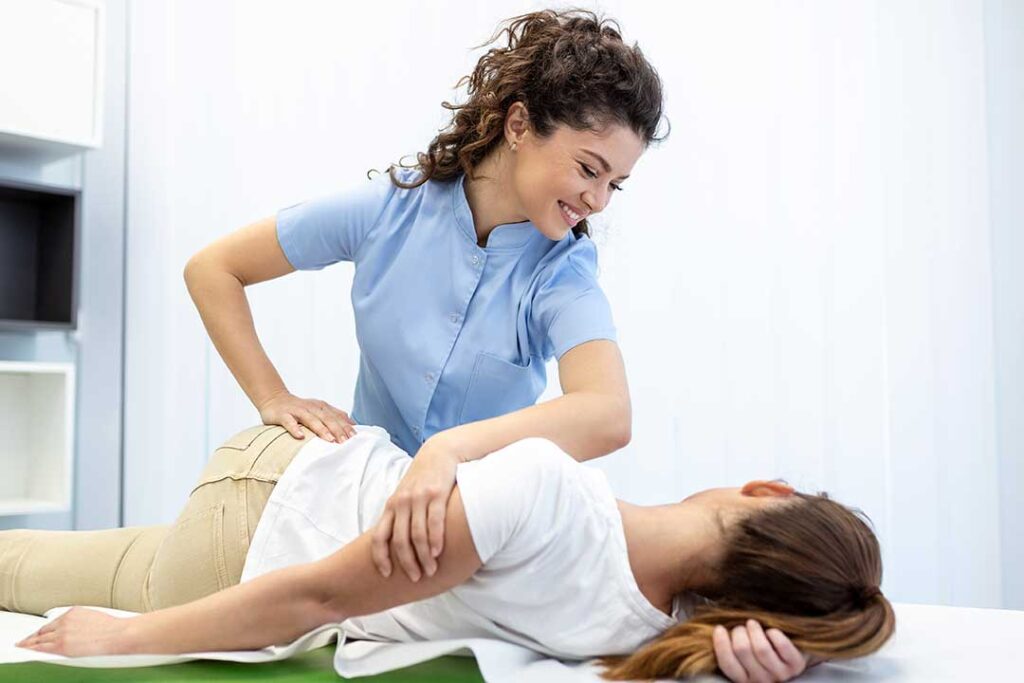
Back strength is not built by forcing the spine through painful movements. It develops gradually through exercises that train the abdominal muscles, hips, glutes, and upper back to share the work of everyday movement.
For residents of Lynbrook, NY, a simple home routine can be useful after long periods of sitting, commuting, household chores, gardening, or reduced activity during cold or rainy weather. The exercises below are generally low-impact and require little equipment, but they should be performed comfortably and without sharp, spreading, or worsening pain.
What muscles help support the back?
The back is supported by more than the muscles directly alongside the spine. The abdominal muscles, pelvic muscles, glutes, hips, and upper back all contribute to stability and posture.
A strong core does not mean having highly defined abdominal muscles. It means being able to brace gently, control the pelvis, and keep the spine in a comfortable position while walking, lifting, reaching, or changing direction.
Strengthening these areas may help improve movement tolerance and reduce strain. Exercise is not a substitute for evaluating a new injury, significant weakness, or unexplained pain.
Which exercises are easiest for beginners?
Beginners can start with exercises that keep the spine supported and use slow, controlled movements. A short routine performed consistently is usually more practical than an intense workout done occasionally.
Pelvic tilts
Pelvic tilts help a person learn how to gently control the position of the lower back.
- Lie on the back with knees bent and feet flat on the floor.
- Relax the shoulders and keep the arms at the sides.
- Gently tighten the abdominal muscles and flatten the lower back toward the floor.
- Hold for about five seconds, then relax.
- Repeat 5 to 10 times.
The movement should be small. Avoid pushing forcefully or holding the breath.
Glute bridges
Bridges strengthen the gluteal muscles and the back of the hips, which can reduce the amount of work demanded from the lower back during standing and walking.
- Lie on the back with knees bent and feet about hip-width apart.
- Tighten the abdomen gently and squeeze the buttocks.
- Lift the hips until the body forms a comfortable line from the shoulders toward the knees.
- Pause for one to three breaths.
- Lower slowly.
- Begin with 5 repetitions and gradually work toward 10 to 15.
Do not arch the back excessively or lift the hips higher than comfortable. If hamstring cramping occurs, move the feet slightly closer to or farther from the body.
Bird-dog
The bird-dog trains balance and coordination between the abdomen, back, hips, and shoulders.
- Start on the hands and knees with the hands below the shoulders and knees below the hips.
- Brace the abdomen gently.
- Extend one leg behind the body without rotating the pelvis.
- If steady, extend the opposite arm at the same time.
- Hold for a few seconds, then return slowly.
- Alternate sides for 5 repetitions per side.
A shorter movement is acceptable. Keeping the hips level matters more than extending the arm and leg high.
Wall sit
A wall sit strengthens the thighs and hips, which can support safer bending and lifting.
- Stand with the back against a wall and feet slightly forward.
- Slide down only as far as comfortable.
- Keep the knees tracking in line with the feet.
- Hold for 10 to 20 seconds.
- Stand slowly and rest.
- Repeat 2 or 3 times.
There is no need to lower into a deep squat. People with knee problems may prefer a shallow slide or a supported sit-to-stand exercise from a firm chair.
How can someone strengthen the upper back?
Upper-back strength can help counter prolonged rounded sitting at a desk, in a vehicle, or on a couch. It also supports comfortable shoulder movement.
Shoulder-blade squeezes
- Sit or stand tall without lifting the shoulders.
- Gently draw the shoulder blades toward each other and slightly downward.
- Hold for about five seconds.
- Relax completely.
- Repeat 5 to 10 times.
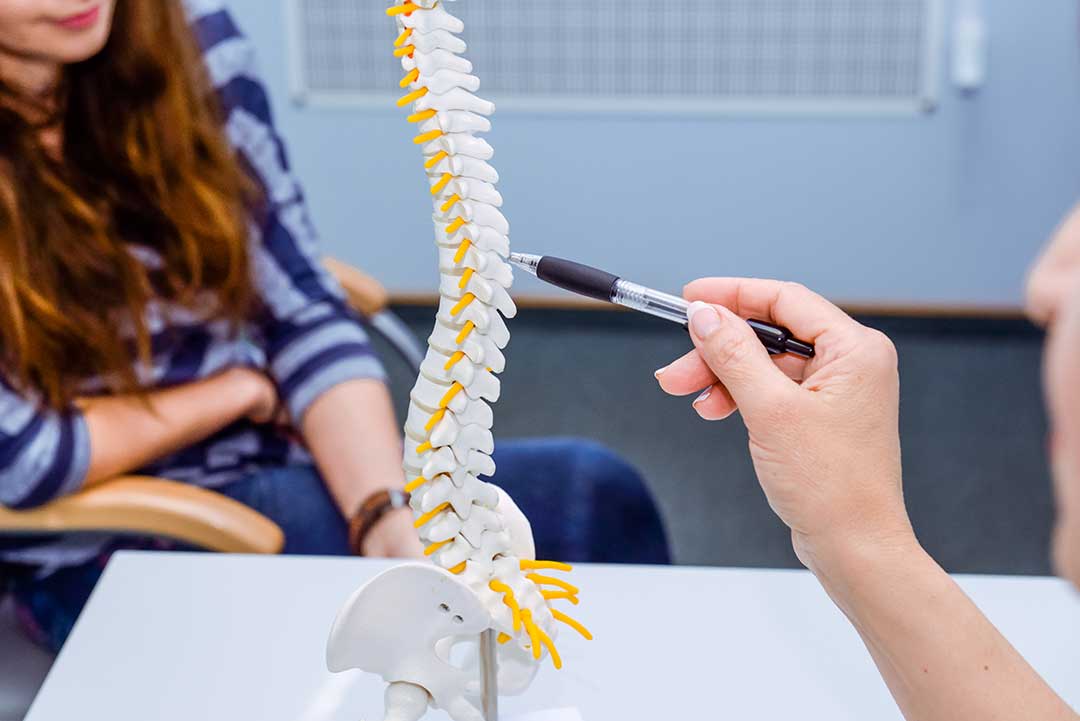
This is not a forceful pinch. The neck should remain relaxed, and the ribs should not flare forward.
Wall angels
- Stand with the back against a wall if comfortable.
- Keep the chin level and the abdomen gently engaged.
- Bend the elbows to about 90 degrees.
- Slowly slide the arms upward only as far as the shoulders and back remain relaxed.
- Return the arms to the starting position.
- Repeat 5 to 8 times.
If the lower back arches away from the wall, reduce the range of motion rather than forcing the position.
How often should back exercises be performed?
A beginner may start with 10 to 15 minutes, two or three days per week. If the body responds well, the routine can gradually become part of a regular movement schedule.
A practical progression is to add repetitions first, then increase the hold time, and only later make an exercise more challenging. Rest days are appropriate, especially when beginning after a period of inactivity.
Walking can complement strengthening exercises. Short walks around the neighborhood, at a comfortable pace, may be easier to maintain than a long workout. During icy or wet weather, indoor walking and gentle mobility work can help maintain regular movement without increasing fall risk.
Should stretching be included?
Stretching may be useful when stiffness limits movement, but stretching and strengthening serve different purposes. A gentle knee-to-chest stretch, lower-back rotation, or hip-flexor stretch may feel comfortable for some people.
Stretching should create mild tension, not sharp pain, numbness, or an electric sensation. It should not be used to push through an acute injury. Warming up with several minutes of easy walking or gentle movement can make the routine more comfortable.
What mistakes should be avoided?
Common problems include progressing too quickly, holding the breath, using momentum, or treating pain as a sign that an exercise is working.
Keep these principles in mind:
- Move slowly enough to maintain control.
- Breathe normally throughout each repetition.
- Stop or modify an exercise if symptoms become sharper, travel down an arm or leg, or continue to worsen.
- Avoid sudden twisting while lifting.
- Do not increase repetitions and difficulty at the same time.
- Use a stable floor surface and remove loose rugs or other tripping hazards.
A mild sense of muscle effort is different from pain in the spine or a nerve-like sensation.
When should back exercise be postponed?
Exercise should be paused and medical guidance sought for new loss of bladder or bowel control, numbness around the groin, severe or progressive leg weakness, major trauma, fever with back pain, unexplained weight loss, or pain that is intense and unrelenting.
People with osteoporosis, recent surgery, a known spinal condition, pregnancy-related concerns, or significant leg symptoms may need a modified program. A chiropractor, physician, physical therapist, or other qualified healthcare professional can help determine which movements are appropriate when symptoms are persistent or difficult to interpret.
For most people, the safest routine is the one that can be performed consistently, comfortably, and with gradual progression.
