
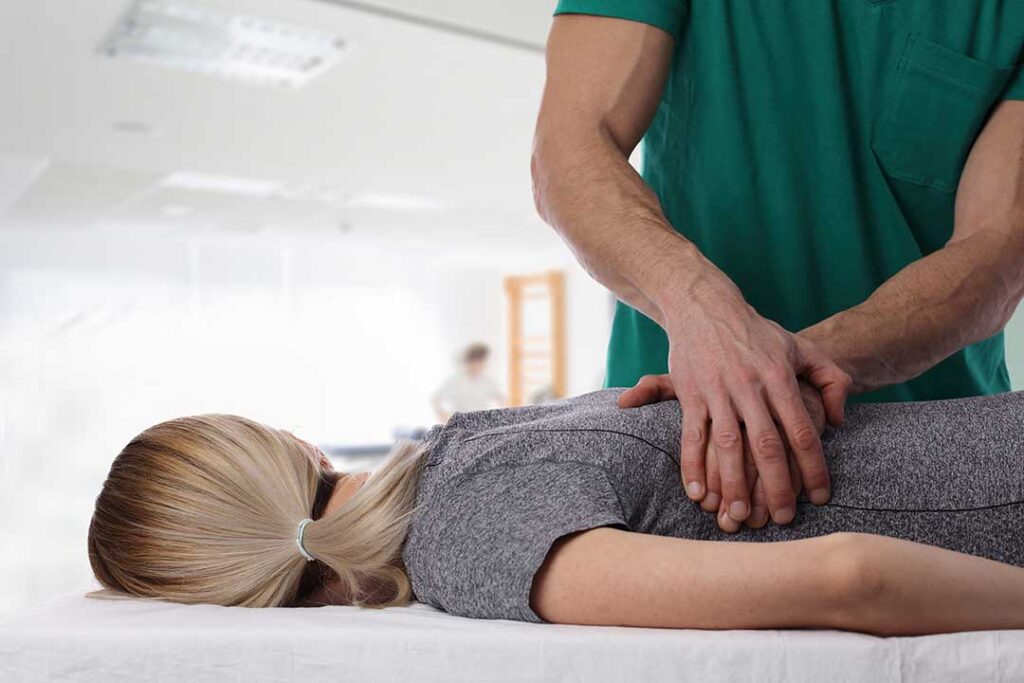
Poor posture is more than an appearance issue. Repeated slouching, leaning, or holding the head forward can increase strain on the muscles and joints, contribute to discomfort, and make ordinary activities such as working, driving, walking, and sleeping less comfortable.
For residents of Lynbrook, NY, posture concerns may show up during long periods at a desk, commuting, household tasks, phone use, or seasonal activities that involve heavy coats and limited movement. The goal is not to hold the body rigidly upright all day. Healthy posture is usually a balance of support, movement, and regular position changes.
What does poor posture do to the body?
Poor posture can place certain muscles under constant tension while allowing others to become less active. Over time, this uneven workload may contribute to neck, shoulder, upper-back, and lower-back discomfort.
Common examples include:
- The head drifting forward while looking at a phone or monitor
- Rounded shoulders during seated work
- Slouching with the pelvis rolled backward
- Leaning to one side while standing or sitting
- Twisting the body repeatedly to reach, lift, or work
These positions do not automatically cause injury. However, staying in one awkward position for long periods, especially while repeating the same movement or handling weight, can increase physical stress. Pain is influenced by many factors, including muscle strength, sleep, activity level, previous injuries, stress, and the design of the work environment.
Can poor posture cause neck and shoulder pain?
Yes. Forward-head posture and rounded shoulders can increase the workload on the muscles that support the head, neck, and shoulder blades. This may lead to aching, stiffness, headaches related to muscle tension, or discomfort that worsens after computer use or extended phone viewing.
The head is supported by the neck, so even a small forward shift can make the surrounding muscles work harder. Looking down for a few minutes is not usually harmful, but repeating the position for hours without breaks can be tiring.
A useful adjustment is to bring the screen closer to eye level rather than repeatedly bending the neck downward. The shoulders should be allowed to relax instead of being pulled forcefully backward. Gentle movement is generally more sustainable than trying to maintain a perfectly straight position.
How can posture affect the lower back?
Slumped sitting can change the way the pelvis and lower spine share the body’s load. Some people notice increased low-back pressure after sitting for a long time, particularly in a soft chair, on a couch, or in a vehicle without adequate support.
Posture is only one possible contributor to back pain. Research does not support the idea that a single “bad” posture explains every case. Still, prolonged sitting, awkward bending, repetitive lifting, and limited movement can combine to aggravate symptoms.
During desk work or household tasks, it may help to:
- Keep both feet supported when seated
- Place frequently used items within easy reach
- Avoid rotating the trunk while lifting
- Alternate between sitting, standing, and walking
- Change position before discomfort becomes intense
Residents who spend more time indoors during cold or snowy weather may notice that reduced movement makes stiffness more apparent. Short walking breaks, gentle mobility exercises, and regular changes in activity can help prevent long periods of physical inactivity.
Does poor posture affect breathing or digestion?
A compressed, slumped position can limit how freely the rib cage and abdomen move. Some people may feel that deep breathing is less comfortable when sitting collapsed forward. Bending tightly at the waist after eating may also increase feelings of abdominal pressure or discomfort.
Posture is not usually the only explanation for breathing or digestive symptoms. Persistent shortness of breath, chest pain, difficulty swallowing, severe abdominal pain, or unexplained digestive changes require medical evaluation rather than posture correction alone.
A more comfortable seated position usually allows the ribs and abdomen to expand without unnecessary compression. This does not require forcing the chest upward or pulling the shoulders back aggressively.
Can posture affect balance and movement?
Posture influences how the body distributes weight over the feet and how easily a person can adjust during walking or standing. A forward-leaning or uneven stance may affect balance, especially in people with weakness, joint problems, vision changes, or reduced sensation.
Older adults may be particularly concerned about falls, but balance issues can affect people of many ages. Slippery winter surfaces, bulky clothing, poor lighting, and cluttered walkways can add environmental challenges in area homes.
A person who develops new balance problems, repeated falls, dizziness, weakness, numbness, or difficulty walking should seek prompt medical assessment. These symptoms should not be assumed to result from posture.
What is a healthy sitting position?
There is no single sitting position that works for every body or every task. A generally supportive setup includes:
- Feet resting on the floor or a stable support
- Knees roughly level with or slightly below the hips
- Lower back supported without excessive arching
- Monitor positioned so the eyes can look forward with minimal neck bending
- Elbows close to the body and shoulders relaxed
- Enough room to change position easily
The most helpful adjustment may be movement rather than a perfect chair angle. Standing briefly, walking, stretching gently, or shifting weight can reduce the strain associated with remaining still.
For home work areas, avoid using a laptop on a bed or low couch for long periods. These surfaces often encourage the neck and upper back to round forward. If a laptop must be used there temporarily, taking frequent breaks becomes especially important.
How can posture improve without forcing the body?
Posture often improves through gradual changes in strength, mobility, awareness, and daily habits. Helpful options may include walking, resistance exercises, activities that strengthen the trunk and upper back, and gentle mobility work for the hips, chest, and neck.
Avoid treating posture as a test that must be passed all day. Constantly bracing the abdomen, pulling the shoulders back, or holding the chin rigidly can create new tension. A better aim is a comfortable, adaptable position that allows easy breathing and movement.
Pain that persists, worsens, or interferes with sleep and normal activities deserves individualized evaluation. Urgent medical care is appropriate for back or neck pain accompanied by new loss of bladder or bowel control, severe weakness, major numbness, fever, unexplained weight loss, or pain after a significant injury.
Posture is one part of overall health, not a complete explanation for every symptom. Paying attention to movement habits, work setup, sleep, physical activity, and warning signs provides a more accurate and practical approach.
