
Why does movement throughout the day matter?
Regular movement helps the body manage stiffness, support joint mobility, maintain muscle endurance, and make everyday tasks feel easier. For residents of Lynbrook, NY, healthy movement may include walking to nearby destinations, carrying groceries, commuting, doing household work, climbing stairs, or spending long periods at a desk.
The goal is not to exercise intensely every hour. It is to avoid staying in one position for too long and to give the spine, hips, shoulders, knees, and ankles frequent opportunities to move.
Long periods of sitting can leave the hips tight, the upper back rounded, and the neck angled forward. Standing still for extended periods can also create fatigue, especially when footwear, flooring, or posture increases strain. Short movement breaks are often more practical and sustainable than waiting for a single long workout.
How often should a person get up and move?
A useful general approach is to change position at least every 30 to 60 minutes. The exact timing can vary depending on work demands, physical condition, and comfort.
A movement break does not need to be elaborate. Two to five minutes may be enough to:
- Walk around the room or hallway
- Roll the shoulders slowly
- Stand and sit from a sturdy chair several times
- Move the ankles and calves
- Reach overhead without forcing the lower back
- Take a few relaxed breaths while standing upright
A timer or natural daily cue can help, such as getting up after finishing a phone call, completing a task, or drinking water. The purpose is to interrupt stillness before stiffness becomes pronounced.
What are healthy movement habits during desk work?
Desk work is generally easier on the body when the workstation allows frequent position changes. There is no single perfect posture that must be held all day. A comfortable, supported position that changes regularly is usually more realistic.
Keep the following principles in mind:
- Place the screen near eye level so the head does not remain tipped downward.
- Keep the keyboard and mouse close enough that the shoulders can stay relaxed.
- Let the feet rest on the floor or on a stable support.
- Keep elbows near the sides rather than reaching forward continuously.
- Avoid sitting on a wallet, phone, or other bulky object.
- Alternate between sitting and standing if the work area allows it.
A common misconception is that “good posture” means holding the chest rigidly or pulling the shoulders back all day. Excessive correction can create its own tension. Neutral alignment should feel relatively easy, with the head balanced over the trunk and the body able to breathe and move naturally.
How can residents add movement to ordinary routines?
Daily movement is often easier to maintain when it is connected to tasks that already happen. Household routines, errands, and commuting can provide opportunities without requiring a formal exercise session.
Try adding small amounts of activity by:
- Taking a brief walk after a meal
- Using stairs when they are safe and manageable
- Carrying lighter bags in both hands instead of loading one side
- Dividing household chores into shorter periods
- Walking while talking on the phone
- Performing gentle leg and shoulder movements during television breaks
- Parking or getting off transportation in a way that adds a short, comfortable walk when practical
Winter cold, summer heat, rain, and icy conditions can affect outdoor plans in Lynbrook. On slippery days, indoor walking, gentle mobility exercises, and ordinary household movement may be safer than forcing an outdoor routine. Footwear with adequate traction is especially relevant during icy conditions.
Which stretches and movements are appropriate during the day?
Daytime mobility should feel controlled and comfortable rather than aggressive. Stretching should create mild tension, not sharp pain, numbness, burning, or a feeling that a joint is being forced.
Simple options include:
Neck movement
Turn the head slowly from side to side within a comfortable range. Avoid fast circles or pressing on the neck. The movement should remain easy and should not reproduce dizziness or arm symptoms.
Upper-back movement
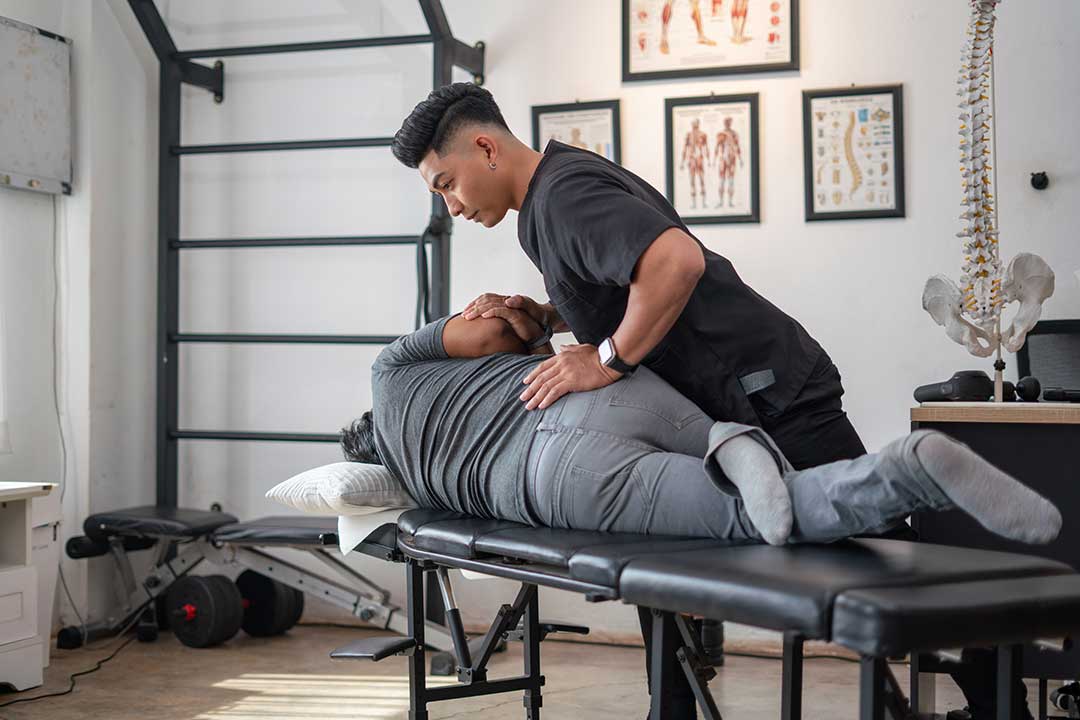
While seated or standing, place the hands across the chest and gently rotate the upper body from one side to the other. Keep the motion smooth and avoid twisting forcefully through the lower back.
Hip movement
Stand near a stable surface for support. Slowly shift weight from one leg to the other, or take a few controlled steps in different directions. This can help reduce the sense of stiffness that follows prolonged sitting.
Ankle movement
Lift one foot slightly and make slow ankle circles, then repeat on the other side. This is useful after sitting, traveling, or spending time at a computer.
Walking
A short, comfortable walk is often more useful than remaining still while searching for a perfect stretch. Begin at an easy pace and increase duration gradually if the body responds well.
How should someone lift, carry, or reach during the day?
Safe movement during household tasks depends on load size, balance, and control. Before lifting, assess whether the object can be divided into smaller loads or moved closer first.
For a manageable object:
- Stand close to it.
- Keep the feet stable.
- Bend through the hips and knees as needed.
- Hold the object near the body.
- Avoid twisting while lifting.
- Turn by moving the feet rather than rotating the trunk under load.
- Set the object down in a controlled manner.
Reaching overhead for long periods can fatigue the neck and shoulders. When possible, use a stable step stool for higher shelves rather than stretching beyond balance. Do not use a chair, unstable box, or rolling surface as a substitute for a step stool.
Is soreness after movement normal?
Mild, temporary muscle fatigue can occur after doing more activity than usual. However, sharp pain, worsening pain, swelling, weakness, persistent numbness, or symptoms that travel into an arm or leg deserve more caution.
Movement should be scaled back when symptoms intensify during an activity or remain significantly worse afterward. Sudden severe pain following a fall, collision, or lifting incident warrants prompt medical evaluation. New loss of bladder or bowel control, severe weakness, chest pain, difficulty breathing, or sudden neurological changes require urgent care.
People with osteoporosis, recent surgery, significant arthritis, balance problems, or other health conditions may need individualized movement limits. Children, older adults, and anyone returning to activity after a long period of inactivity should increase demands gradually.
How can healthy movement become a lasting habit?
The most dependable routine is one that fits normal life. Set modest targets, such as standing during two work breaks, walking for five minutes after lunch, or performing gentle mobility exercises before bed.
Track consistency rather than perfection. A missed day does not require compensating with an exhausting workout. It is usually better to resume a comfortable routine and adjust it based on sleep, workload, weather, and physical symptoms.
Healthy movement throughout the day is a combination of changing positions, walking when practical, using controlled body mechanics, and responding to discomfort early. These habits can support daily function without turning every activity into a formal exercise session.
