
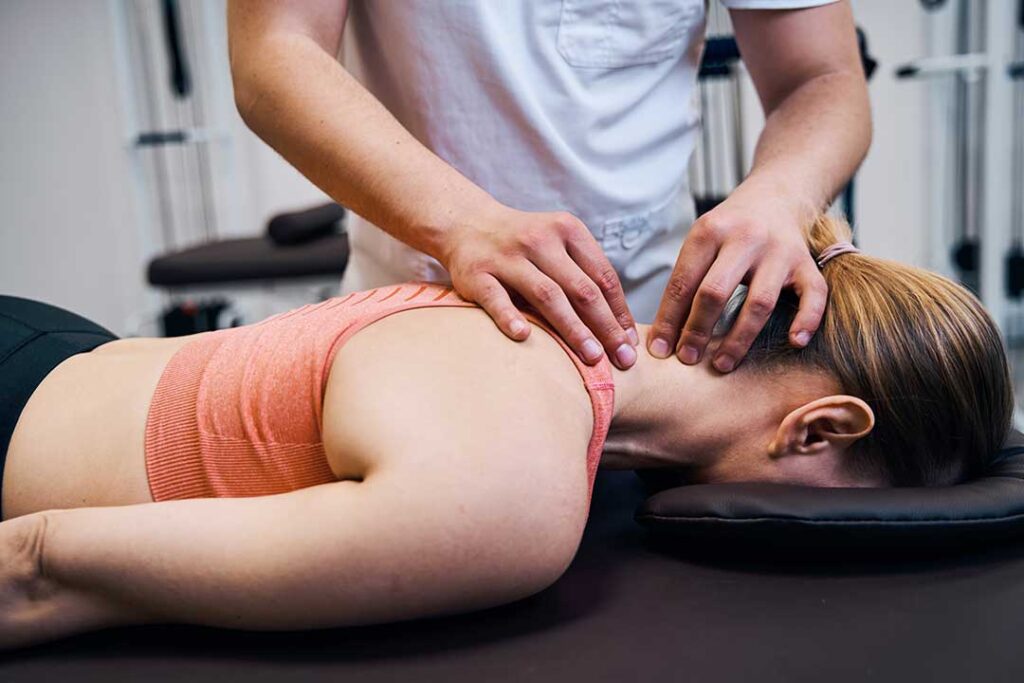
Referred pain can make it difficult to identify where a problem actually begins. A neck joint may contribute to shoulder discomfort, a lower-back issue may be felt in the hip or leg, and a tight muscle may create pain farther away from the area being pressed.
For residents of Lynbrook, NY, understanding this pattern can make it easier to describe symptoms accurately and recognize when chiropractic care may be appropriate—or when pain requires prompt medical evaluation.
What is referred pain?
Referred pain is discomfort felt in one part of the body even though the underlying source is located somewhere else. The brain receives signals from many nearby tissues through connected nerve pathways. Because those signals can overlap, the brain may interpret the location incorrectly.
Referred pain is different from pain that travels along a nerve. Nerve-related pain often follows a more recognizable path and may include burning, tingling, numbness, or weakness. Referred pain is frequently dull, aching, tight, or difficult to pinpoint.
Examples include:
- Neck problems felt in the shoulder, upper back, or arm
- Upper-back or rib irritation felt around the chest wall
- Lower-back or pelvic joint discomfort felt in the buttock or outer hip
- Muscle trigger points that produce pain in another area
- Jaw or neck tension associated with headaches
The location of pain does not always identify its cause. A careful assessment considers the pain pattern, movement, posture, recent activity, general health, and other symptoms.
How can someone tell whether pain is referred?
It is not always possible to determine this at home. However, several clues may suggest that the painful area is not the primary source.
Pain may be referred when:
- The painful area was not injured directly
- Moving the neck or back changes symptoms in a distant area
- Pressing or contracting a nearby muscle reproduces the pain
- Symptoms vary with posture, lifting, sitting, or repetitive activity
- The pain is difficult to locate with one finger
- The discomfort appears alongside stiffness in another region
For example, shoulder pain that becomes worse when turning the neck may involve the cervical spine or surrounding muscles rather than the shoulder joint alone. Likewise, buttock or outer-hip discomfort may sometimes be influenced by the lower back, pelvis, or nearby muscles.
These patterns are clues, not a diagnosis. Pain in the shoulder, chest, abdomen, or back can also arise from non-musculoskeletal conditions.
Can chiropractic care help referred pain?
Chiropractic care may help some forms of referred pain when the source is related to the muscles, joints, movement patterns, or mechanical stress of the spine. Care commonly begins with a history and physical examination rather than assuming that the painful area is the problem.
An evaluation may consider:
- Range of motion in the neck, spine, and nearby joints
- Muscle tenderness and possible trigger points
- Strength, sensation, reflexes, and coordination
- Whether certain movements reproduce or reduce symptoms
- Recent falls, lifting, exercise, work, or sleep-position changes
- Health conditions, medications, and previous injuries
Treatment may include gentle joint mobilization, manual techniques, soft-tissue work, exercise instruction, and advice about activity modification. The purpose is to improve movement and reduce mechanical irritation—not simply to treat the place where pain is felt.
For some people, active care is especially useful. This may include gradual strengthening, mobility exercises, walking, and instruction on lifting or workstation habits. Passive treatment alone may provide temporary relief without addressing the factors that keep symptoms returning.

What should someone expect during an evaluation?
A responsible evaluation should include questions about the full symptom pattern. Important details include when the pain began, whether it followed an injury, what makes it better or worse, and whether it occurs with numbness, weakness, fever, shortness of breath, digestive symptoms, or changes in bladder or bowel function.
The painful area may be examined, but nearby regions should also be assessed. Someone with shoulder pain may need a neck and upper-back evaluation. Someone with hip-area pain may need assessment of the lower back, pelvis, and leg.
Imaging is not automatically necessary for every episode of musculoskeletal pain. It may be considered when there has been significant trauma, persistent or worsening symptoms, suspected nerve involvement, or signs of a more serious condition. Imaging findings also need to be interpreted alongside the examination because normal age-related changes do not always explain pain.
When is referred pain a medical emergency?
Some referred pain patterns require urgent medical attention. Seek emergency help for sudden or severe pain associated with symptoms such as:
- Chest pressure, shortness of breath, sweating, nausea, or fainting
- Pain spreading to the jaw, arm, shoulder, or upper back
- Sudden weakness, facial drooping, trouble speaking, or confusion
- Loss of bladder or bowel control
- New numbness in the groin or inner thighs
- Severe abdominal pain with vomiting or collapse
Prompt medical evaluation is also appropriate for unexplained pain accompanied by fever, unexplained weight loss, significant nighttime pain, a history of cancer, recent major trauma, or progressive weakness.
A chiropractic examination should not delay emergency care. Referred pain from the heart, lungs, abdominal organs, or other systems can resemble a muscle or joint problem.
Why can seasonal routines affect symptoms in the area?
Local residents may notice symptoms after long commutes, extended sitting, home maintenance, yard work, or carrying items up and down stairs. Winter cold can lead some people to move less and tense the shoulders, while spring cleanup and summer outdoor activity may increase lifting, bending, and repetitive reaching.
Older homes and compact living spaces can also encourage awkward lifting, prolonged computer use, or working in confined positions. These factors do not automatically cause referred pain, but they may aggravate an existing sensitivity in the neck, back, or surrounding muscles.
A gradual return to activity is generally more comfortable than alternating between inactivity and strenuous weekend projects. Frequent position changes, sensible lifting technique, and gentle movement breaks can reduce unnecessary strain.
What can a person do before seeking care?
Keep a brief record of the symptoms. Note the location, intensity, timing, activities involved, and any associated sensations such as tingling or weakness. This information can help distinguish movement-related pain from symptoms that need broader medical assessment.
Avoid repeatedly testing painful movements or performing forceful stretches. Gentle walking and comfortable range-of-motion activity may be reasonable for many uncomplicated musculoskeletal problems, but worsening pain is a signal to stop and reassess.
The central question is not simply, “Where does it hurt?” It is also, “What structures or health conditions could be producing that pain?” Chiropractic care may be one part of evaluating movement-related referred pain, provided serious causes are considered first and the treatment plan matches the findings.
