
Jaw pain is often treated as a problem limited to the teeth or jaw joint. In reality, the jaw, neck, upper back, and nervous system work as a connected movement system. Changes in one area can influence muscle tension and movement in another, although spinal posture is not the sole cause of temporomandibular disorders.
For residents of Lynbrook, NY, this connection can matter during long commutes, desk-based work, phone use, physically demanding household tasks, or colder months when people unconsciously tighten the jaw and shoulders.
How are the jaw and spine connected?
The jaw is controlled by muscles that attach to the skull, face, neck, and upper chest. The temporomandibular joints, commonly called TMJs, sit just in front of the ears and allow the mouth to open, close, speak, and chew.
The upper neck helps support and position the head. When the head moves forward for extended periods, the muscles at the front and back of the neck may work differently. The jaw muscles can also become more active as the body attempts to stabilize the head.
This does not mean that poor posture automatically causes jaw pain. Jaw symptoms may involve several factors, including muscle overuse, teeth grinding, stress, injury, arthritis, sleep-related clenching, or changes in pain sensitivity. Spinal alignment is one possible contributor rather than a complete explanation.
Can neck problems cause jaw pain?
Neck problems can contribute to jaw discomfort, especially when muscles in the neck, shoulders, and jaw remain tense for long periods. Pain signals from nearby areas can also overlap, making it difficult to identify where symptoms began.
A person with neck-related muscle tension may notice:
- Aching near the jaw or cheek
- Tightness at the base of the skull
- Headaches that spread toward the temples
- Shoulder tension
- Pain that increases after computer work or phone use
- Jaw fatigue without a clear dental cause
The reverse can also happen. Persistent jaw clenching may increase activity in the neck and upper shoulder muscles, contributing to stiffness or headaches.
What symptoms suggest a temporomandibular disorder?
Temporomandibular disorders, or TMDs, are a group of conditions affecting the jaw joints, chewing muscles, and nearby tissues. They can affect one or both sides and may come and go.
Common signs include:
- Pain while chewing, yawning, or speaking
- Tenderness in the cheek or temple muscles
- Clicking, popping, or grating sounds
- Reduced ability to open the mouth
- A feeling that the jaw catches or locks
- Ear-area discomfort without an ear infection
- Headaches or facial pain
- Changes in how the teeth meet
A painless click does not always indicate a serious disorder. However, clicking accompanied by pain, locking, swelling, or a change in jaw movement deserves attention.
How can posture affect jaw symptoms?
Posture can influence the amount of work required from the jaw and neck muscles. Sitting with the head far forward, raising the shoulders, or looking downward for long periods may increase muscular load.
Typical examples include:
- Holding a phone between the shoulder and ear
- Looking down at a device for extended periods
- Working at a counter or laptop without back support
- Driving with the head projected forward
- Sleeping in a position that strains the neck
- Bracing the jaw during concentration or exercise
These habits may be especially noticeable during busy workweeks or long periods indoors during cold weather. The goal is not to maintain a rigid “perfect” posture. More useful habits include changing positions regularly, keeping screens closer to eye level, allowing the shoulders to relax, and avoiding prolonged jaw clenching.

What does spinal health have to do with jaw movement?
Healthy spinal function involves mobility, strength, coordination, and the ability to tolerate ordinary activities. A stiff upper back or irritated neck may alter how the head is carried. That change can affect the muscles involved in jaw movement.
A simple example is the relationship between the chin and neck. If the chin repeatedly moves forward, the muscles under the jaw and along the front of the neck may be placed under different tension. The upper back and shoulder muscles may also become more active. Over time, this can contribute to discomfort, particularly in people who already grind or clench their teeth.
Spinal health should therefore be understood broadly. It is not only about the position of individual bones. It also includes movement variety, muscle endurance, sleep, recovery, stress, and the ability to perform daily tasks without excessive guarding.
Can chiropractic care help with jaw-related symptoms?
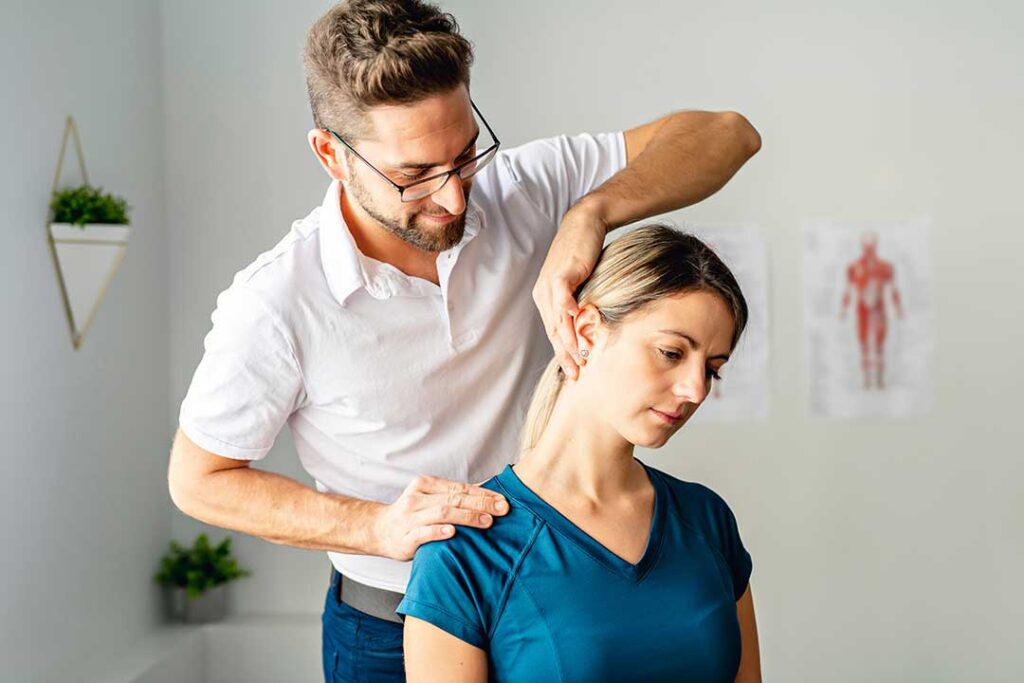
A chiropractic evaluation may consider the neck, upper back, shoulders, posture, and movement patterns when jaw pain occurs with musculoskeletal symptoms. Gentle mobility work, exercise guidance, breathing strategies, and education about muscle tension may be relevant in some cases.
Jaw pain should not automatically be treated as a spinal problem. A careful assessment should account for dental symptoms, facial pain, trauma, neurological signs, medication use, and the possibility of a primary jaw-joint disorder.
Treatment should also avoid assuming that forceful manipulation is appropriate for every person or every condition. The most suitable approach depends on the cause, symptom pattern, medical history, and examination findings. Coordination with dental, medical, physical therapy, or other healthcare professionals may be appropriate when symptoms overlap.
What can residents try safely at home?
For mild, recent symptoms without warning signs, short-term self-care may reduce irritation:
- Choose softer foods temporarily if chewing is painful.
- Avoid gum, chewy foods, and very wide yawning.
- Keep the teeth slightly apart when not eating; the lips may rest together while the jaw remains relaxed.
- Apply a comfortable warm compress to tense jaw or neck muscles.
- Take brief movement breaks during desk work or device use.
- Use slow, comfortable neck and shoulder movements rather than forcing a stretch.
- Notice whether clenching occurs during concentration, driving, exercise, or stress.
- Avoid repeatedly testing a painful click or forcing the mouth open.
These measures are not a diagnosis or a substitute for evaluation when symptoms persist.
When should jaw pain be evaluated promptly?
Medical or dental assessment is appropriate for jaw pain that is severe, persistent, worsening, or associated with difficulty opening the mouth. Prompt evaluation is also warranted after a blow to the face or jaw, especially if the bite suddenly changes.
Urgent medical attention is needed when jaw discomfort occurs with chest pressure, shortness of breath, sweating, nausea, faintness, or pain spreading into the arm or neck. Jaw pain can occasionally be part of a heart-related emergency, particularly when it appears with other concerning symptoms.
Other warning signs include facial swelling, fever, unexplained weight loss, numbness, weakness, severe headache, vision changes, or difficulty swallowing.
What is the main takeaway?
Jaw pain and spinal health can be connected through shared muscles, posture, movement habits, and overlapping pain signals. Neck or upper-back tension may aggravate jaw symptoms, while clenching may increase strain in the neck and shoulders. Still, no single posture or spinal finding explains every case.
Understanding the whole movement system can help local residents recognize contributing habits without overlooking dental, joint, medical, or neurological causes. A balanced approach considers the jaw, neck, upper back, sleep, stress, daily activities, and any symptoms that require prompt attention.
