
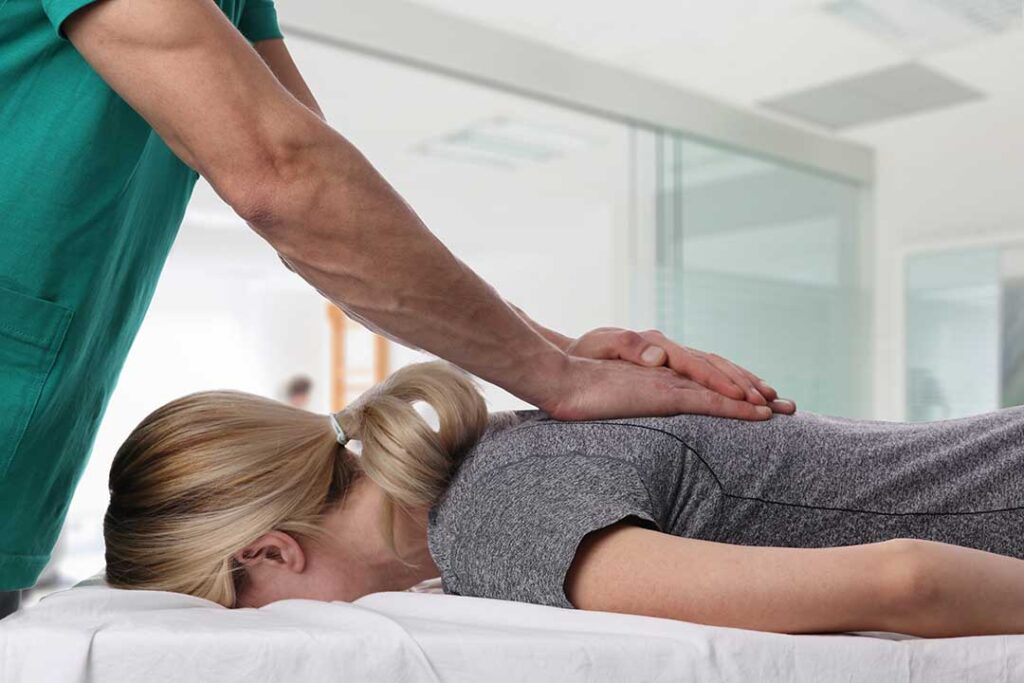
What is the Graston Technique?
The Graston Technique is a form of instrument-assisted soft-tissue mobilization, often abbreviated as IASTM. It uses smooth, handheld instruments to apply controlled pressure and gliding strokes to muscles, tendons, fascia, and other soft tissues.
In chiropractic care, it is generally used as one part of a broader plan that may also include movement assessment, joint mobilization, stretching, strengthening, posture changes, and advice about daily activity. It is not a separate diagnosis, and it does not replace a medical evaluation when symptoms may have a more serious cause.
The instruments are commonly made from stainless steel or another firm material. Their shape allows the practitioner to feel changes in tissue texture and apply pressure over a specific area. Despite common descriptions, the tool is not literally scraping scar tissue out of the body or breaking up adhesions in a mechanical way.
How is the technique performed?
A typical session begins with questions about pain, injury history, work demands, exercise, and movement limitations. The area may then be examined while the person moves through activities that reproduce stiffness or discomfort.
A small amount of lotion or treatment gel may be applied to the skin. The instrument is then moved over the selected area using short or longer strokes. Pressure should be adjusted to the person’s tolerance and the condition of the tissue.
Treatment may last only a few minutes for one region. The goal is usually to make movement more comfortable or to prepare the area for active rehabilitation. For example, soft-tissue work might be followed by calf strengthening for heel pain, shoulder exercises after periods of stiffness, or controlled mobility work for a strained muscle.
Mild redness, tenderness, or temporary bruising can occur. These effects should be discussed during the session rather than treated as proof that the technique is working.
What conditions may be treated?
IASTM is sometimes used for localized soft-tissue complaints involving the neck, back, shoulders, elbows, wrists, hips, knees, ankles, or feet. Examples may include:
- Muscle tightness after increased activity
- Tendon-related pain, such as some cases of tennis elbow or Achilles discomfort
- Restricted movement after an injury
- Scar-related stiffness after healing
- Plantar heel pain
- Repetitive-strain symptoms
- General soft-tissue sensitivity associated with prolonged sitting or altered movement
A person who spends long periods driving, working at a computer, lifting household items, or performing seasonal outdoor tasks may develop stiffness from repeated positions rather than from a single injury. In a dense suburban community such as Lynbrook, commuting, home maintenance, and recreational walking can all contribute to these patterns.
The technique is not appropriate for every condition. Nerve compression, a fracture, infection, significant joint disease, vascular problems, or unexplained persistent pain may require a different evaluation.
Does it actually break up scar tissue?
Not in the literal sense often suggested in advertisements or casual explanations. Soft tissue is biologically complex, and a handheld instrument cannot be assumed to physically remove scar tissue beneath the skin.
The possible effects may involve several factors, including temporary changes in pain sensitivity, improved tolerance to movement, altered muscle tone, and increased awareness of how an area moves. Any short-term improvement should be used to support normal activity and exercise rather than as an excuse to avoid strengthening or gradual return to function.
Research on IASTM has produced mixed findings. Some reviews report short-term improvements in pain or range of motion, while other reviews find that the overall evidence is limited, inconsistent, or not clearly better than other active treatments. The quality of studies varies by body region, diagnosis, treatment method, and outcome measured.
For that reason, the technique is best viewed as an optional supportive treatment rather than a stand-alone cure.
What should a person expect afterward?
Temporary soreness or skin discoloration may occur for one to several days. More pronounced pain, swelling, blistering, numbness, or loss of strength is not an expected goal and should be reported promptly.
After treatment, gentle movement is often more useful than complete rest. A person may be given home exercises, walking guidance, mobility work, or instructions to gradually resume normal activities. Hydration may be comfortable for some people, but there is no special need to “flush toxins” from the body.
The most meaningful measure is functional change. Useful questions include:
- Can the person walk, lift, reach, or climb stairs more comfortably?
- Is range of motion improving over time?
- Is strength returning?
- Can normal activity increase without a flare-up?
- Are symptoms becoming less frequent or less intense?
If the only result is repeated bruising without better function, the treatment plan should be reconsidered.
Who should avoid or postpone it?
Instrument-assisted soft-tissue treatment should generally be avoided over open wounds, active skin irritation, unexplained bruising, blisters, or areas of infection. Extra caution is needed with blood-clotting disorders, medications that increase bleeding risk, fragile skin, uncontrolled vascular disease, or a history of unusual bruising.
It should not be applied over an unhealed fracture, suspected blood clot, active bone infection, or a recently injured area unless the treatment has been specifically cleared as part of appropriate care. People with acute fever or a contagious illness should postpone hands-on treatment.
Pregnancy does not automatically rule out soft-tissue care, but treatment location, pressure, symptoms, and the individual’s medical history matter. Anyone taking anticoagulant medication or managing a significant medical condition should disclose that information before treatment.
When is a medical evaluation more appropriate?
Pain after a minor strain may improve with sensible activity modification and rehabilitation. However, urgent evaluation is more appropriate for symptoms such as sudden severe pain, major swelling, inability to bear weight, new weakness, progressive numbness, loss of bladder or bowel control, unexplained fever, chest pain, or shortness of breath.
Persistent pain that does not improve, pain following a significant fall or collision, or symptoms that repeatedly return also deserve a careful assessment. Soft-tissue treatment should not delay evaluation of a possible fracture, infection, nerve problem, or circulation issue.
How can residents judge whether it is being used responsibly?
A responsible approach includes a clear working diagnosis, discussion of alternatives, attention to the person’s tolerance, and measurable goals. The technique should be combined with appropriate movement and exercise when those activities are safe.
Be cautious of claims that the method can permanently remove scar tissue, correct every alignment problem, cure internal disease, or work equally well for every type of pain. A reasonable explanation should acknowledge uncertainty and describe what improvement will be monitored.
For local residents managing stiffness during colder months, after snow-related chores, or following a sudden increase in walking and outdoor activity, gradual loading and movement habits are usually more important than any single hands-on method. Instrument-assisted care may help some people participate in that process, but the long-term objective remains better function, not repeated treatment alone.
