
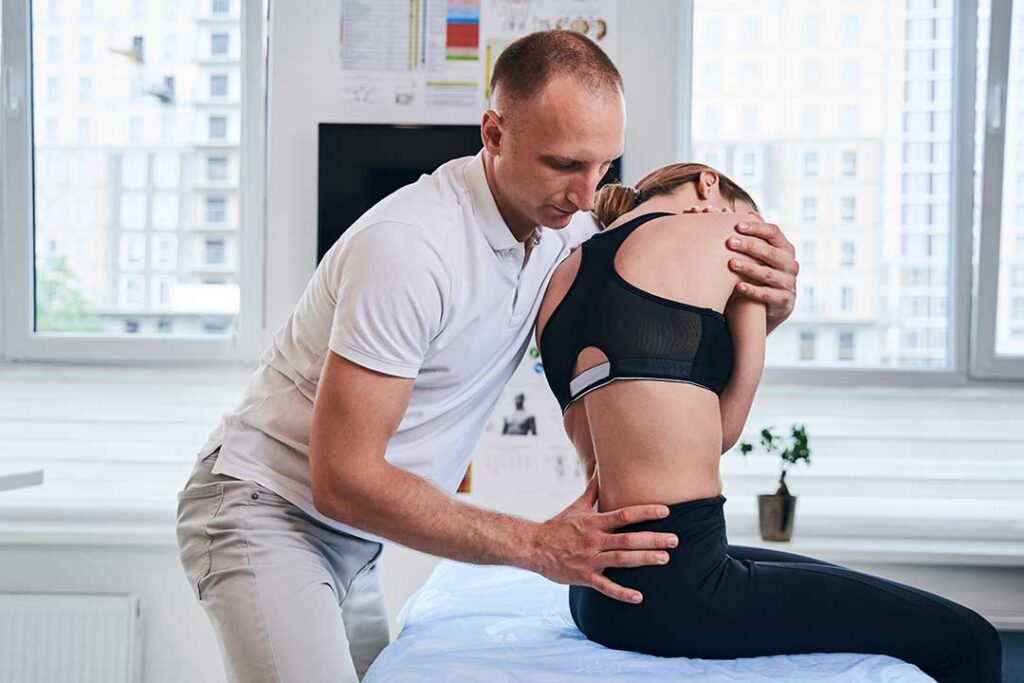
Simple back exercises can improve the strength and endurance of the muscles that support the spine, pelvis, and hips. For many residents in Lynbrook, NY, a practical routine can fit around commuting, desk work, household tasks, walking, and seasonal outdoor activities.
Back strength does not come only from exercising the lower back. The abdominal muscles, gluteal muscles, hips, and upper back all help distribute movement and reduce the amount of work placed on one area.
Which exercises are safest for beginners?
A good starting routine uses slow, controlled movements and avoids forcing the spine into painful positions. Perform the following exercises on a firm surface, such as an exercise mat or carpeted floor.
Abdominal bracing
Abdominal bracing teaches the deep abdominal muscles to support the spine without repeated bending.
1. Lie on your back with your knees bent and feet flat.
2. Keep your arms relaxed at your sides.
3. Gently tighten your abdominal muscles as if preparing for a light cough.
4. Continue breathing normally.
5. Hold for 5 to 10 seconds, then relax.
Begin with 5 to 10 repetitions. The goal is not to push the lower back forcefully into the floor or hold the breath. The stomach should feel engaged without excessive tension in the neck or shoulders.
Glute bridge
The bridge strengthens the buttocks and the muscles along the back of the hips. Stronger glutes can help the back during walking, lifting, and stair climbing.
1. Lie on your back with both knees bent.
2. Place your feet about hip-width apart.
3. Tighten the abdomen gently and squeeze the buttocks.
4. Lift the hips slowly until the shoulders, hips, and knees form a comfortable diagonal line.
5. Pause for 2 to 5 seconds.
6. Lower with control.
Try 8 to 12 repetitions. Avoid arching the back to lift higher. A smaller movement performed smoothly is more useful than a high bridge that causes discomfort.
Bird dog
This exercise develops trunk control while the arms and legs move separately.
1. Begin on your hands and knees, with hands under the shoulders and knees under the hips.
2. Tighten the abdomen lightly.
3. Extend one leg backward without twisting the pelvis.
4. If steady, reach the opposite arm forward.
5. Hold for 3 to 5 seconds.
6. Return slowly and switch sides.
Start with 5 repetitions per side. Keeping only one hand or one leg moving is an appropriate modification. The back should remain relatively still rather than dipping or rotating.
Wall squat
A supported squat strengthens the thighs, hips, and trunk, which are all involved in lifting and standing.
1. Stand with your back against a wall and feet slightly forward.
2. Slide down only as far as comfortable.
3. Keep the knees aligned with the middle of the feet.
4. Hold for 5 to 10 seconds.
5. Slide back up slowly.
Repeat 5 to 10 times. A shallow squat is sufficient for beginners. This may be especially useful for people whose daily routines involve carrying groceries, using stairs, or standing for extended periods.
How often should back-strengthening exercises be performed?
Most beginners can start with two or three sessions each week, allowing at least one day between more demanding sessions. A short routine of 10 to 15 minutes is often easier to maintain than an ambitious program performed only occasionally.
A reasonable progression is:
- Start with one set of each exercise.
- Add repetitions gradually rather than increasing everything at once.
- Move from two-leg or supported exercises to more challenging variations only after the basic form feels steady.
- Stop a set when technique begins to deteriorate.
- Include regular walking or another comfortable low-impact activity.
The purpose is to build capacity over time. Muscle fatigue is expected, but sharp pain, spreading pain, numbness, or increasing weakness is not a normal training response.
Should stretching be included?
Stretching can complement strengthening, particularly when the hips, thighs, or upper back feel stiff. It should feel like mild tension rather than pulling, burning, or pain.
Useful gentle options include:
- A comfortable hip-flexor stretch performed with one knee supported.
- A hamstring stretch using a towel or strap while lying down.
- A child’s-pose-style rest position, if bending forward feels comfortable.
- Gentle chest opening against a doorway to counter prolonged sitting.
Hold a mild stretch for about 15 to 30 seconds and breathe normally. Flexibility is not a requirement for back strength, and stretching should not be forced during an acute flare-up.
What should people do if sitting or commuting aggravates the back?
Long periods in one position can increase stiffness even when the chair itself is not the sole cause. Residents who spend much of the day at a desk, in a vehicle, or seated at home may benefit from changing positions regularly.
Try standing briefly, walking around the room, or performing a few gentle movements every 30 to 60 minutes. Keep frequently used items within easy reach, and avoid twisting while lifting from the floor or from a car trunk.
During colder months, people may also become less active and spend more time sitting indoors. A short daily walk, indoor marching, or several brief movement breaks can help maintain conditioning without requiring intense exercise.
Are these exercises appropriate during back pain?
They may be appropriate for mild, uncomplicated discomfort, but the right movement depends on the cause and pattern of symptoms. Exercise should not be used to push through severe pain.
Reduce the range of motion or stop an exercise if symptoms become clearly worse during the movement or remain worse afterward. New back pain after a fall, collision, heavy lift, or sudden injury deserves extra caution.
Urgent medical evaluation is appropriate for back pain accompanied by new loss of bladder or bowel control, numbness around the groin, severe or progressive leg weakness, fever, unexplained weight loss, or pain after significant trauma. Persistent night pain or symptoms that steadily worsen also warrant medical attention.
How does chiropractic care fit into a back-strengthening plan?
Chiropractic education often emphasizes movement, joint function, muscle coordination, and safe activity progression. Exercises may be used alongside other conservative approaches, but no single routine is suitable for every person.
Someone with recurring symptoms, leg pain, a known spinal condition, osteoporosis, recent surgery, or other health concerns may need an individualized exercise plan. A qualified healthcare professional can help determine which movements are appropriate and whether symptoms suggest a condition requiring additional evaluation.
For general back health, the most useful routine is usually one that can be performed consistently, progresses gradually, and supports everyday activities without provoking symptoms.
