
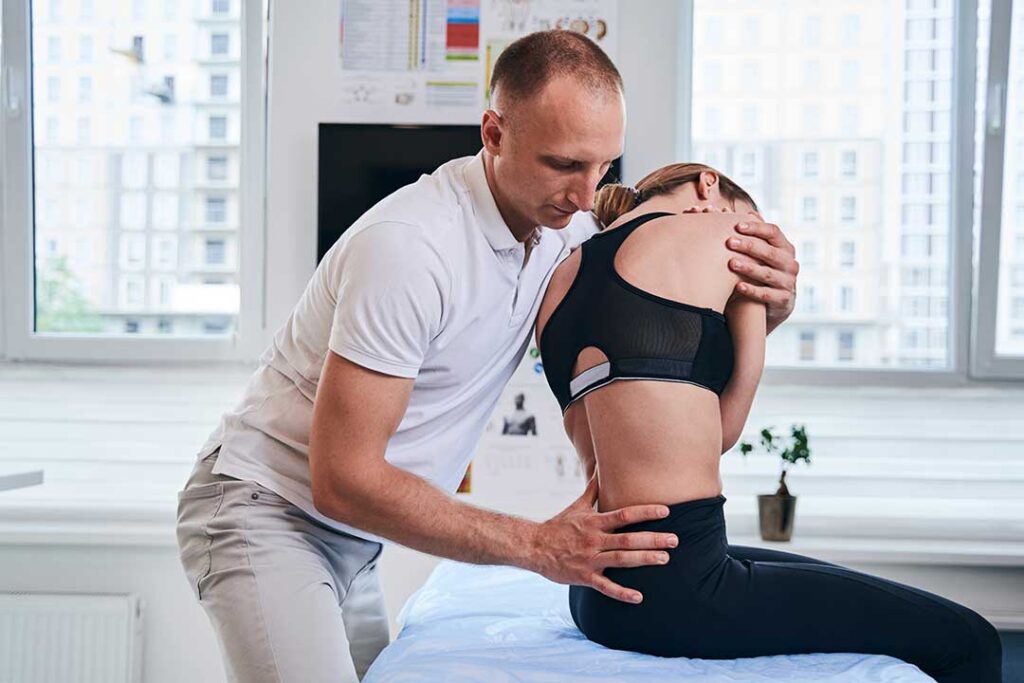
Balance problems can sometimes be related to the way the spine, neck muscles, eyes, inner ear, and nervous system work together. Spinal alignment is one possible factor, but it is rarely the only explanation for dizziness, unsteadiness, or difficulty walking.
For residents in Lynbrook, NY, understanding this connection can help distinguish ordinary posture-related discomfort from symptoms that require prompt medical evaluation.
How can spinal alignment affect balance?
Spinal alignment may influence balance through posture, muscle coordination, and proprioception—the body’s ability to sense position and movement without looking.
The joints and muscles of the neck contain sensors that send information to the brain about the position of the head. The brain combines those signals with information from:
- The inner ear, which helps detect motion and orientation
- The eyes, which provide visual references
- The feet, ankles, hips, and spine, which detect pressure and movement
- The brain and nervous system, which interpret and coordinate the information
If neck movement is restricted, painful, or poorly coordinated, the signals from the cervical spine may not match what the eyes and inner ear are reporting. This mismatch can contribute to a feeling of unsteadiness, disorientation, or motion sensitivity.
This does not mean that a “misaligned spine” is automatically the cause of balance problems. Spinal posture is one part of a larger sensory and movement system.
What does “spinal alignment” really mean?
Spinal alignment refers to how the head, neck, spine, pelvis, and limbs are positioned in relation to one another during standing and movement. A healthy spine is not perfectly straight. It has natural curves that help distribute forces and support efficient motion.
Alignment can temporarily change because of:
- Muscle fatigue or weakness
- Guarding caused by pain
- Prolonged sitting or screen use
- A recent injury, such as a fall or whiplash
- Limited movement in the hips, ankles, or upper back
- Repetitive work, lifting, or carrying
- Stress-related muscle tension
Posture that looks uneven does not necessarily indicate disease. Many people have mild differences in shoulder height, spinal curve, or pelvic position without having balance problems. The more useful question is whether a change in posture is associated with pain, reduced movement, weakness, altered sensation, or difficulty performing normal activities.
Can neck pain cause dizziness or unsteadiness?
Neck pain can be associated with balance changes in some people, particularly after injury or during periods of significant stiffness. Research has found that people with neck pain may show differences in neck position sense, eye movement control, and postural sway compared with people without neck pain.
Symptoms sometimes described as “cervicogenic dizziness” may include:
- Lightheadedness or a floating sensation
- Unsteadiness when turning the head
- Difficulty focusing while walking
- A sense that the surroundings are moving slightly
- Increased symptoms after prolonged neck positioning
However, this diagnosis should be approached carefully. There is no single test that proves the neck is the cause, and other conditions must be considered first. Inner-ear disorders, medication effects, migraine, vision changes, low blood pressure, neurological conditions, and heart-related problems can also cause dizziness or balance difficulties.
True spinning vertigo—especially when it begins suddenly—is more commonly associated with the vestibular system or other medical causes than with ordinary spinal posture.
Does chiropractic care correct balance problems?
Spinal and joint-focused care may be relevant when balance symptoms occur alongside mechanical neck or back pain, restricted movement, or muscle coordination problems. An evaluation may include posture, walking, joint motion, strength, sensation, reflexes, and symptom patterns.
The goal should not be to assume that every balance problem results from spinal alignment. A responsible assessment considers whether the symptoms fit a musculoskeletal pattern and whether another type of evaluation is more appropriate.
Depending on the findings, care may involve movement education, gentle mobility work, strengthening, balance exercises, and strategies for reducing strain during sitting, lifting, or daily activities. Any hands-on treatment should be adapted to the person’s age, health history, medications, bone strength, and injury history.
Balance rehabilitation may also involve vestibular or neurological assessment when symptoms suggest an inner-ear or nervous-system cause. These approaches are not interchangeable, and one type of care should not delay evaluation for another condition.
What can local residents do safely at home?
Simple habits can reduce strain and provide useful information about symptom patterns, although they should not replace medical evaluation for persistent or worsening symptoms.
Try the following:
- Change sitting position regularly instead of holding the neck still for long periods.
- Keep frequently used screens near eye level rather than looking downward for extended times.
- Walk on even, well-lit surfaces when feeling unsteady.
- Use handrails on stairs, particularly during icy or wet seasonal conditions.
- Wear stable footwear when walking outdoors or on uneven sidewalks.
- Practice gentle neck movement only within a comfortable range.
- Avoid challenging balance exercises near stairs, hard surfaces, or other fall hazards.
- Keep a brief record of when symptoms occur, including head movements, standing, meals, medications, sleep, and recent injuries.

A person who feels unsteady should not test balance by standing on one foot near a counter or attempting unsupported exercises. Safety matters more than proving whether posture is involved.
When is a balance problem an urgent concern?
New, severe, sudden, or rapidly worsening balance symptoms should be evaluated promptly. Emergency care is especially important when dizziness or unsteadiness occurs with:
- Weakness or numbness of the face, arm, or leg
- Trouble speaking, confusion, or fainting
- A sudden severe headache
- Double vision or a sudden change in hearing
- Chest pain, shortness of breath, or an irregular heartbeat
- Repeated vomiting
- Inability to walk safely
- A recent significant head or neck injury
Even without those warning signs, recurring dizziness, unexplained falls, symptoms that disrupt daily life, or balance problems lasting more than a short period deserve medical attention.
What questions help identify the likely cause?
A clear description can help guide the evaluation. Useful details include:
- Is the sensation spinning, lightheadedness, swaying, or weakness?
- Did it begin suddenly or gradually?
- Does turning the head bring it on?
- Is there neck pain or a recent injury?
- Are there hearing changes, ringing in the ears, nausea, or headaches?
- Does the problem happen only when standing?
- Have there been falls, medication changes, illness, or vision changes?
- Is one side of the body weaker or less coordinated?
Spinal alignment can influence how the neck and body contribute to balance, but it should be viewed as one component of a complex system. The safest approach is to assess posture and movement without overlooking the inner ear, vision, circulation, medications, and neurological health.
