
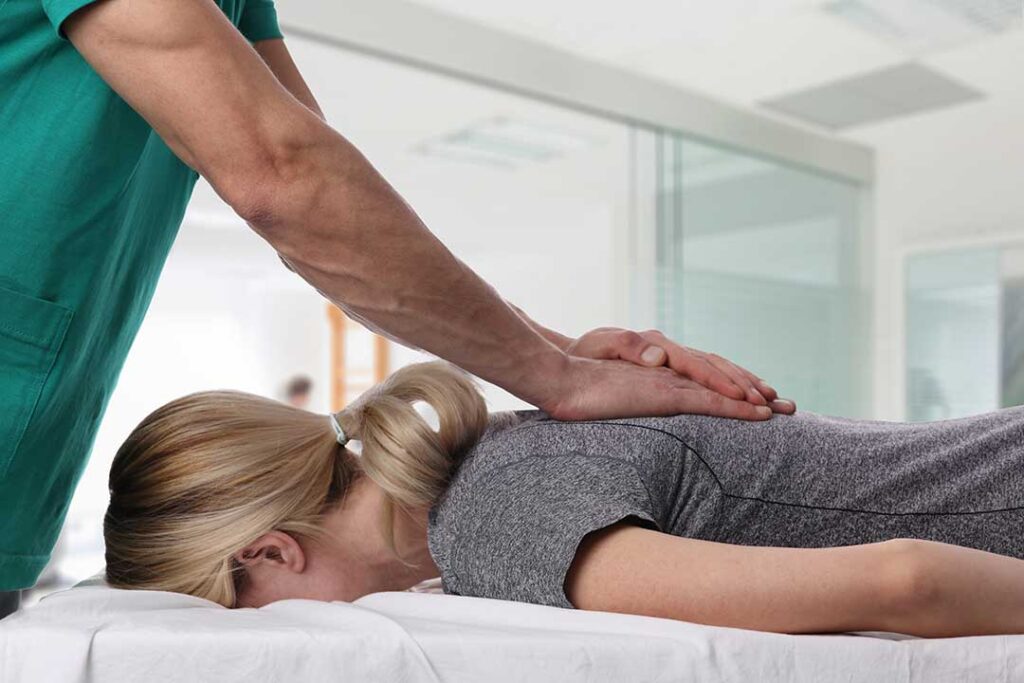
Foot pain is not always limited to the foot. Because the feet support the body during standing and walking, changes in foot movement can affect the ankles, knees, hips, pelvis, and lower back. In some people, a painful foot may also cause a temporary change in posture or walking pattern that creates discomfort farther up the body.
The relationship is real, but it is not automatic. Foot pain does not prove that the spine is “out of alignment,” and back pain is not always caused by the feet. A careful assessment considers the entire movement chain, along with other causes such as injury, arthritis, nerve irritation, muscle weakness, footwear, and activity changes.
How are the feet connected to spinal alignment?
The feet form the foundation of the body’s weight-bearing system. Each step requires the foot and ankle to absorb force, adapt to the ground, and then become firm enough to help propel the body forward.
If one foot moves differently from the other, the leg may rotate slightly inward or outward. That movement can influence the knee, hip, and position of the pelvis. The pelvis and spine then adjust to keep the eyes and head level and to maintain balance.
These changes are usually subtle. They may become more noticeable during prolonged walking, standing, stair climbing, or carrying loads. In a dense community such as Lynbrook, residents may experience these demands during daily walking, commuting, household tasks, or navigating uneven sidewalks and seasonal surfaces.
Can flat feet or high arches cause back pain?
Flat feet and high arches are not automatically problems. Many people have these foot shapes without pain or movement limitations. Concern is more appropriate when the foot structure is associated with stiffness, weakness, instability, or a noticeable change in walking.
A flexible flat foot may allow the arch to lower and the ankle to roll inward during weight-bearing. A rigid high arch may absorb less impact and place more pressure on specific areas of the foot. Either pattern can affect how force travels through the legs, but the result differs from person to person.
Research suggests that foot posture, lower-limb alignment, and back symptoms can be related, but the connection is not simple or consistent. Foot shape alone cannot identify the cause of low back pain. Dynamic factors—what happens during walking or activity—may matter more than how the feet look while standing still.
How does foot pain change posture?
Pain often changes movement before a person consciously notices it. Someone with heel pain may shorten their stride or avoid placing weight on the painful side. A person with pain near the ball of the foot may shift weight toward the heel or outside edge of the foot.
These compensations can lead to:
- Limping or uneven stride length
- Reduced ankle movement
- Increased tension in the calf or hamstring
- Greater rotation through the knee or hip
- A tilted or rotated pelvis during walking
- Increased muscle effort in the lower back
The body can tolerate short-term adjustments well. Problems are more likely when the altered pattern continues for weeks, becomes increasingly uneven, or is combined with high activity levels, limited mobility, or a previous injury.
Could back or nerve problems feel like foot pain?
Yes. Foot symptoms do not always begin in the foot. Irritation of nerves in the lower back can cause pain, burning, tingling, numbness, or weakness that travels through the buttock and leg into the foot.
This type of discomfort may feel different from common local foot conditions. Nerve-related symptoms may be accompanied by:
- Pain that travels below the knee
- Pins-and-needles or reduced sensation
- Weakness when lifting the foot or pushing off
- Symptoms that change with sitting, bending, coughing, or certain spinal movements
A local foot problem is more likely when pain is clearly linked to pressure, footwear, the first steps after rest, or direct tenderness in a specific area. However, symptoms can overlap, so location alone is not enough to identify the cause.
What daily habits may contribute?
Foot and spinal mechanics can be affected by routine habits rather than one dramatic injury. Common contributors include suddenly increasing walking or exercise, standing for long periods, wearing footwear that does not accommodate the foot, and spending much of the day in one position.
Seasonal conditions can also change movement. Wet leaves, snow, ice, and uneven surfaces may encourage shorter steps or guarded walking. Indoor routines may shift as well, with more time spent on hard floors or less time moving during colder months.
Helpful observations include noting:
- When the pain began
- Whether one side is worse
- Which activity brings it on
- Whether symptoms improve with rest
- Whether footwear changes the discomfort
- Whether there is numbness, weakness, or swelling

A brief symptom record can make patterns easier to recognize.
What can be done at home?
For mild symptoms without warning signs, reducing the activity that aggravates the pain may help. This does not necessarily mean complete rest. Gentle movement, gradual return to normal activity, and avoiding sudden increases in walking or exercise are often more useful than remaining inactive.
Other practical measures may include:
- Using comfortable footwear with adequate room for the toes
- Avoiding worn-out shoes during long walks or extended standing
- Taking short movement breaks instead of remaining still for hours
- Performing gentle calf and ankle mobility exercises if they do not increase pain
- Improving lighting and clearing indoor walking paths to reduce trip risks
- Paying attention to whether pain is caused by a specific surface or activity
Arch supports or other inserts may help some people, but they are not universally appropriate. An insert that changes foot motion too aggressively can create new discomfort. It is also a misconception that every back problem requires a lift, brace, or special shoe.
When should foot pain be evaluated promptly?
Seek prompt medical evaluation for severe pain after an injury, an inability to bear weight, marked swelling or deformity, a hot or red foot, or a wound that is not healing. People with diabetes, reduced circulation, or reduced sensation should take foot wounds and persistent pain particularly seriously.
Foot pain accompanied by progressive leg weakness, significant numbness, loss of bladder or bowel control, or numbness around the groin area requires urgent attention because these symptoms may indicate a serious nerve or spinal problem.
For less urgent symptoms, evaluation is sensible when pain keeps returning, steadily worsens, changes the way a person walks, lasts beyond a reasonable period of self-care, or is associated with both foot and back symptoms.
What does a thorough assessment consider?
A useful assessment looks beyond spinal position alone. It may consider foot and ankle motion, balance, walking pattern, leg strength, hip mobility, pelvic control, spinal movement, footwear, recent activity, and the exact quality and location of pain.
The goal is not to force the body into a perfect posture. Human movement varies naturally, and many people have harmless differences in foot shape or spinal position. The more practical question is whether a particular movement pattern is contributing to pain, limiting function, or failing to improve.
For residents of Lynbrook, paying attention to walking changes during daily routines can provide valuable information. Foot pain and spinal discomfort may be connected through movement, but the right explanation depends on the individual pattern rather than a single alignment label.
