

Foot pain and spinal alignment are connected through the way the body absorbs pressure and organizes movement. A painful foot can change walking patterns, while altered movement at the hips, pelvis, or spine can increase stress on the feet. This relationship is real, but it is usually more complicated than saying that a “misaligned spine” directly causes every foot problem.
For residents of Lynbrook, NY, daily walking, standing, commuting, household tasks, and seasonal changes in outdoor surfaces can all influence how the feet and spine work together.
Can foot pain affect the spine?
Yes. Foot pain can alter the way a person stands and walks, which may place extra stress on the ankles, knees, hips, pelvis, and lower back.
A person with heel pain may shorten the painful side’s stride or avoid placing the heel down normally. Someone with pain in the ball of the foot may shift weight toward the outside edge of the foot. These adjustments may reduce discomfort temporarily, but they can also create uneven loading through the legs and pelvis.
Over time, an altered gait may contribute to:
- Tightness in the calf, hamstring, hip, or lower-back muscles
- Uneven wear on shoes
- Increased fatigue during walking or standing
- Aching around the sacroiliac region or lower back
- A feeling of imbalance when moving from sitting to standing
This does not mean foot pain always causes spinal changes. The body may compensate effectively for a short period, and many foot conditions remain limited to the foot itself.
Can spinal or pelvic problems cause foot pain?
They can contribute to foot symptoms, especially when nerves or movement patterns are involved. Irritation of a nerve in the lower back may cause pain, tingling, numbness, or weakness that travels through the buttock, leg, ankle, or foot. This type of discomfort may be mistaken for a local foot problem.
A useful distinction is the quality and location of the symptoms:
- Pain from the foot itself is often tender in a specific area and may worsen with direct pressure or the first steps after rest.
- Nerve-related symptoms may feel burning, electric, sharp, or numb and may travel along the leg.
- Muscle and joint-related pain may be dull, stiff, or sore and may vary with posture or activity.
Because symptoms can overlap, the location of pain alone cannot identify the cause.
What role do flat feet and high arches play?
Foot shape can influence how force moves through the lower limb, but neither flat feet nor high arches automatically indicate a problem.
A lower arch may allow the foot to roll inward during standing or walking. A high arch may provide less natural shock absorption and place more pressure on certain parts of the heel or forefoot. However, many people have these foot types without pain or functional limitations.
The key question is not whether the foot looks perfectly “neutral.” It is whether the foot is strong, mobile enough for the activity, and able to handle daily demands without persistent symptoms.
Foot posture also changes with activity. A foot may look different while standing still than it does while walking, climbing stairs, or carrying a household load. This is why observing movement can be more informative than examining the arch alone.
How does walking change the way the spine moves?
Walking is a coordinated sequence involving the foot, ankle, knee, hip, pelvis, and spine. When one area becomes painful or restricted, other areas often adjust.
For example, limited ankle motion may cause a person to rotate the foot outward or lift the heel earlier. Reduced hip strength may cause the pelvis to shift from side to side. A stiff or painful lower back may shorten the stride and reduce normal trunk rotation.
These changes can increase muscular effort without necessarily creating a permanent alignment problem. The body is designed to adapt, but repeated compensation can become uncomfortable when combined with long periods of standing, increased activity, inadequate recovery, or poorly tolerated footwear.
In a dense community with frequent walking on sidewalks, pavement, stairs, and uneven outdoor surfaces, small movement changes may become more noticeable during a busy week.
Is spinal alignment the main cause of foot pain?
Usually, no single alignment finding explains foot pain. Foot discomfort may result from several factors, including:
- Plantar fascia irritation
- Achilles tendon or calf tightness
- An ankle sprain or previous injury
- Arthritis or joint stiffness
- Stress injury
- Nerve irritation
- Sudden increases in walking, running, or standing
- Changes in body weight or activity level
- Shoes that do not suit the person’s foot shape or daily demands
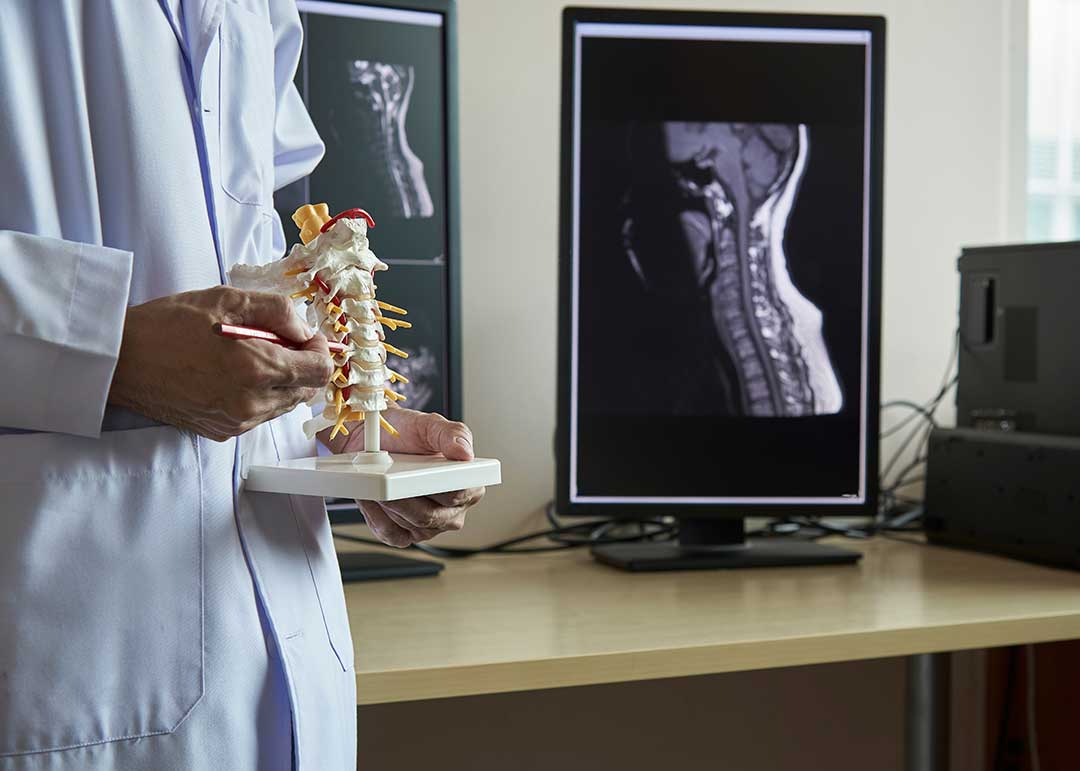
Posture can influence symptoms, but posture is only one part of the picture. A visible difference in shoulder height, pelvic position, or arch height does not prove that one structure is causing pain.
It is also a misconception that every foot problem should be corrected by forcing the spine or pelvis into a particular position. A sensible evaluation considers the entire movement pattern and the person’s symptoms rather than relying on a single visual measurement.
What can be checked at home?
A few simple observations may help identify patterns. They do not replace a clinical assessment, but they can make symptoms easier to describe.
Notice whether pain is worse:
- During the first steps in the morning
- After prolonged sitting
- After walking on hard surfaces
- On stairs or inclines
- When standing barefoot
- In one particular pair of shoes
- After an increase in errands, exercise, or household work
Check whether one shoe shows noticeably different wear from the other. Also observe whether the painful foot turns outward, whether the heel lifts early, or whether the stride becomes shorter. Avoid repeatedly testing a painful movement if it increases symptoms.
For mild, recent pain, reducing aggravating activity for a short period, using comfortable supportive footwear, and gradually returning to normal movement may help. Gentle calf and foot mobility can be useful when it does not increase pain.
When should foot and back symptoms be evaluated promptly?
Persistent or worsening pain deserves attention, especially when it interferes with walking, sleep, work, or ordinary household activities. Prompt medical evaluation is appropriate for:
- Inability to bear weight
- Significant swelling, bruising, or deformity
- Sudden weakness or loss of coordination
- Numbness that is spreading or persistent
- Loss of bladder or bowel control with back symptoms
- Fever, redness, warmth, or an open wound
- Foot pain after a fall or other substantial injury
- Diabetes, poor circulation, or reduced sensation in the feet
A careful evaluation may include a history of the symptoms, examination of the foot and ankle, strength and sensation testing, assessment of walking mechanics, and review of the hip, pelvis, and spine. Imaging is not always necessary, particularly when symptoms are mild and improving.
The practical lesson is that foot pain and spinal mechanics can influence each other, but neither should be reduced to a simple alignment label. Understanding the complete movement chain—foot, ankle, knee, hip, pelvis, and spine—usually provides a clearer explanation and a safer path for deciding what to do next.
