
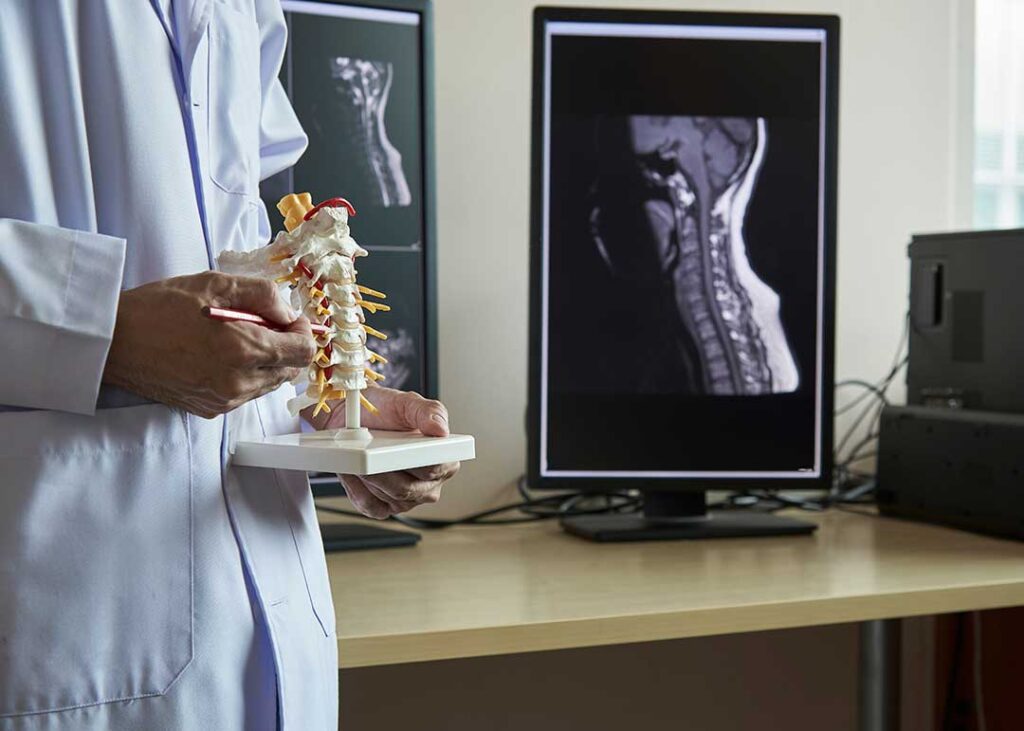
Balance depends on more than the inner ear. The brain, eyes, muscles, joints, nerves, and spine all contribute to keeping the body upright and oriented in space. Changes in spinal movement or posture may affect balance in some people, but spinal alignment is only one possible factor and should not be assumed to be the cause of dizziness or unsteadiness.
How does spinal alignment relate to balance?
The spine helps position the head and trunk over the pelvis and legs. Muscles and joints along the neck, back, hips, and ankles contain sensory receptors that provide the brain with information about body position and movement. This internal sense is called proprioception.
If pain, stiffness, muscle weakness, or restricted joint movement changes the way a person stands or walks, the brain may receive less consistent information about body position. A person may then compensate by shifting weight, tilting the head, shortening steps, or avoiding movement. These changes can make walking feel less stable, particularly on stairs, uneven sidewalks, wet surfaces, or during quick turns.
Poor posture does not automatically mean the spine is “out of alignment.” Human posture naturally changes throughout the day, and there is no single perfect position. The more useful question is whether pain, limited motion, weakness, or a noticeable change in movement is interfering with daily activities.
Can a neck problem cause dizziness or unsteadiness?
Sometimes neck pain or injury is associated with a feeling of unsteadiness, but this connection is complex. The neck contributes sensory information about head position, and the brain compares that information with signals from the eyes and inner ear. When these signals do not agree, some people may feel off-balance, lightheaded, or disoriented.
This is sometimes described as cervicogenic dizziness. It is generally considered a diagnosis made after other causes have been evaluated, not a conclusion based only on neck stiffness. Inner-ear disorders, medication effects, migraine, blood-pressure changes, vision problems, neurological conditions, and cardiovascular issues can produce similar symptoms.
A neck-related problem may be more plausible when dizziness occurs with neck pain or restricted neck movement, especially after a strain or injury. Spinning sensations, hearing changes, fainting, severe headache, or neurological symptoms point toward other causes and require prompt medical assessment.
Why is balance rarely a spine-only issue?
The balance system uses several sources of information at once:
- The inner ear detects head movement and changes in gravity.
- The eyes show where the body is in relation to the environment.
- Muscles and joints report the position of the limbs and spine.
- The brain combines these signals and produces corrective movements.
- The legs and feet provide the strength and quick reactions needed to prevent a fall.
A problem in any of these systems may affect stability. For example, an inner-ear condition may cause spinning, while low blood pressure may cause lightheadedness after standing. Arthritis in the hips or knees can shorten a person’s stride. Numbness in the feet may reduce awareness of the ground. A spinal condition may contribute to stiffness or altered movement, but it is only one part of the overall assessment.
What symptoms may suggest a movement or alignment component?
Balance concerns deserve attention when they are persistent, worsening, or interfering with routine activities. A musculoskeletal contribution may be more likely when unsteadiness occurs alongside:
- Neck, mid-back, or low-back pain
- Limited ability to turn the head or trunk
- Uneven weight-bearing between the legs
- Muscle fatigue while standing or walking
- Changes in gait after an injury
- Difficulty maintaining posture during prolonged sitting or standing
- Repeated tightening of the shoulders, back, or hips to feel stable

These signs do not identify a specific diagnosis. They simply help describe the pattern. A careful evaluation may include questions about falls, medications, vision, hearing, blood pressure, prior injuries, and the timing of symptoms.
When is a balance problem urgent?
Sudden balance loss should be treated seriously, especially when it occurs with facial drooping, arm or leg weakness, trouble speaking, confusion, new vision changes, severe headache, chest pain, or fainting. These can be warning signs of a stroke or another emergency and warrant immediate emergency care.
Prompt medical attention is also appropriate after a fall involving a head impact, severe neck pain, loss of consciousness, or new weakness or numbness. New spinning dizziness with severe vomiting, hearing loss, or difficulty walking should not be attributed to spinal alignment without evaluation.
For symptoms that develop gradually, keeping a brief record can be helpful. Note whether the sensation is spinning, lightheadedness, swaying, or simple weakness; what triggers it; how long it lasts; and whether neck movement, standing, turning, or walking changes it.
What can residents do at home to reduce avoidable instability?
A safer home environment can reduce fall risk while the cause is being clarified. In older homes and multi-level households, practical changes may include improving lighting on stairs, securing loose rugs, keeping walkways clear, using handrails, and taking extra care on wet or icy outdoor surfaces during seasonal weather.
Movement also matters. Gentle walking, lower-body strengthening, and balance exercises can support mobility when performed safely. Examples include standing from a chair, controlled heel raises, side steps near a stable counter, and practicing a narrow stance while holding support. Exercises should be adapted for current strength, pain, medical conditions, and fall history. Anyone who feels faint or significantly unstable should stop rather than push through the symptom.
Long periods of sitting can contribute to stiffness, particularly when work, commuting, or household routines involve limited movement. Changing positions regularly and taking short, comfortable walking breaks may help maintain joint motion and body awareness.
What role can chiropractic care play?
A chiropractor may assess spinal and joint mobility, posture, muscle tension, gait, and movement patterns when balance concerns appear related to pain or stiffness. Care may include education, gentle mobility work, exercises, and strategies for improving movement tolerance.
Chiropractic care should not replace assessment for inner-ear, neurological, cardiovascular, medication-related, or vision-related causes. High-velocity neck manipulation deserves particular caution in anyone with unexplained dizziness, neurological symptoms, recent trauma, significant vascular risk, or severe headache. The safest approach is coordinated care based on the person’s symptoms and medical history.
The practical takeaway is that spinal alignment can influence how the body senses and controls movement, but balance problems have many possible causes. Identifying the symptom pattern, watching for warning signs, improving fall safety, and choosing appropriate evaluation are more reliable than assuming every balance issue begins in the spine.
