
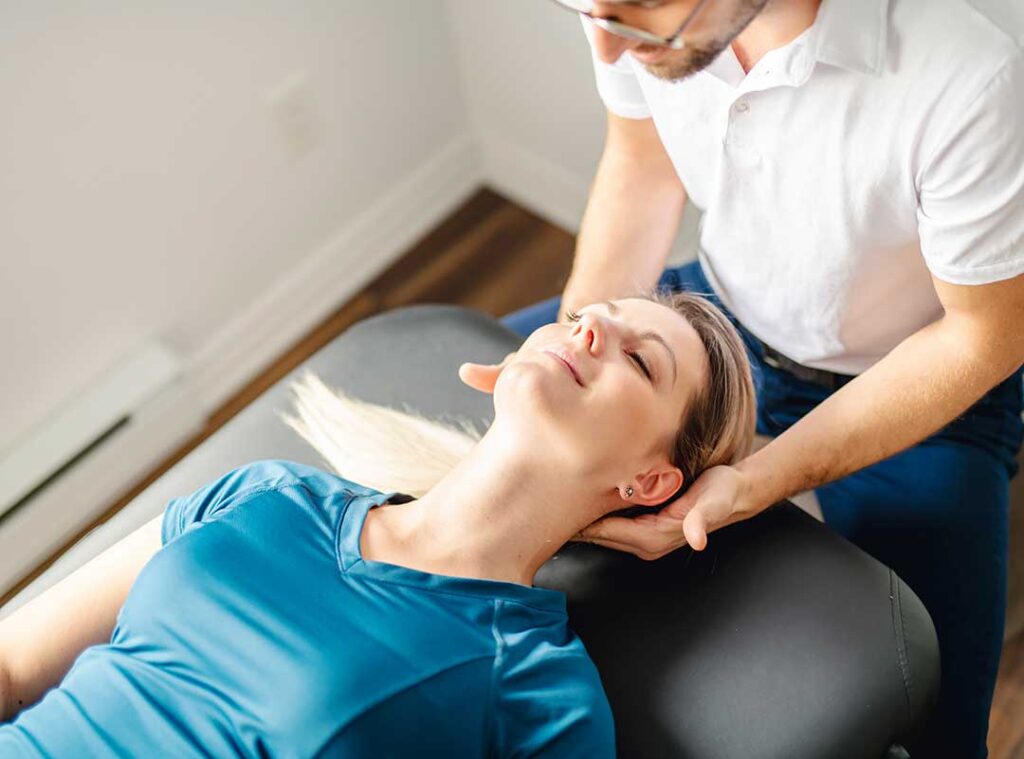
Spinal health influences far more than whether the back feels sore. The spine supports movement, protects the spinal cord, and helps the body coordinate everyday activities such as walking, lifting, sitting, sleeping, and turning the head. When spinal discomfort or reduced mobility persists, it can affect work, household responsibilities, exercise, mood, and social life.
What does spinal health mean?
Spinal health refers to how well the bones, joints, discs, muscles, ligaments, and nerves of the back and neck work together. A healthy spine does not need to be perfectly straight or completely free of occasional aches. It should be able to move, bear normal loads, and recover from ordinary physical demands.
Problems may involve the lower back, neck, mid-back, or the nerves that extend into the arms and legs. Some symptoms develop after an injury, while others build gradually through repetitive movement, prolonged sitting, reduced activity, aging, or changes in strength and flexibility.
Back pain is common, and many episodes improve with time and appropriate movement. Persistent or recurring symptoms deserve closer attention because they may interfere with normal function even when the underlying cause is not dangerous.
How can spinal health affect quality of life?
Spinal problems can reduce quality of life by making routine activities more difficult, uncomfortable, or unpredictable. A person may begin avoiding movements that once felt normal, such as bending to tie shoes, carrying groceries, climbing stairs, or playing with children.
The effects often extend beyond physical pain:
- Mobility: Stiffness or pain may limit walking, reaching, bending, or turning.
- Sleep: Finding a comfortable position can become difficult, and disrupted sleep may increase fatigue.
- Work and household tasks: Sitting at a desk, standing for long periods, lifting, or commuting may become harder.
- Exercise: Fear of aggravating symptoms can lead to less activity, which may reduce strength and endurance.
- Mood: Ongoing pain can contribute to frustration, irritability, anxiety, or low mood.
- Social participation: People may skip outings, family activities, or hobbies because movement feels difficult.
This pattern can become self-reinforcing. Pain may lead to less movement, less movement may lead to reduced conditioning, and reduced conditioning may make ordinary physical demands feel more strenuous.
Is posture the main cause of spinal discomfort?
Posture matters, but it is rarely the only explanation. There is no single “perfect” posture that prevents all back or neck problems. A position that feels comfortable for one person may cause strain for another, and even a well-aligned position can become uncomfortable if maintained for too long.
The broader goal is posture variety. Alternating between sitting, standing, walking, and gentle movement generally places less stress on the body than remaining fixed in one position for hours.
For residents working from home or spending long periods at a computer, useful adjustments include:
- Keeping the screen near eye level
- Supporting the lower back without forcing an exaggerated arch
- Allowing the feet to rest on the floor or a stable support
- Keeping frequently used items within easy reach
- Changing position every 30 to 60 minutes
- Taking brief walking or stretching breaks
These changes are not a substitute for evaluation when symptoms are severe or persistent, but they can reduce strain during daily routines.
How does movement support the spine?
Regular movement helps maintain muscle strength, joint mobility, balance, and tolerance for normal activity. Walking, swimming, strength training, mobility exercises, and other forms of physical activity may support spinal function when adapted to a person’s abilities.
Complete bed rest is usually not helpful for ordinary back pain. Gentle movement within comfortable limits is often more useful than avoiding all activity. A gradual approach may include short walks, light household tasks, or simple range-of-motion exercises.
The right level of activity depends on the individual. Someone with a recent injury, significant leg symptoms, osteoporosis, a history of cancer, or another medical condition may need specific guidance before increasing exercise.

Seasonal habits can also affect movement. During colder months, people may spend more time indoors and become less active. Snow, ice, or wet surfaces can increase the risk of slips and sudden twisting. Using careful foot placement, avoiding rushed lifting, and maintaining year-round strength can help reduce avoidable strain.
Can spinal health affect energy and concentration?
Yes. Pain can require constant mental attention, especially when a person is deciding how to sit, stand, walk, or complete a task. Poor sleep caused by discomfort may lead to daytime fatigue and difficulty concentrating.
Neck discomfort may also make prolonged screen use, reading, or driving less comfortable. The issue is not always the amount of time spent on a device; the height of the screen, the position of the arms, and the frequency of breaks can also matter.
Improving sleep habits, changing positions regularly, and addressing persistent symptoms may help reduce the effect on energy and concentration.
What symptoms should not be ignored?
Most mild episodes of back or neck discomfort are not emergencies. However, urgent medical evaluation is appropriate for symptoms such as:
- New loss of bladder or bowel control
- Numbness in the groin or inner thighs
- Significant or worsening weakness in an arm or leg
- Severe pain after a fall, collision, or other injury
- Back pain accompanied by fever or unexplained weight loss
- Pain with a history of cancer, serious infection, or major bone weakness
- Sudden severe symptoms that continue to worsen
Pain traveling down an arm or leg, persistent numbness, or tingling should also be assessed, particularly if weakness develops.
What can residents do to protect spinal function?
Spinal health is supported by consistent habits rather than a single exercise or posture correction. Practical steps include maintaining regular physical activity, building strength gradually, using safe lifting techniques, taking movement breaks, and paying attention to sleep quality.
When lifting, keep the object close to the body, avoid twisting while carrying it, and use the legs and hips as much as possible. Heavy or awkward items may require assistance, especially on stairs or uneven surfaces.
Persistent pain should not be dismissed as something that must simply be endured. A qualified healthcare professional can help determine whether symptoms are related to muscles and joints, nerve irritation, injury, or another condition. The purpose of evaluation is not only to reduce pain but also to restore confidence in safe, useful movement.
A well-functioning spine supports independence. It helps people participate in work, recreation, family life, and ordinary household activities with fewer limitations. Protecting that function means paying attention to movement, strength, recovery, and warning signs—not pursuing perfect posture or avoiding activity altogether.
