
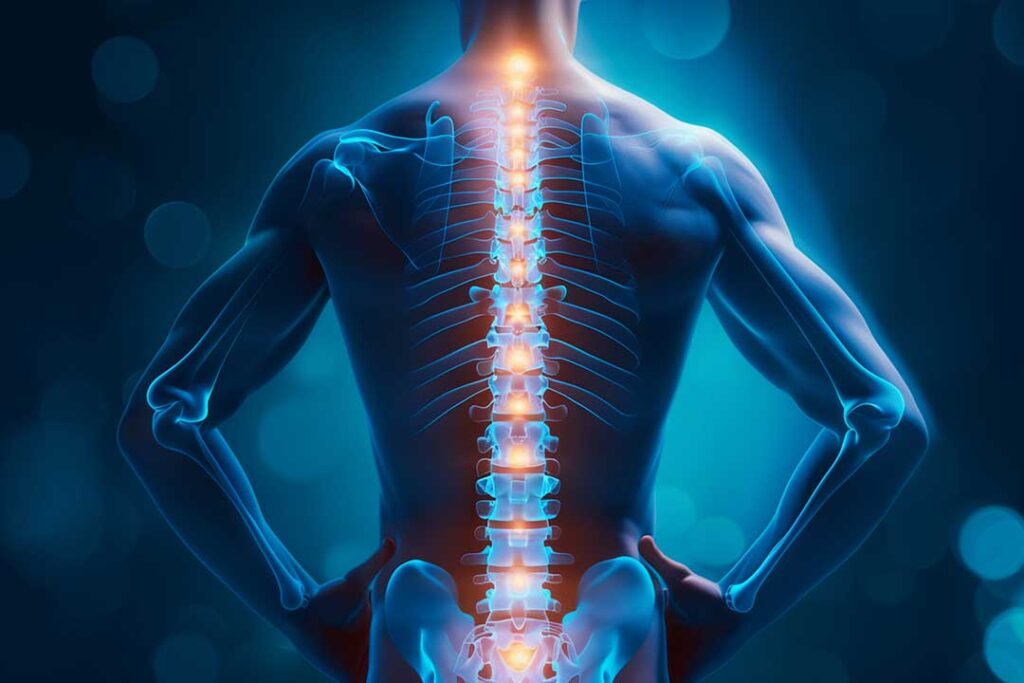
A person in Lynbrook, NY may hear the word “subluxation” after developing back or neck discomfort, following a fall, or discussing chiropractic care. The term matters because it can describe different things in different medical settings.
In general medicine, a subluxation is a partial loss of normal joint alignment. In chiropractic care, “spinal subluxation” may refer more broadly to an altered relationship between spinal joints, movement, and function. These meanings overlap in some situations but are not interchangeable.
What does subluxation mean?
A subluxation is usually understood as a joint that is not moving or aligning normally, while the joint surfaces still maintain some contact. A complete dislocation is more severe: the joint surfaces are forced entirely out of position.
Subluxations can occur in several parts of the body, including the shoulder, kneecap, fingers, and spine. They may result from:
- A fall, collision, or sports injury
- Repeated strain or awkward movement
- Ligament looseness or joint instability
- Age-related changes
- Abnormal joint structure or a medical condition
The symptoms depend on the joint involved. Pain, stiffness, swelling, weakness, reduced range of motion, clicking, or a feeling that the joint is unstable may occur.
A suspected traumatic subluxation should not be treated as a routine muscle ache. A joint may look nearly normal even when ligaments, cartilage, nerves, or bone have also been injured.
What does “spinal subluxation” mean in chiropractic care?
In chiropractic settings, spinal subluxation commonly describes a segment of the spine whose movement, alignment, or mechanical function appears altered. It does not necessarily mean that a vertebra has dramatically slipped out of place.
This distinction is important. A small difference in posture, joint motion, or spinal alignment is not automatically a dangerous injury. The spine naturally changes position as a person sits, walks, bends, sleeps, and lifts.
The term can also be used differently from one practitioner to another. Some use it to describe a specific joint restriction identified during a physical examination. Others use it as a broader clinical concept involving spinal movement, muscle tension, and related symptoms.
For that reason, anyone hearing the term should ask what it means in the specific case:
- Which spinal region is involved?
- What examination findings support the description?
- Is the concern a structural injury, restricted movement, muscle guarding, or something else?
- What symptoms is treatment expected to improve?
- How will progress be measured?
Clear answers help prevent the word from sounding more alarming than the actual findings justify.
Why can a subluxation matter?
A subluxation matters when it affects comfort, movement, strength, stability, or nerve function. A joint that does not move normally may cause surrounding muscles to tighten or work harder. In the spine, this can contribute to localized pain, stiffness, or difficulty with ordinary activities such as turning the head, getting out of a chair, lifting laundry, or sleeping comfortably.
The clinical significance depends on the person rather than the label alone. Two people may receive the same description but have very different problems. One may have mild, temporary stiffness after prolonged sitting. Another may have a traumatic injury requiring imaging or urgent evaluation.
Symptoms also do not always match the size of an apparent alignment change. A minor-looking injury can be painful, while visible age-related changes on an image may cause no symptoms at all.
Is a subluxation the same as a “bone out of place”?
Usually, no. The phrase “bone out of place” can suggest a dramatic displacement, but many spinal complaints described as subluxation involve altered movement or mechanical sensitivity rather than a vertebra being visibly displaced.
A true partial dislocation is a structural injury and may require medical evaluation, particularly after trauma. A joint restriction or movement problem is assessed differently. An examination may include range of motion, strength, sensation, reflexes, balance, tenderness, and functional movements.
X-rays, magnetic resonance imaging, or other testing may be appropriate in selected cases, but imaging is not automatically needed for every episode of back or neck pain. The decision depends on the injury, symptoms, examination findings, age, medical history, and warning signs.
Can a subluxation cause back or neck pain?
It can be associated with pain, but the word itself does not identify the pain’s cause. Back and neck symptoms may also result from muscle strain, irritated joints, disc problems, arthritis, nerve compression, osteoporosis-related fractures, infection, or other conditions.
Pain may be felt close to the affected area or may spread into the shoulder, arm, hip, or leg. Numbness, tingling, weakness, or changes in coordination deserve particular attention because they may indicate nerve involvement.
In the community, seasonal conditions can contribute to injuries. Slippery winter surfaces, hurried commuting, snow removal, home repairs, and sudden changes in physical activity may strain the spine or other joints. Long periods of sitting at a computer or in a vehicle can also make stiffness more noticeable, although sitting alone does not prove that a subluxation is present.
How is a possible spinal subluxation evaluated?
Evaluation begins with a history and physical examination. The clinician may ask when symptoms started, whether there was a fall or impact, what movements worsen the problem, and whether symptoms travel into an arm or leg.
The examination may assess:

- Spinal and joint movement
- Muscle strength
- Sensation and reflexes
- Balance and walking
- Tenderness and muscle guarding
- Signs of nerve irritation
- Functional tasks such as bending or reaching
Imaging may be considered after significant trauma, when symptoms persist or worsen, or when the examination suggests fracture, instability, infection, cancer, or serious nerve compression. Imaging findings should be interpreted alongside symptoms and examination results rather than treated as a diagnosis by themselves.
When should symptoms receive urgent attention?
Prompt medical evaluation is appropriate after a major fall, vehicle collision, or direct blow, especially when there is severe pain, visible deformity, or an inability to use the affected area.
Urgent attention is also warranted for:
- New or worsening weakness
- Loss of bladder or bowel control
- Numbness in the inner thighs or groin
- Severe pain with fever or unexplained illness
- Unexplained weight loss with persistent pain
- Difficulty walking or maintaining balance
- Neck pain after trauma with arm or hand weakness
- Sudden, severe headache or neurological changes
These symptoms should not be explained away as an ordinary spinal adjustment issue.
What should a person ask about treatment?
Treatment should be tied to a specific problem and a measurable goal, such as improving walking tolerance, reducing pain, restoring motion, or returning to normal daily activities. Depending on the findings, care may involve temporary activity modification, therapeutic exercise, mobility work, strengthening, heat or cold, medication guidance, or manual treatment.
A responsible explanation should also include expected benefits, possible risks, alternatives, and signs that the plan needs to change. Repeated treatment should be reconsidered if symptoms are not improving, new symptoms develop, or the original explanation remains unclear.
The most useful question is not simply, “Do I have a subluxation?” It is, “What finding explains my symptoms, and what evidence shows that the recommended care is helping?”
