
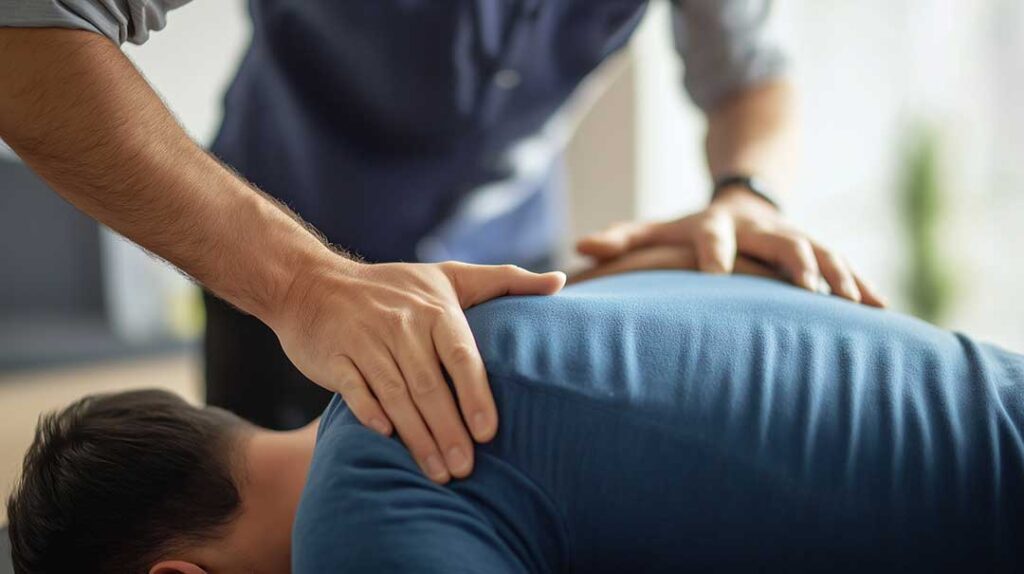
What role can chiropractic care play after a sports injury?
Chiropractic care may help some people manage sports-related muscle, joint, and back pain by improving movement, reducing irritation, and supporting a gradual return to activity. It is generally most useful as one part of a broader recovery plan rather than as a stand-alone solution for every injury.
In Lynbrook, NY, residents may experience sports injuries from running, cycling, recreational leagues, school athletics, strength training, or physically demanding outdoor activities. The injury may be sudden, such as an ankle sprain, or develop gradually through repeated stress, poor movement mechanics, or an overly rapid increase in training.
A careful evaluation should come before treatment. The goal is to determine whether the problem appears to involve muscles, joints, ligaments, tendons, nerves, or bone—and whether additional medical assessment is needed.
Which sports injuries may respond to chiropractic treatment?
Chiropractic treatment may be considered for certain uncomplicated musculoskeletal problems, including:
- Mild to moderate low-back pain after lifting, twisting, or repetitive activity
- Neck or upper-back stiffness after contact or awkward movement
- Joint stiffness involving the spine, hips, shoulders, or extremities
- Some overuse-related aches connected to altered movement patterns
- Muscle tightness and reduced range of motion after training
- Certain uncomplicated sprains and strains during the rehabilitation phase
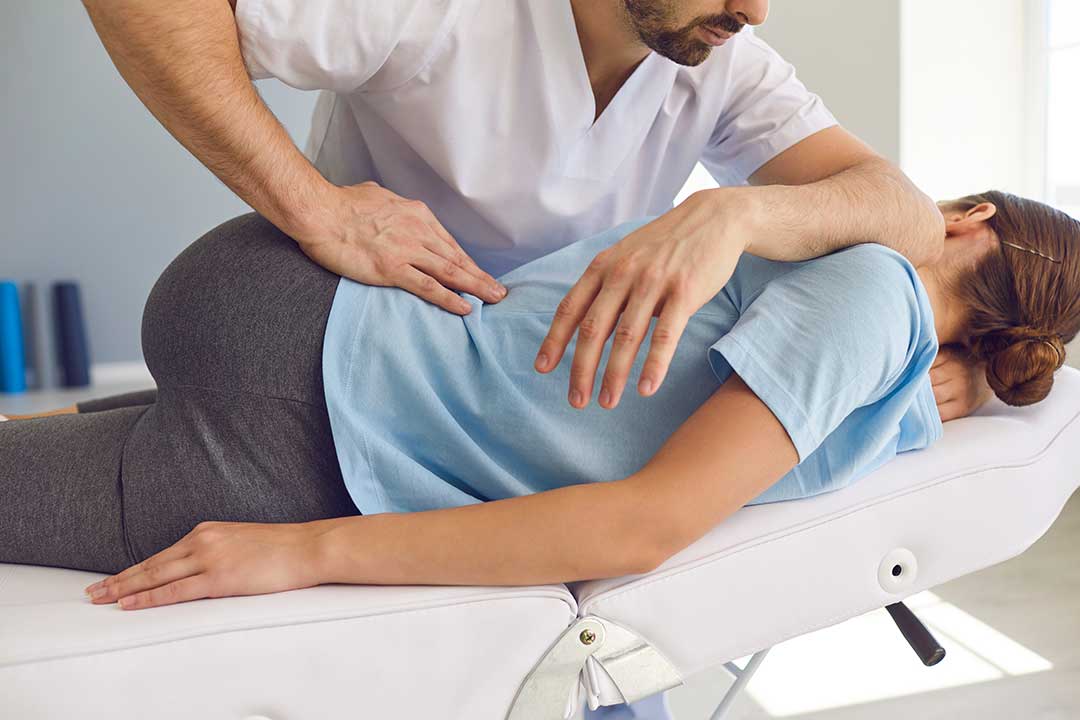
Treatment depends on the injury and the person’s health history. A chiropractor may use hands-on mobilization, spinal manipulation, soft-tissue techniques, stretching, movement retraining, and strengthening exercises.
These approaches are not appropriate for every injury. A suspected fracture, major ligament tear, significant tendon rupture, dislocation, or serious nerve problem requires a different level of evaluation and care.
How might chiropractic care reduce pain and stiffness?
Manual treatment may temporarily improve joint motion and reduce the feeling of stiffness. For some people, this makes it easier to walk, turn, reach, or perform carefully selected rehabilitation exercises.
Exercise is often more important for lasting recovery than passive treatment alone. Once pain and swelling are controlled, a rehabilitation plan may address:
- Joint range of motion
- Muscle strength and endurance
- Balance and coordination
- Trunk and hip control
- Landing, lifting, throwing, or running mechanics
- Gradual exposure to sport-specific demands
For example, a runner recovering from lower-leg or back pain may need more than treatment to the painful area. Training volume, footwear, running surface, recovery time, hip strength, and stride changes may all affect symptoms. A recreational athlete with shoulder pain may need attention to thoracic mobility, shoulder strength, throwing volume, and technique.
Does an adjustment heal the injury itself?
Usually, no. An adjustment does not directly repair a torn ligament, knit a fractured bone, or replace the healing process of damaged tissue.
Its possible role is more limited: improving movement, easing short-term discomfort, and helping a person participate in an appropriate exercise program. Tissue healing still depends on factors such as the type and severity of injury, circulation, sleep, nutrition, age, training load, and whether the injured area is protected from excessive stress.
Pain relief can also create a false sense of recovery. Feeling better does not necessarily mean that the body is ready for full-speed play, heavy lifting, jumping, or contact.
What happens during an evaluation?
A sports-injury evaluation commonly includes questions about how the injury occurred, when symptoms began, what activities worsen them, and whether there was swelling, bruising, numbness, weakness, or a popping sensation.
Movement may be observed during walking, squatting, reaching, bending, or sport-related tasks. The examination may also compare strength and motion on both sides of the body.
A responsible evaluation should consider whether imaging or referral is needed. Persistent focal bone pain, marked swelling, visible deformity, inability to bear weight, or loss of strength should not be treated as routine soreness.
Residents who exercise outdoors in the community may also notice seasonal effects. Colder months can lead to longer warm-up needs and stiffer muscles, while summer activity may increase training volume, heat exposure, and dehydration risk. These factors do not cause every injury, but they can influence how the body tolerates exercise.
Is chiropractic care safe after a sports injury?
Many people tolerate appropriately selected manual techniques well, but treatment is not risk-free. Temporary soreness, stiffness, or a mild increase in discomfort can occur after manipulation or mobilization.
Neck manipulation deserves particular caution. Serious complications are rare, but sudden neck movement has been associated with rare blood-vessel injuries. A thorough health history is important, especially for people with clotting problems, vascular conditions, neurologic symptoms, recent trauma, or other factors that may increase risk.
A person should share information about medications, previous injuries, surgeries, osteoporosis, inflammatory conditions, and other relevant health concerns. Treatment should be modified or avoided when the examination suggests that manipulation may be unsafe.
When should a sports injury be evaluated urgently?
Immediate medical evaluation is appropriate for symptoms such as:
- Obvious deformity or a joint that appears out of place
- Inability to bear weight or use an arm normally
- Severe or rapidly increasing swelling
- Numbness, paralysis, or significant weakness
- Loss of circulation, unusual coldness, or color change in a limb
- Severe pain after a collision or fall
- Head injury symptoms, including confusion, repeated vomiting, worsening headache, or unusual drowsiness
- Neck pain accompanied by neurologic symptoms
- Persistent, pinpoint bone pain that worsens with activity
Pain that does not improve with rest, or pain that repeatedly returns when training resumes, also deserves evaluation. Continuing to play through suspected stress injuries can allow a small problem to become more serious.
How is a safe return to sport determined?
Return to sport should be based on function rather than a calendar date. A person should generally be able to perform basic movements without significant pain, limping, protective movement, or major weakness before progressing to full activity.
The progression may move from daily activities to low-intensity drills, then to faster movements, sport-specific practice, and finally competition. Strength, balance, coordination, and confidence should be tested at each stage.
A practical return-to-activity plan may include:
- Reducing intensity or duration at first
- Warming up gradually
- Restoring full or near-full motion
- Rebuilding strength on both sides
- Practicing sport-specific movements
- Monitoring symptoms during the following day
- Increasing only one training variable at a time
A flare-up does not always mean new damage, but it may signal that the workload increased too quickly. Adjusting the plan is often more useful than stopping all movement indefinitely.
What is the most realistic expectation?
Chiropractic care may be helpful for selected sports-related pain and movement problems, particularly when it is combined with exercise, sensible activity modification, and appropriate medical coordination. It should not be presented as a cure for all injuries or as a substitute for urgent evaluation.
The strongest recovery plans match treatment to the actual injury, address the reasons it developed, and use clear functional milestones before full return to sport.
