

Stress and back pain often reinforce each other. Stress can increase muscle tension, disturb sleep, change movement habits, and make the nervous system more sensitive to discomfort. Back pain can then create more worry, reduced activity, and frustration, forming a cycle that may prolong symptoms.
For residents of Lynbrook, daily routines may include commuting, desk work, household responsibilities, caregiving, or physically demanding tasks. These pressures can affect the back even when there has been no single injury.
Can stress directly cause back pain?
Stress does not always create a structural injury, but it can contribute to pain through several physical and behavioral changes. During stressful periods, the body may remain in a heightened state of alertness. Muscles around the neck, shoulders, mid-back, and lower back may stay partially contracted for long periods.
That tension can lead to:
- Muscle fatigue and aching
- Stiffness after sitting or standing
- More frequent muscle spasms
- Headaches or upper-back discomfort
- Increased sensitivity to ordinary movement
Stress can also change how a person moves. Someone who feels rushed may lift quickly, brace excessively, avoid turning, or remain in one position for too long. These habits can place additional strain on the back.
Stress-related back pain is still real pain. It does not mean the symptoms are imaginary or that a person is simply “thinking” the pain into existence.
Why does back pain feel worse during stressful periods?
Stress can affect the nervous system’s interpretation of pain. The brain continuously evaluates signals from muscles, joints, and other tissues. When a person is anxious, sleep-deprived, or emotionally overwhelmed, the nervous system may become more reactive to those signals.
Several factors may occur at the same time:
- Tight muscles produce more discomfort.
- Poor sleep reduces the body’s ability to recover.
- Worry increases attention toward painful sensations.
- Fatigue makes ordinary tasks feel more physically demanding.
- Reduced activity can lead to weakness and stiffness.
- Fear of movement may cause protective bracing or guarded posture.
This helps explain why a back problem may flare during a demanding work period, family crisis, financial concern, or period of poor sleep—even when no new injury has occurred.
Is stress-related back pain the same as a muscle strain?
Not necessarily. Stress may contribute to muscle tension, but back pain can have many causes. These include muscle or ligament strain, irritated joints, disc-related problems, nerve compression, arthritis, reduced conditioning, or medical conditions unrelated to the spine.
A recent increase in stress may be part of the picture, but it should not automatically be considered the only explanation. Pain that is severe, persistent, recurrent, or accompanied by other symptoms deserves careful evaluation.
The pattern can offer useful clues. Generalized aching and stiffness that vary with stress, sleep, and activity may involve muscle tension or increased pain sensitivity. Burning pain, numbness, tingling, or weakness that travels into a leg may suggest nerve involvement and should be assessed more promptly.
How can local residents reduce stress-related back discomfort?
The most useful approach usually combines gentle physical activity with strategies that calm the body’s stress response. Complete bed rest often increases stiffness and deconditioning, unless a clinician has given specific instructions to limit movement.
Helpful steps may include:
Change positions regularly
During desk work, commuting, or household tasks, avoid remaining in one position for extended periods. Stand, walk briefly, or move the hips and shoulders at comfortable intervals.
A practical routine is to take a short movement break every 30 to 60 minutes. The goal is not strenuous exercise; it is to interrupt prolonged sitting or bracing.
Use gentle movement
Walking, light mobility exercises, and gradual strengthening can help maintain circulation and reduce stiffness. Movements should be comfortable or mildly challenging, not sharply painful.
During a flare, shorter walks may be more manageable than a long workout. As symptoms settle, activity can be increased gradually.
Practice slow breathing
Slow breathing may reduce muscle guarding and help the body shift away from a heightened stress response. Try inhaling comfortably through the nose, then exhaling slightly longer than the inhale for several minutes.
This can be done while sitting with the feet supported or lying in a comfortable position. It is not a cure for every type of back pain, but it may reduce tension and improve awareness of unnecessary bracing.
Improve sleep conditions
Poor sleep can make pain feel stronger and can reduce tolerance for normal activity. Consistent sleep and wake times, reduced evening stimulation, and a comfortable sleeping position may help.
If pain repeatedly interrupts sleep, that pattern should be discussed with a qualified healthcare professional rather than treated as ordinary stress alone.
Use heat cautiously
A warm shower or heating pad may relax tense muscles for some people. Heat should feel comfortably warm rather than hot, and a heating pad should not be used while sleeping. People with reduced sensation or certain circulation problems should use extra caution.
Can chiropractic care be part of a broader approach?
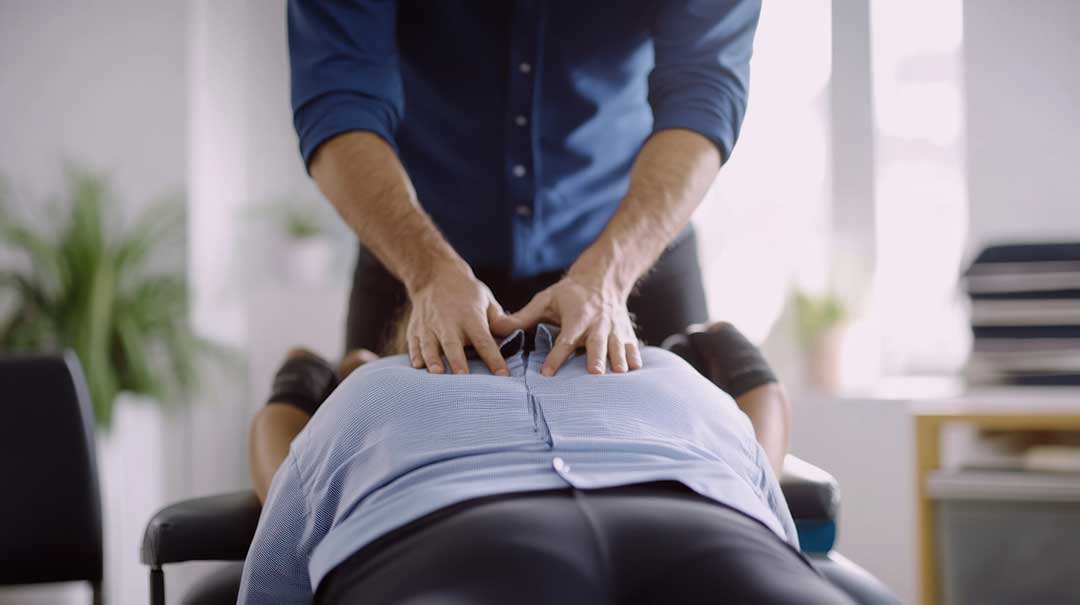
Chiropractic care may be one non-surgical option considered for some types of back pain, particularly when treatment includes movement guidance, education, and attention to daily habits. It should not be viewed as a substitute for evaluating warning signs or addressing sleep, stress, physical conditioning, and other contributors.
A balanced approach may involve several types of support depending on the situation, such as exercise-based rehabilitation, medical evaluation, behavioral strategies, or counseling for persistent anxiety and stress. The appropriate combination depends on the cause, duration, severity, and effect of the symptoms.
No single technique is appropriate for every person. Treatment should be adjusted if symptoms worsen, spread, or change in character.
When should back pain be evaluated promptly?
Back pain requires prompt medical attention when it occurs with symptoms that may indicate nerve compression, infection, fracture, or another serious condition. Seek urgent evaluation for:
- New loss of bladder or bowel control
- Numbness around the inner thighs or groin
- Significant or progressive leg weakness
- Severe pain after a fall or other trauma
- Fever, unexplained weight loss, or feeling unusually ill
- Back pain associated with a history of cancer
- Pain that is severe at night or steadily worsening without explanation
Even without these warning signs, an evaluation is reasonable when pain lasts more than several weeks, repeatedly returns, limits normal activities, or causes substantial distress.
What is the main connection between stress and back pain?
Stress can increase muscle tension, alter sleep, change movement patterns, and heighten the nervous system’s response to pain. Back pain can then increase stress and reduce activity, creating a self-reinforcing cycle.
Breaking that cycle usually involves more than focusing on the painful area alone. Gentle movement, regular position changes, better sleep habits, calming breathing exercises, and appropriate evaluation can address several contributing factors at once. For people living in the community, these strategies can often be adapted to commuting, desk work, seasonal chores, and the physical demands of household life.
