

Sports injuries can affect anyone in Lynbrook, NY, from recreational runners and cyclists to student athletes, gym members, and adults who play weekend sports. Chiropractic care may support recovery from some muscle, joint, and movement-related problems, but it is not a substitute for emergency evaluation, fracture care, concussion management, or surgery when those are needed.
What types of sports injuries may respond to chiropractic care?
Chiropractic care is most commonly considered for injuries involving muscles, joints, and the spine. Examples include mild to moderate back pain, neck stiffness, muscle strains, joint irritation, movement-related aches, and some overuse problems.
A sports injury may occur after a single event, such as a fall or awkward landing. It may also develop gradually from repeated throwing, running, jumping, lifting, or sudden increases in training volume.
A chiropractic evaluation may look at:
- Joint movement and stiffness
- Muscle tension and tenderness
- Posture and movement patterns
- Balance and coordination
- Strength differences between limbs
- How the spine, hips, shoulders, knees, and ankles work together
The purpose is not simply to identify where pain is felt. Pain in one area can sometimes be influenced by limited movement or poor load distribution elsewhere. For example, restricted ankle movement may affect running mechanics, while limited hip mobility may change how the lower back absorbs force.
How might chiropractic treatment help recovery?
Chiropractic care may help some people move more comfortably and return gradually to normal activity. Treatment can include joint mobilization, spinal manipulation, soft-tissue techniques, stretching guidance, strengthening exercises, and advice about modifying activity.
Spinal manipulation is one technique used by chiropractors, but it is only one part of care. Research supports its use most clearly for certain types of low-back pain, with generally modest improvements in pain and function. Evidence for specific sports injuries is more limited and varies by condition.
Possible goals include:
- Reducing pain that limits ordinary movement
- Improving joint mobility
- Decreasing muscle guarding or stiffness
- Restoring comfortable walking, lifting, or reaching
- Identifying movements that may be aggravating the injury
- Building a gradual plan for returning to exercise
Treatment should be matched to the injury and adjusted based on how the body responds. A forceful technique is not automatically better, and some injuries should not be manipulated at all.
Can chiropractic care speed up a return to sports?
It may help an athlete participate in rehabilitation more comfortably, but there is no universal treatment that guarantees a faster return. Recovery depends on the type and severity of the injury, sleep, conditioning, nutrition, training demands, previous injuries, and whether the athlete follows a gradual progression.
Returning to a sport should be based on function rather than a calendar date. Useful benchmarks may include:
- Full or nearly full range of motion
- Strength that is comparable from side to side
- Ability to perform sport-specific movements
- No significant increase in pain or swelling after activity
- Confidence and control during cutting, jumping, throwing, or running
- Ability to complete practice-level demands before competition
An athlete who can walk comfortably may still not be ready to sprint, pivot, tackle, or perform repeated overhead movements. Pain relief alone does not prove that tissue has fully recovered.
What happens during an evaluation?
An evaluation generally begins with questions about how the injury occurred, when symptoms started, and which activities make them better or worse. The history may also include previous injuries, medications, medical conditions, training changes, and symptoms such as numbness or weakness.
The physical assessment may include movement testing, strength checks, balance, reflexes, and examination of the surrounding joints and muscles. If the injury suggests a fracture, significant ligament damage, nerve involvement, or another condition outside routine musculoskeletal care, imaging or medical referral may be appropriate.
For residents who exercise in every season, training conditions can also matter. Cold weather may lead some people to warm up less thoroughly, while humid summer conditions can increase fatigue and affect coordination. Indoor workouts may involve repetitive movements or limited space. These factors do not cause every injury, but they can influence how the injury occurred and how activity should be modified.
When is chiropractic care not the right first step?
Certain symptoms require urgent medical evaluation rather than routine manual treatment. Examples include:
- Suspected fracture or dislocation
- Inability to bear weight after an injury
- Major swelling, deformity, or rapidly worsening pain
- Loss of sensation, significant weakness, or loss of coordination
- Chest pain, severe shortness of breath, or fainting
- A head injury with worsening headache, repeated vomiting, confusion, unusual behavior, or loss of consciousness
- Severe neck pain after a collision or fall
- Loss of bladder or bowel control along with back pain
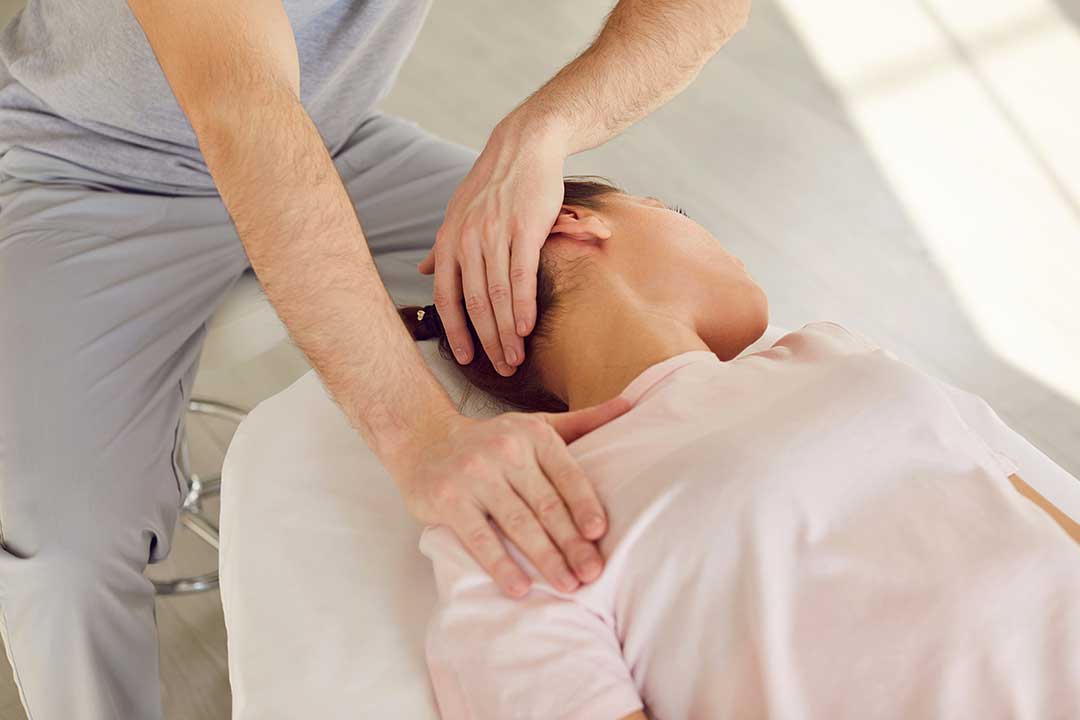
Concussions require particular caution. An athlete with possible concussion symptoms should not return to play simply because neck or back discomfort improves. Return-to-activity decisions should follow appropriate concussion assessment and a staged process.
Neck manipulation also deserves careful screening. Sudden neck movements have rare but serious potential risks, and anyone with unusual neurological symptoms, severe sudden headache, vision changes, dizziness, or difficulty speaking should receive urgent medical attention.
Does chiropractic care replace physical therapy or sports medicine?
Not necessarily. Chiropractic care, physical therapy, athletic training, primary care, orthopedics, and sports medicine may address different parts of recovery. Physical therapy often emphasizes progressive exercise, endurance, balance, and sport-specific rehabilitation. Medical evaluation may be needed for imaging, medication decisions, injections, surgical questions, or complex injuries.
A coordinated plan is often more useful than relying on a single treatment. For example, manual therapy may temporarily improve movement, while a strengthening program helps the body tolerate the demands that caused the problem.
A person should also understand what treatment is being proposed, what evidence supports it, what risks exist, and how progress will be measured. Care should be reconsidered if symptoms are not improving as expected or if new symptoms develop.
How can athletes reduce the risk of another injury?
Injury prevention is usually less about avoiding all activity and more about preparing the body for the activity it must perform. Helpful habits include:
- Increasing training volume gradually
- Warming up with movements related to the sport
- Maintaining strength in the hips, trunk, shoulders, and legs
- Practicing balance and landing mechanics
- Using proper protective equipment
- Taking recovery days seriously
- Replacing worn footwear when it no longer provides adequate support
- Avoiding competition when pain changes normal movement
Recurring injuries may signal a training error, incomplete rehabilitation, limited mobility, weakness, poor technique, or a medical condition that needs further assessment. Treating the painful area without addressing the reason the injury keeps returning may provide only temporary relief.
For active households in Lynbrook, regular walking, school sports, recreational leagues, and home workouts can all place different demands on the body. The safest approach is to match treatment and activity changes to the specific injury rather than assuming every strain or sprain should be handled the same way.
