
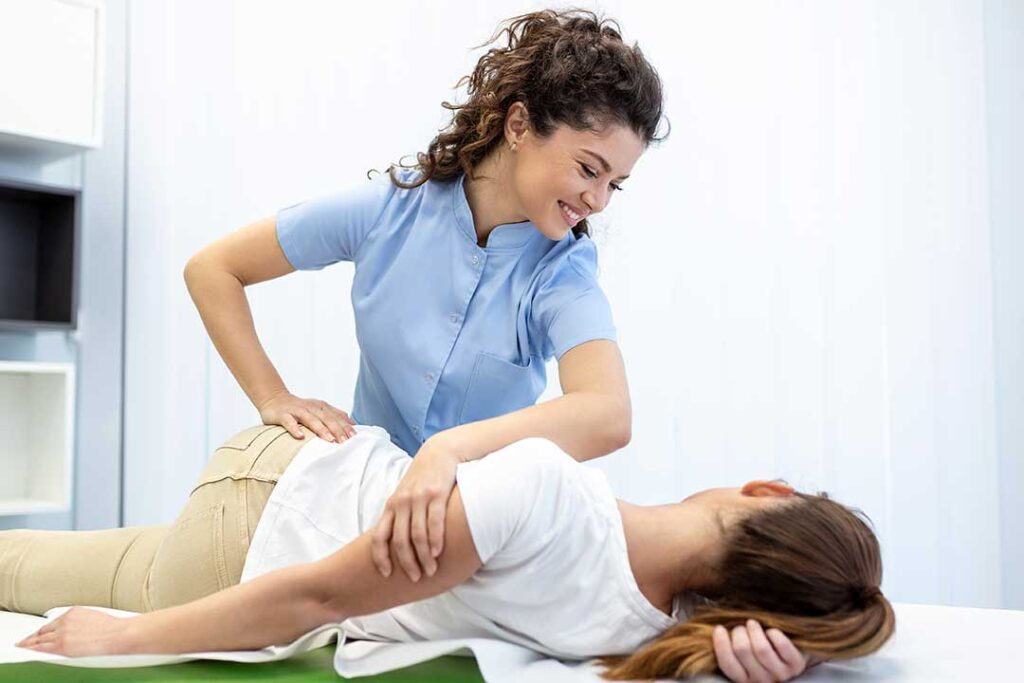
Golf places repeated demands on the lower back, hips, shoulders, wrists, and knees. A golf swing combines rotation, balance, timing, and force transfer through the entire body. For residents of Lynbrook, NY, chiropractic care may be one part of a broader plan to address movement restrictions, manage certain musculoskeletal complaints, and return to practice more comfortably.
Chiropractic care does not replace golf instruction, strength training, medical evaluation, or equipment adjustments. Its potential value is more specific: improving how the joints and supporting muscles move so the body can perform the swing with less unnecessary strain.
Can chiropractic care improve a golfer’s swing?
It may help indirectly by addressing pain, stiffness, restricted joint motion, or movement patterns that interfere with a consistent swing. A chiropractor may assess the spine, hips, pelvis, shoulders, and surrounding muscles to identify areas that are not moving well or are compensating for another restriction.
A more comfortable and coordinated body can make it easier to:
- Rotate through the backswing and follow-through
- Maintain posture during setup
- Transfer weight between the legs
- Keep the head and trunk controlled
- Practice without repeatedly aggravating a sore area
This does not mean an adjustment automatically increases driving distance or lowers a handicap. Swing mechanics, club selection, practice quality, physical conditioning, sleep, and technique remain major factors. Chiropractic care is best viewed as supportive musculoskeletal care rather than a shortcut to better performance.
Why does the lower back often bother golfers?
The lower back is exposed to substantial rotational and compressive forces during the swing. Problems may develop when the lumbar spine is asked to rotate excessively because the hips or upper back are stiff, or when the trunk and pelvis do not coordinate smoothly.
Common contributors include:
- Limited hip rotation
- Weakness in the hips or trunk
- Poor control of the pelvis during the downswing
- Repeated practice without adequate recovery
- Sudden increases in the number of swings or rounds
- Loss of posture during setup or impact
- Fatigue late in a round
A golfer who cannot comfortably rotate through the hips and upper back may compensate by twisting more through the lower back. That compensation can contribute to soreness, reduced confidence, and changes in swing timing.
What might a chiropractic assessment include?
An evaluation generally begins with questions about symptoms, previous injuries, work demands, activity level, and the movements that cause discomfort. The assessment may then examine posture, spinal motion, hip mobility, shoulder movement, balance, and functional tasks related to the golf swing.
The goal is not simply to find a “misaligned” area. A useful evaluation considers how multiple regions work together. For example, limited hip motion may affect pelvic rotation, while reduced upper-back mobility may cause the lower back to contribute more during the backswing.
Depending on the findings, care may include:
- Manual joint mobilization or manipulation
- Soft-tissue techniques
- Mobility exercises for the hips, upper back, or shoulders
- Trunk and hip strengthening
- Balance and movement-control drills
- Guidance on gradually returning to practice
The exact approach should match the individual’s symptoms, health history, age, and physical goals.
Can chiropractic care help with golf-related back pain?
It may help some people with uncomplicated mechanical back pain, particularly when symptoms are related to stiffness, altered movement, or irritation of muscles and joints. However, back pain has many possible causes, and not every case is appropriate for chiropractic treatment alone.
Pain that travels below the knee, progressive leg weakness, numbness in the groin area, loss of bladder or bowel control, fever, unexplained weight loss, or severe pain after a fall requires prompt medical attention. New back pain in someone with a history of cancer, significant osteoporosis, or major trauma also deserves medical evaluation.
Even when chiropractic care is appropriate, recovery usually involves more than passive treatment. Strengthening, walking, mobility work, improved swing habits, and appropriate rest may be necessary to reduce the likelihood of recurrence.
What exercises can support a healthier golf swing?
A golfer does not need an elaborate program to begin improving basic movement capacity. Exercises should be comfortable and performed with controlled breathing rather than forced stretching.
Useful categories include:
Hip mobility
Gentle hip rotations, supported hip hinges, and controlled leg movements can help maintain the range of motion needed for setup and weight transfer.
Upper-back rotation

Seated or side-lying rotation exercises may help the thoracic spine move without forcing the lower back to twist excessively.
Trunk endurance
Exercises such as dead bugs, bird dogs, side planks, and controlled carries can build the ability to stabilize the trunk while the hips and shoulders move.
Glute and leg strength
Bridges, sit-to-stands, split squats, and step-ups can support balance and force production during the swing.
Shoulder control
Rows, wall slides, and light resistance exercises may help improve the control needed for the backswing and follow-through.
A movement that causes sharp pain, radiating symptoms, joint instability, or increasing soreness should not be pushed through. The purpose of exercise is to build capacity, not to repeatedly provoke symptoms.
How should golfers prepare before playing?
A few minutes of gradual movement is generally more useful than beginning with full-power swings. This is especially relevant during colder months, after long periods of inactivity, or when playing early in the morning.
A practical warm-up may include:
- Five to ten minutes of brisk walking
- Gentle trunk rotations
- Hip hinges and bodyweight squats
- Shoulder circles and arm swings
- Practice swings that gradually increase in speed
- Several shorter swings before using a driver
Static stretching is not necessarily harmful, but long holds immediately before explosive movement may not prepare the body as well as active, sport-specific motions. Stretching can be included after play or during separate mobility sessions.
Does pain-free golf require perfect flexibility?
No. Golfers do not need extreme flexibility to play safely or effectively. Excessive mobility without adequate control can create its own problems. The more useful goal is sufficient motion in the hips, upper back, shoulders, and ankles, combined with the strength to control that motion.
A golfer with a modest handicap, a recreational player, and someone returning after a long break may all need different physical priorities. For one person, hip strength may be the limiting factor. For another, shoulder mobility, balance, or endurance may matter more.
What local habits may affect golfers in Lynbrook?
Seasonal changes can influence how often local residents play and how quickly they resume activity. After a winter with limited outdoor practice, it is common to increase swing volume too rapidly once the weather improves. Weekend-only golfers may also move from minimal activity to a long round involving repeated swings, walking, bending, and carrying equipment.
A gradual buildup is generally more practical than trying to regain several months of conditioning in one week. Short practice sessions, walking during the off-season, and regular hip and trunk exercises can make the transition to more frequent play easier.
Golfers should also pay attention to everyday factors such as prolonged sitting, commuting, home projects, and carrying heavy objects. These activities can affect stiffness and fatigue before a round even begins.
When should a golfer seek further evaluation?
Persistent pain, repeated flare-ups, symptoms that interfere with sleep, or a noticeable loss of strength or coordination should not be treated as ordinary golf soreness. Evaluation may be appropriate when symptoms do not improve with reduced activity and basic self-care.
A coordinated approach may involve chiropractic care, primary medical care, physical therapy, golf instruction, or sports medicine, depending on the problem. The most useful plan is the one that identifies the cause of the limitation and gives the golfer practical ways to move, practice, and recover with greater consistency.
