

Spinal adjustments are controlled manual movements applied to joints of the spine. They are intended to influence movement, pain sensitivity, and how the nervous and musculoskeletal systems respond—not to “put a bone back into place” in the literal sense.
For residents of Lynbrook, NY, this distinction matters because back and neck discomfort can arise from many everyday sources, including prolonged desk work, commuting, household tasks, exercise, and seasonal changes in activity. An adjustment may be one part of care for certain musculoskeletal problems, but it is not a universal treatment for every type of pain.
What happens during a spinal adjustment?
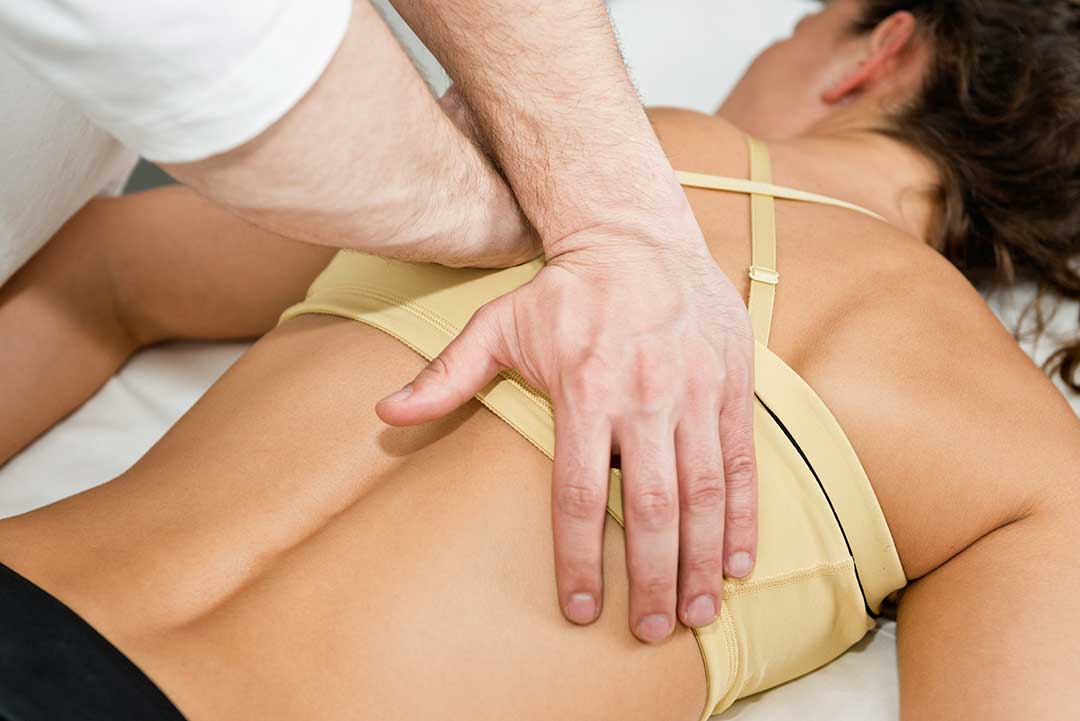
A spinal adjustment, also called spinal manipulation, uses a controlled force directed at a specific joint. The movement is usually quick and relatively small, although the exact technique varies by the area being treated, the person’s symptoms, and the practitioner’s assessment.
Spinal manipulation differs from mobilization. Mobilization uses slower or gentler movements within a joint’s existing range, while manipulation generally includes a brief thrust that moves the joint slightly farther and faster than the person can move it voluntarily.
The goal is not necessarily to change the permanent position of a vertebra. Research suggests that immediate effects may include:
- A temporary change in joint motion
- Reduced stiffness in some spinal segments
- Changes in muscle activity
- Altered sensitivity in pain-sensing tissues
- Improved confidence with movement
These effects can vary considerably from one person to another.
Why can an adjustment reduce pain?
The leading scientific explanation is that spinal adjustments may affect several systems at the same time. Mechanical movement is only one part of the process.
Joints, muscles, ligaments, and skin contain sensory receptors that constantly send information to the nervous system. A controlled movement can change the signals coming from these tissues. The brain and spinal cord then interpret those signals alongside information about movement, threat, stress, and prior pain experiences.
Some studies have found short-term changes in pressure-pain sensitivity after manipulation, including at areas away from the treated joint. This suggests that the nervous system—not only the local joint—may be involved in the response.
An adjustment may also temporarily make movement feel easier. If a person is guarding an area because it feels stiff or painful, improved motion can allow more normal activity. That activity may support recovery, especially when combined with exercises, education, sleep, and gradual return to routine tasks.
The exact biological mechanism remains unsettled. Current evidence does not support a single explanation that applies to every patient.
What causes the popping sound?
The audible pop commonly associated with an adjustment is called a cavitation. It is generally related to a rapid change in pressure within the joint, which can produce a gas bubble in the joint fluid.
The sound does not mean that a bone has been “cracked,” broken, or moved back into alignment. It also does not prove that an adjustment was effective. Some helpful adjustments produce no audible sound, and a loud pop can occur without meaningful improvement in pain or function.
Pain relief appears to depend on more than whether a joint makes a noise. Changes in nervous-system sensitivity, muscle activity, movement confidence, and expectations may all contribute.
What conditions may respond to spinal manipulation?
The strongest evidence concerns some types of musculoskeletal pain, particularly low-back pain. Research generally shows modest improvements in pain and daily function for certain people with acute or chronic low-back pain. Benefits are often similar in size to those reported for other conservative treatments.
Spinal manipulation may also help some people with neck pain, although the quality and consistency of research varies. It may be considered alongside movement-based care rather than as a stand-alone answer.
Evidence is much less convincing for using spinal adjustments to treat non-musculoskeletal conditions such as high blood pressure, digestive disorders, infections, or internal-organ disease. Claims that an adjustment can broadly improve general health are not supported by strong clinical evidence.
A useful question is not simply, “Can an adjustment help?” It is, “Is this type of treatment appropriate for this specific pattern of symptoms, and how will improvement be measured?”
Does an adjustment correct poor posture?
Usually, not by itself. Posture is dynamic rather than a fixed position. It changes with fatigue, stress, work demands, vision, strength, habit, and the environment.
A person who spends long periods seated at a computer, drives regularly, or performs repetitive household work may feel better after an adjustment because movement temporarily becomes easier. However, lasting improvement usually depends on addressing the broader pattern through activity changes, strengthening, mobility work, ergonomic adjustments, and adequate recovery.
For households dealing with winter inactivity or increased spring and summer outdoor activity, a sudden change in workload can also contribute to soreness. Gradually increasing walking, yard work, recreational activity, or lifting is generally more practical than relying on repeated passive treatment alone.
Are spinal adjustments safe?
For most appropriately screened adults, spinal manipulation is associated primarily with short-term, mild side effects. These can include temporary soreness, stiffness, headache, or a brief increase in symptoms, often resolving within a day.
Serious complications are uncommon, but they have been reported. Neck manipulation deserves particular caution because rare cases of artery injury have been associated with sudden neck movements. Research has not fully established whether manipulation directly causes these events, since similar artery injuries can occur after ordinary activities, trauma, or sudden neck strain.
A careful health history should include:
- Recent falls, collisions, or whiplash
- Osteoporosis or a history of fracture
- Cancer involving bone
- Inflammatory arthritis
- Bleeding disorders or blood-thinning medication
- Recent surgery
- Numbness, weakness, or changes in coordination
- Pregnancy or other significant medical conditions
Manipulation should not delay evaluation of symptoms that may require urgent medical attention.
When should back or neck pain be evaluated promptly?
Seek urgent medical evaluation for pain accompanied by new or worsening weakness, loss of bladder or bowel control, numbness around the groin, severe unsteadiness, fainting, fever, unexplained weight loss, or a history of major trauma.
Sudden severe headache, dizziness, double vision, difficulty speaking, facial drooping, or trouble swallowing after neck pain or manipulation requires emergency attention.
These symptoms do not automatically identify a specific diagnosis, but they can signal conditions that need a different form of assessment.
What should a person reasonably expect?
A scientifically grounded approach should focus on function as well as pain. Useful measures include whether a person can sleep more comfortably, walk farther, turn the head more easily, complete household tasks, or return to normal activity.
An adjustment is best understood as one possible tool within conservative musculoskeletal care. Its effects may involve joint movement, sensory input, muscle response, and the nervous system. The evidence supports modest benefits for some pain conditions, while also showing that results are not universal and that the underlying mechanisms are still being studied.
