
Pregnancy can change posture, balance, muscle use, and the way the joints of the lower back and pelvis handle everyday movement. Mild aching is common, but severe or unusual pain should not be assumed to be a normal part of pregnancy.
For residents of Lynbrook, NY, safe relief usually begins with simple changes at home, gentle activity, and guidance from the prenatal care team when symptoms persist or raise concern.
Why does pregnancy cause back pain?
Pregnancy-related back pain often develops because the growing uterus shifts the body’s center of gravity forward. This can increase the curve in the lower back and place additional work on the back, abdominal, hip, and pelvic muscles.
Hormonal changes also loosen ligaments around the pelvis in preparation for childbirth. Although this is a normal part of pregnancy, looser ligaments may make certain movements feel less stable or more uncomfortable.
Pain may be felt in the lower back, buttocks, hips, or the area around the sacroiliac joints. Long periods of standing, lifting, climbing stairs, sitting at a desk, or carrying household items may make symptoms worse.
What can help relieve back pain safely at home?
Gentle movement and changes in body position are often more helpful than prolonged bed rest. Try the following approaches:
- Take short, comfortable walks rather than remaining seated for long periods.
- Change positions regularly while working, resting, or watching television.
- Sit in a chair with lower-back support, keeping both feet supported when possible.
- Sleep on the side with a pillow between the knees. A second pillow under the abdomen may reduce strain as pregnancy progresses.
- Bend at the knees and keep objects close to the body when picking something up. Avoid twisting while lifting.
- Wear comfortable, supportive shoes with a low heel, especially when walking on sidewalks or standing for extended periods.
- Avoid carrying heavy laundry baskets, filled storage containers, or other loads that increase strain.
- Use a warm—not hot—compress on sore muscles for a short period. A towel should separate the heat source from the skin, and the lowest effective temperature is safest.
Cold packs may also help after activity if the area feels irritated or swollen. Use a cloth barrier and short applications rather than placing ice directly on the skin.
During hot, humid summer weather, dehydration and fatigue can make physical discomfort feel more intense. Regular water intake, shaded breaks, and avoiding strenuous outdoor activity during the hottest part of the day can make movement more comfortable.
Is exercise safe during pregnancy?
For most uncomplicated pregnancies, appropriate physical activity can reduce stiffness and help maintain the strength needed for posture, walking, and daily tasks. Walking, prenatal stretching, swimming, and water exercise are commonly well tolerated, but the prenatal care provider should confirm what is appropriate for the individual pregnancy.
Exercise should feel controlled rather than painful. Stop and seek medical guidance if activity causes bleeding, fluid leakage, dizziness, chest pain, unusual shortness of breath, painful contractions, weakness, numbness, or worsening back pain.
Gentle movements may include:
- Pelvic tilts performed slowly while standing or on hands and knees
- Comfortable hip and back stretches
- Light strengthening for the hips and upper back
- Short walking intervals on level surfaces
- Prenatal exercise classes led by someone trained to modify movements for pregnancy
Avoid sudden forceful twisting, high-impact activity that was not part of the usual routine, and exercises that increase the risk of falling. As the abdomen grows, balance can change, so uneven sidewalks, wet surfaces, and cluttered floors deserve extra attention.
Can chiropractic care or massage help during pregnancy?
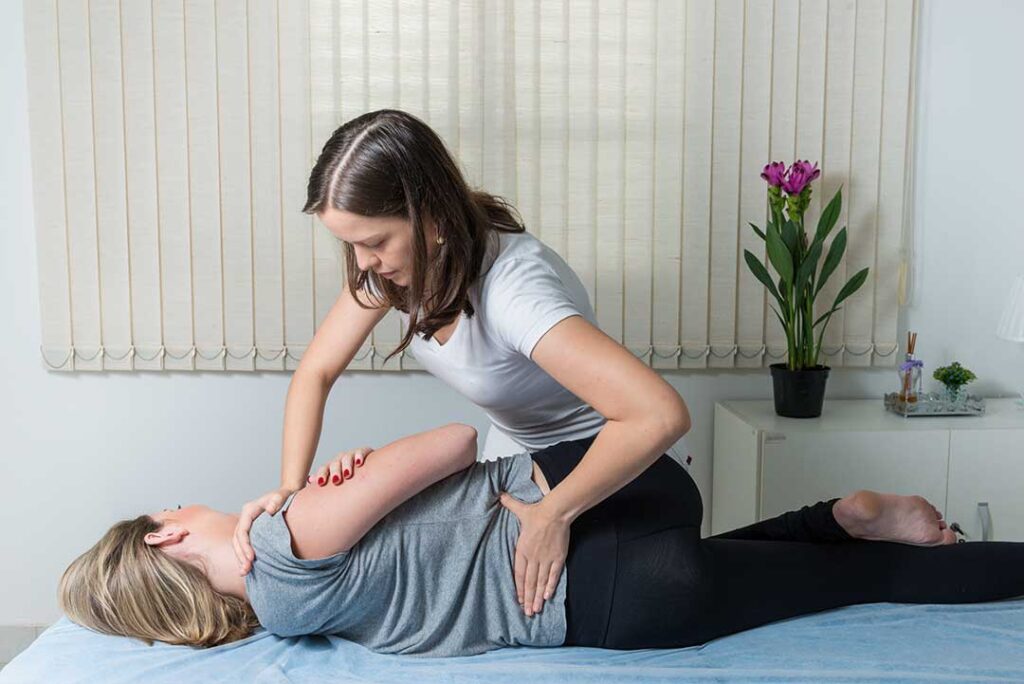
Some pregnant patients benefit from individualized movement guidance, manual therapy, or massage. These approaches should be adapted to the stage of pregnancy, symptoms, health history, and any pregnancy-related complications.
A chiropractor who works with prenatal patients may use gentle, pregnancy-appropriate techniques rather than forceful manipulation. Any care should begin only after the prenatal care provider has confirmed that it is appropriate. The clinician should also know about prior pelvic problems, osteoporosis, bleeding, high blood pressure, clotting concerns, recent injury, and other medical conditions.
Massage may ease muscle tension, but the massage provider should be informed about the pregnancy. Deep pressure over the abdomen should be avoided, and positioning should remain comfortable and safe. Pain that is sharp, radiating, associated with weakness, or accompanied by other symptoms should not be treated as simple muscle tightness.
Which pain medicines are safe during pregnancy?
Do not start an over-the-counter pain medicine, supplement, topical product, or herbal remedy without checking with the prenatal care provider. Medication safety can depend on the trimester, dosage, other medicines, liver or kidney conditions, and pregnancy complications.
Acetaminophen may be recommended for some pregnant patients, but the correct amount should be confirmed with the obstetric care team. Products containing ibuprofen, naproxen, or other nonsteroidal anti-inflammatory drugs may have pregnancy-related restrictions, particularly later in pregnancy, so they should not be taken casually for back pain.
Check combination cold, flu, or sleep products carefully. A person may unintentionally take acetaminophen from more than one product, increasing the risk of overdose.

When is pregnancy back pain a warning sign?
Back pain deserves prompt medical attention when it is severe, sudden, persistent, or different from the usual discomfort of pregnancy. Urgent guidance is especially important if it occurs with:
- Vaginal bleeding or fluid leakage
- Fever or chills
- Burning or pain during urination
- Regular cramping or contractions
- New pelvic pressure
- Pain in the side or upper back
- Numbness, weakness, or difficulty walking
- Loss of bladder or bowel control
- Severe headache, vision changes, or sudden swelling
- One-sided leg swelling or pain
These symptoms can point to conditions such as a urinary infection, preterm labor, nerve involvement, or another problem requiring evaluation. Severe pain or pain lasting more than a couple of weeks should also be discussed with the prenatal care provider.
How can daily routines be adjusted in a local household?
Many homes in the community involve stairs, compact rooms, frequent driving, and household tasks that require bending or carrying. Small changes can reduce repeated strain:
- Keep commonly used items between waist and shoulder height.
- Break cleaning, shopping, and laundry into shorter tasks.
- Use a stable chair while dressing instead of balancing on one leg.
- Place frequently used bags on the floor only when they can be lifted safely with both hands.
- During car rides, adjust the seat so the knees are slightly lower than the hips and stop periodically on longer trips.
- Use handrails on stairs and avoid rushing when carrying items.
The goal is not to eliminate all activity. It is to reduce awkward lifting, prolonged static positions, and movements that repeatedly trigger pain while preserving comfortable mobility.
