
Premenstrual syndrome, or PMS, includes physical and emotional symptoms that appear in the days or weeks before a menstrual period. Common examples include abdominal cramping, low back discomfort, breast tenderness, headaches, bloating, fatigue, irritability, anxiety, and changes in sleep or appetite.
Chiropractic adjustments may help some people feel less muscle tension or back discomfort during this time, but they should not be viewed as a proven treatment for PMS itself. The strongest evidence supports exercise, symptom tracking, appropriate pain relief, lifestyle measures, and medical treatment when symptoms are severe or disruptive.
What causes PMS symptoms?
PMS is linked to normal hormonal changes during the menstrual cycle, especially changes in estrogen and progesterone after ovulation. These shifts can affect the nervous system, fluid balance, mood, digestion, sleep, and pain sensitivity.
Not every symptom comes directly from the reproductive organs. For example, abdominal cramping may lead to protective tightening in the lower back, hips, or abdominal muscles. Breast tenderness may contribute to rounded-shoulder posture. Fatigue and poor sleep can also make ordinary muscle aches feel more intense.
That overlap explains why some people notice temporary comfort after hands-on care, stretching, massage, heat, or gentle movement. Relief from muscle tension, however, is different from correcting the hormonal processes that cause PMS.
Can a chiropractic adjustment reduce PMS symptoms?
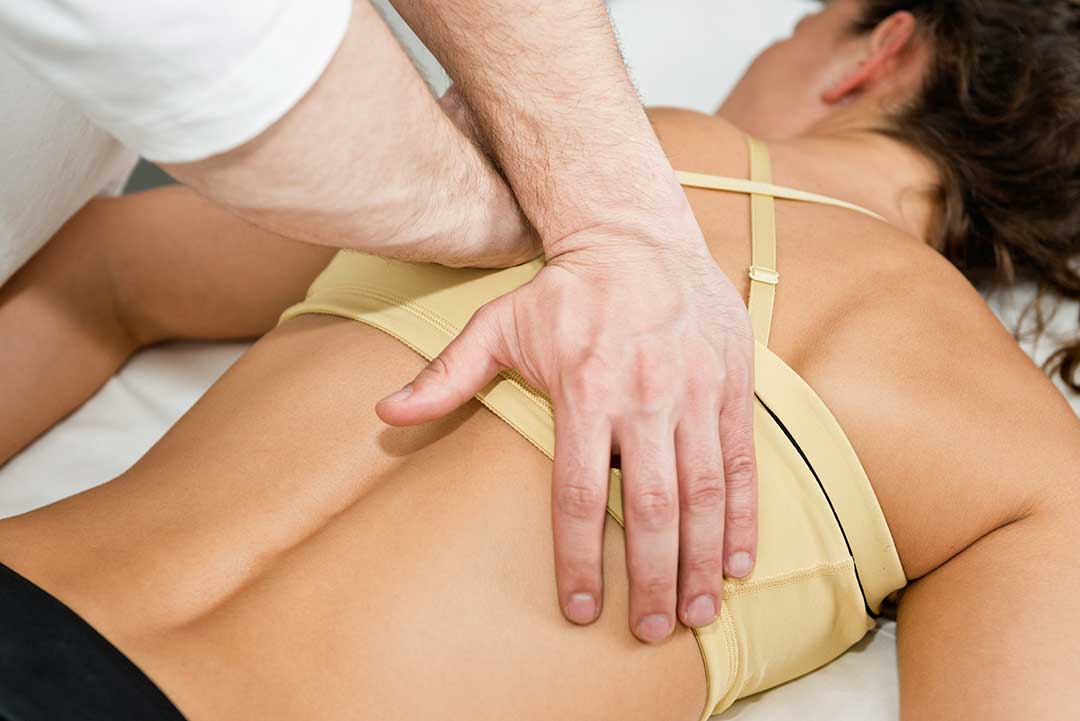
Possibly, but the evidence is limited and does not establish spinal adjustments as a reliable treatment for PMS. A chiropractic adjustment may affect musculoskeletal discomfort, joint stiffness, or muscle guarding in the back, pelvis, or hips. If those problems are adding to menstrual discomfort, a person may feel better after treatment.
Research on spinal manipulation for menstrual pain has been mixed. Some smaller studies have reported short-term pain improvements, while higher-quality reviews have not found convincing evidence that spinal manipulation consistently treats painful periods. There is even less evidence showing that adjustments improve the broader emotional and physical symptoms associated with PMS.
A practical way to understand the potential benefit is:
- Adjustments may help a related back, hip, or muscle problem.
- They may make movement more comfortable for some individuals.
- They are not known to regulate menstrual hormones.
- They should not replace evaluation for severe, new, or worsening symptoms.
Which PMS symptoms might be related to the spine or muscles?
Chiropractic care is more directly relevant to symptoms that have a musculoskeletal component. These may include:
- Aching in the lower back
- Stiffness around the pelvis or hips
- Muscle tightness from prolonged sitting
- Discomfort that changes with posture or movement
- Tension-related headaches
- Reduced mobility during cramping
A person who spends long periods sitting at a desk, commuting, studying, or caring for children may notice more back and hip tightness during the premenstrual phase. In a compact, busy community such as Lynbrook, daily routines may include extended time in cars, trains, offices, or small living spaces. Those habits can contribute to stiffness independently of PMS.
An adjustment may address joint or soft-tissue discomfort, but it cannot determine whether pelvic pain is caused by endometriosis, fibroids, an ovarian condition, infection, or another medical problem.
What treatments have better support for PMS?
For mild or moderate symptoms, several measures are commonly recommended:
- Regular aerobic activity, such as walking, cycling, swimming, or other comfortable exercise
- Consistent sleep and a regular daily routine
- Heat applied to the lower abdomen or back
- Relaxation methods, breathing exercises, yoga, or meditation
- Limiting alcohol and reducing excess caffeine if they worsen symptoms
- Over-the-counter anti-inflammatory medicine when medically appropriate
- A balanced eating pattern with adequate calcium and overall nutrition
Pain medicines such as ibuprofen or naproxen can reduce menstrual cramping for many people, but they are not safe for everyone. People with a history of stomach ulcers, kidney disease, certain cardiovascular conditions, medication interactions, or pregnancy concerns should seek individualized medical guidance before using them.
Supplements deserve caution as well. Calcium, magnesium, vitamin D, and vitamin B6 are sometimes discussed for PMS, but dose, quality, medication interactions, and medical history matter. “Natural” does not automatically mean risk-free.
How can someone tell whether treatment is helping?
A symptom diary is more useful than relying on memory. For at least two or three menstrual cycles, record:
- The first day of each period
- When symptoms begin and end
- Pain intensity and location
- Mood, sleep, energy, appetite, and bowel symptoms
- Exercise, stress, and major changes in routine
- Any treatment used and how long relief lasted
PMS usually follows a recognizable pattern: symptoms begin before menstruation and improve within several days after the period starts. Symptoms that occur throughout the month, steadily worsen, or do not improve after menstruation may have another cause.
Tracking can also help distinguish back pain that happens to coincide with the menstrual cycle from pain that is primarily related to posture, lifting, work habits, or an underlying spine condition.
Is it safe to receive an adjustment during PMS?
For many generally healthy adults, spinal manipulation is considered a low-risk form of musculoskeletal care when performed after an appropriate health history and examination. Temporary soreness, stiffness, or a mild increase in symptoms can occur.
Extra caution is needed with conditions such as osteoporosis, recent trauma, inflammatory arthritis, bleeding disorders, certain neurological problems, active infection, or suspected fracture. A person who is pregnant, recently postpartum, or taking medication that affects bleeding should also disclose that information before treatment.
Pelvic or abdominal pain should not automatically be treated as a back problem. Severe pain, fainting, fever, vomiting, unusual vaginal discharge, sudden one-sided pain, or very heavy bleeding requires prompt medical assessment rather than an adjustment.
When could PMS actually be PMDD or another condition?
Premenstrual dysphoric disorder, or PMDD, is a more severe condition involving prominent mood symptoms such as intense irritability, depression, anxiety, emotional sensitivity, or difficulty functioning. Physical symptoms may occur as well.
Painful periods can also be caused by conditions such as endometriosis, adenomyosis, fibroids, ovarian cysts, or pelvic infection. Warning signs include:
- Pain that is severe or newly worsening
- Pain between periods or during sex
- Bleeding that is unusually heavy or prolonged
- Symptoms that interfere with work, school, sleep, or relationships
- Pain that does not improve with usual measures
- New symptoms after years of previously manageable periods
These patterns deserve evaluation by a qualified medical clinician. Chiropractic care may be considered for accompanying back or muscle discomfort, but it should remain complementary rather than a substitute for diagnosis and treatment.
A balanced answer for local residents
Chiropractic adjustments may provide short-term relief when PMS is accompanied by lower-back stiffness, hip tightness, or other musculoskeletal discomfort. Current evidence does not show that adjustments reliably treat PMS as a hormonal or gynecological condition.
For residents in Lynbrook, a reasonable approach is to track symptoms, maintain regular movement, use heat or appropriate self-care, and seek medical evaluation when symptoms are severe, unusual, or disruptive. Chiropractic care may have a supporting role for related back and muscle symptoms, provided that more serious causes have been considered.
